What does the church say about remarriage?
6 min read
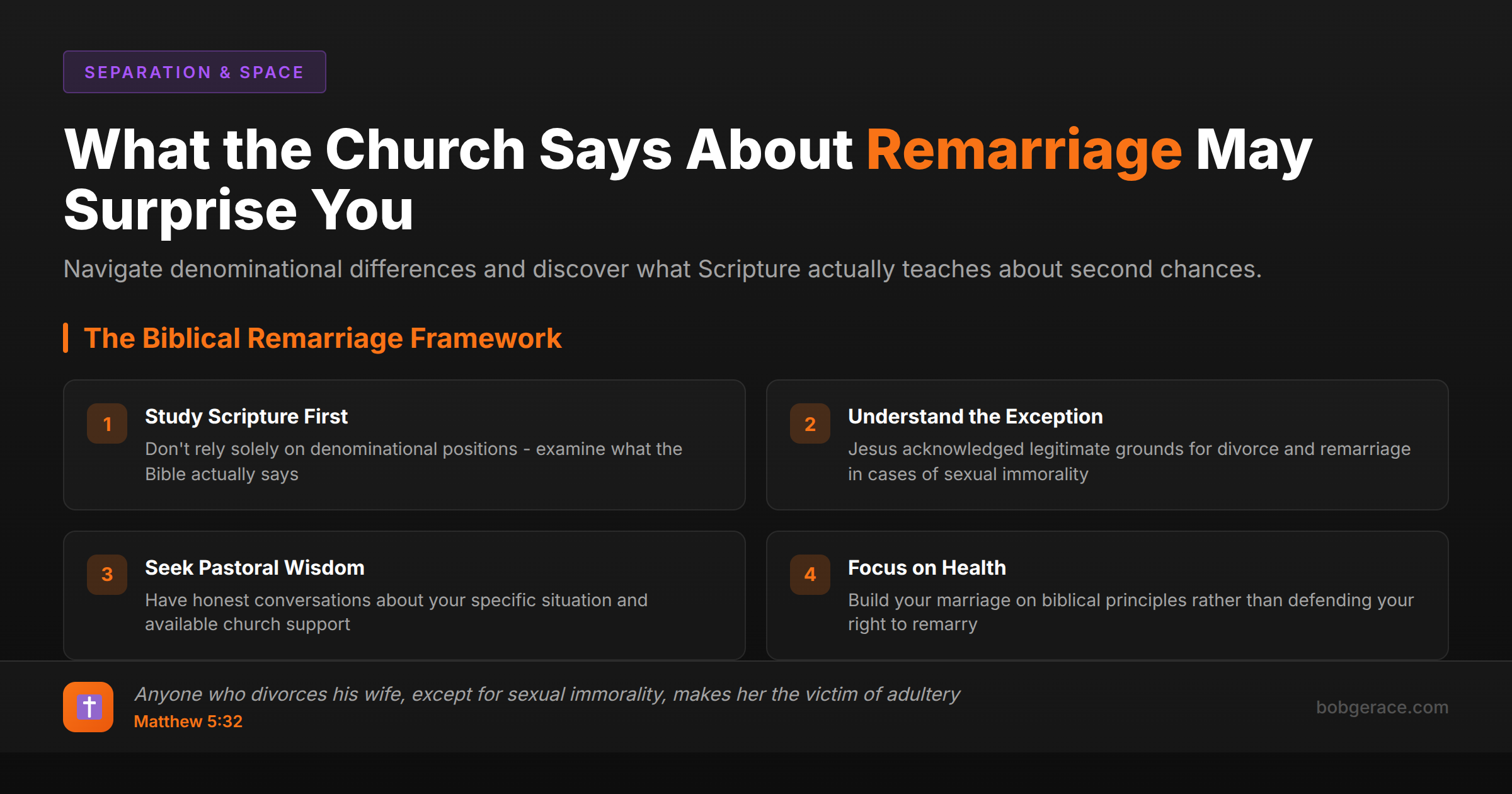
The church's position on remarriage varies significantly across denominations, though most share common biblical foundations. Many Protestant churches allow remarriage after divorce, particularly in cases of adultery or abandonment, while the Catholic Church generally doesn't recognize divorce and requires annulment for remarriage. Orthodox churches permit remarriage with pastoral discretion. What matters most isn't navigating denominational politics, but understanding what Scripture actually teaches about marriage, divorce, and God's heart for restoration. While churches may differ in application, the biblical principles of grace, forgiveness, and God's desire for healthy marriages remain consistent across traditions.
The Full Picture
Here's the reality: you'll find dramatically different answers depending on which church door you walk through. The Catholic Church maintains that marriage is indissoluble, requiring annulment (declaring the marriage never existed) before remarriage is permitted. Most Protestant denominations allow remarriage, especially in cases Jesus mentioned - adultery or abandonment. Orthodox churches fall somewhere in between, permitting remarriage through pastoral discretion.
But here's what's really happening beneath these official positions: churches are wrestling with the same tensions you are. They're trying to balance biblical truth with pastoral care, uphold marriage's sanctity while extending grace to the broken, and maintain doctrinal consistency while addressing real human pain.
The disconnect many couples feel isn't just theological - it's deeply personal. You might attend a church that technically allows remarriage but makes you feel like a second-class citizen. Or you might face a congregation that preaches grace but whispers judgment. Some churches require extensive counseling and waiting periods; others celebrate your new beginning immediately.
What's missing in many church discussions is practical wisdom about the "how" of remarriage. Sure, they'll tell you whether it's permissible, but who's helping you navigate blending families, dealing with ex-spouses, or building trust after betrayal? Most church policies focus on the legal/theological question while leaving couples to figure out the relational complexities alone.
The truth is, God cares more about the health of your actual marriage than denominational distinctions. Whatever your church's official position, what matters is building a marriage that honors Christ and reflects His love.
What's Really Happening
From a clinical perspective, the church's varied positions on remarriage create what we call "religious anxiety" - a specific type of stress that occurs when personal circumstances conflict with perceived religious expectations. This isn't just theological confusion; it's measurable psychological distress that impacts relationship formation.
I've observed that couples navigating remarriage often experience "approval-seeking behavior" with their church community, where they modify their authentic selves to gain acceptance. This pattern actually undermines the emotional intimacy essential for healthy remarriage. When you're constantly worried about meeting external religious standards, you're not fully present to build genuine connection with your spouse.
The most successful remarried couples I work with have learned to differentiate between divine approval and human approval. They understand their standing with God isn't determined by their pastor's opinion or their denomination's handbook. This psychological separation is crucial for emotional health.
Interestingly, research shows that couples who face initial resistance from their faith community but work through it often develop stronger marriages. The process of defining their own values while maintaining their faith creates resilience and unity. However, couples who remain in environments of ongoing judgment show higher rates of marriage distress.
The key clinical insight is this: your relationship with God and your relationship with your church are not identical. Healthy remarriage requires the emotional maturity to seek spiritual guidance while maintaining personal agency in your marriage decisions.
What Scripture Says
Let's look at what the Bible actually teaches about remarriage, beyond denominational interpretations:
Jesus acknowledged legitimate grounds for divorce and remarriage: *"But I tell you that anyone who divorces his wife, except for sexual immorality, makes her the victim of adultery, and anyone who marries a divorced woman commits adultery"* (Matthew 5:32). This "exception clause" indicates Jesus recognized some marriages end legitimately.
Paul addressed abandonment by unbelieving spouses: *"But if the unbeliever leaves, let it be so. The brother or the sister is not bound in such circumstances; God has called us to live in peace"* (1 Corinthians 7:15). The phrase "not bound" suggests freedom to remarry.
God's heart is always toward restoration: *"The Lord is close to the brokenhearted and saves those who are crushed in spirit"* (Psalm 34:18). This isn't about perfect performance but about God's grace meeting us in our brokenness.
Marriage itself is meant to reflect Christ's love: *"Husbands, love your wives, just as Christ loved the church and gave himself up for her"* (Ephesians 5:25). Whether it's a first marriage or remarriage, the standard is the same - sacrificial love.
Grace covers our failures: *"Therefore, there is now no condemnation for those who are in Christ Jesus"* (Romans 8:1). This doesn't minimize the seriousness of marriage vows, but it does emphasize God's redemptive power.
The focus should be on building godly marriages: *"Unless the Lord builds the house, the builders labor in vain"* (Psalm 127:1). Whatever your past, God wants to be the foundation of your current marriage.
What To Do Right Now
-
1
Study Scripture for yourself - don't rely solely on denominational positions or pastoral opinions about remarriage
-
2
Have an honest conversation with your pastor about your specific situation and their church's practical support
-
3
Seek out couples in healthy remarriages within your faith community who can provide real-world guidance
-
4
Focus on building your marriage according to biblical principles rather than defending your right to remarry
-
5
Consider changing churches if your current one creates shame rather than providing support for your marriage
-
6
Invest in professional Christian counseling to address remarriage challenges your church may not be equipped to handle
Related Questions
- Does divorce always prohibit remarriage?
- What if I was the innocent party?
- What if I was the guilty party but have repented?
- What about divorce before I was a Christian?
- What are the different denominational positions?
- What does 'commits adultery' in Matthew 19 mean?
- Does the Bible require me to stay after an affair?
- Can I forgive and still have boundaries?
- What does biblical forgiveness require of me?
- What's the difference between forgiveness and reconciliation?
Also find Bob on
Subscribe for weekly videos on Christian marriage.
Your Marriage Deserves More Than Generic Church Advice
A coach who knows your actual story—your history, your denomination's stance, what you're actually dealing with—beats another sermon. Bring this to someone who can help you apply it.
Talk to Bob →