What's the difference between her being withdrawn and being done?
6 min read
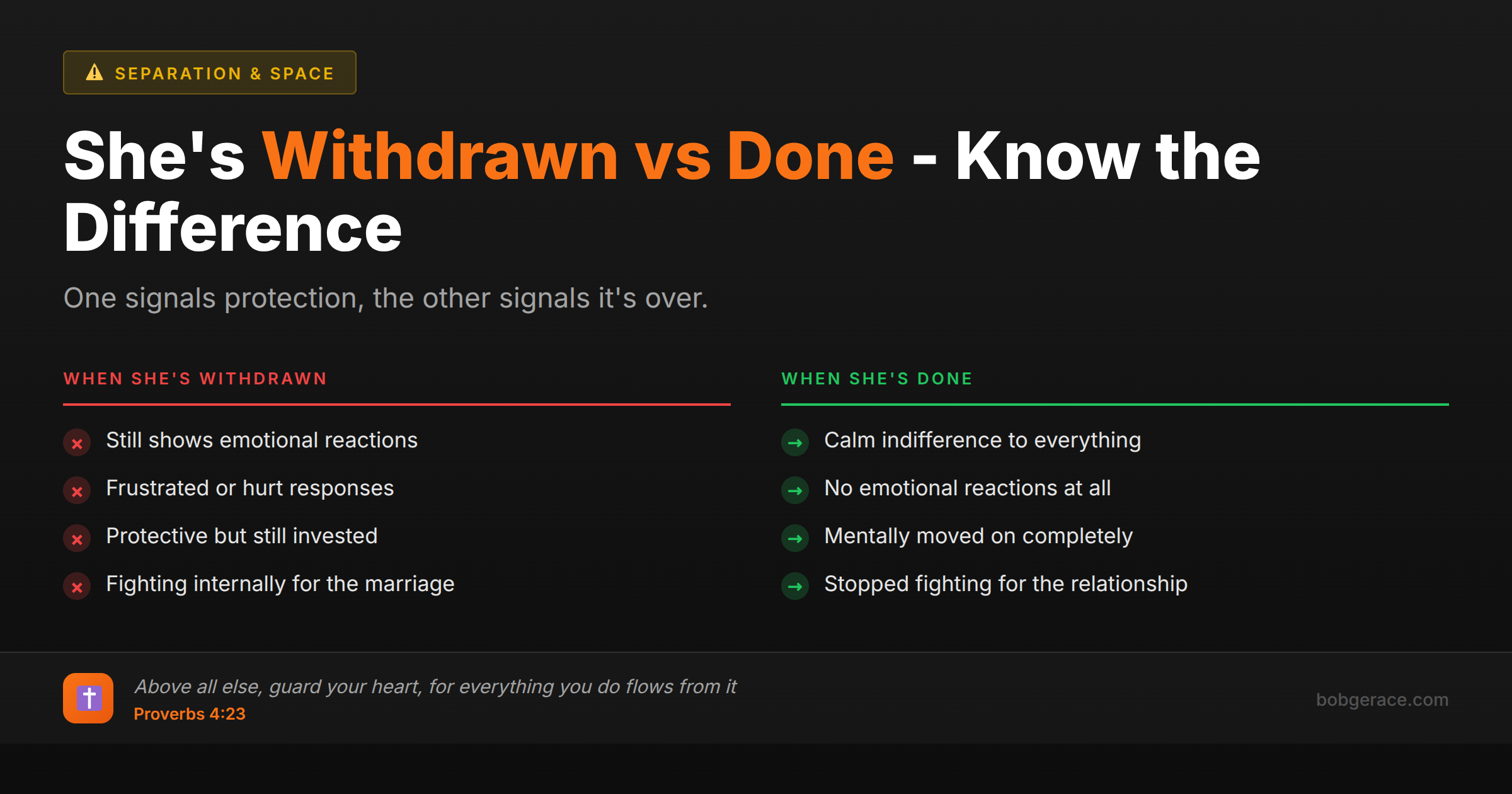
The difference between withdrawal and being done is like the difference between winter and death - one is temporary, the other is permanent. When she's withdrawn, she's emotionally protecting herself but still invested in the relationship's outcome. There's still emotional energy present, even if it's defensive. When she's done, there's an absence of emotional investment altogether - a calm detachment that signals she's mentally moved on. Withdrawal often comes with frustration, hurt, or anger because she still cares about fixing things. Being done comes with peace and indifference because she's stopped caring about the outcome. The key difference is investment level - withdrawn wives are still fighting internally, while wives who are done have stopped fighting entirely.
The Full Picture
Understanding the difference between withdrawal and being done could save your marriage. These aren't just different degrees of the same problem - they're entirely different emotional states requiring completely different approaches.
Withdrawal is active protection. When your wife withdraws, she's still emotionally engaged but protecting herself from further hurt. Think of it as emotional armor - she's still in the battle, just defending herself. You'll see signs like:
- Shortened conversations but still some engagement - Emotional reactions when triggered (anger, tears, frustration) - Criticism or complaints (she's still trying to communicate needs) - Physical presence but emotional distance - Occasional glimpses of the woman you married
Being done is passive disengagement. When she's done, the emotional investment has flatlined. She's not protecting herself anymore because she's no longer in the fight. The signs look different:
- Calm, polite interactions without depth - No emotional reactions to things that used to trigger her - Stopped complaining or asking for changes - Making independent plans and decisions - Treating you like a roommate or business partner
The timeline matters too. Withdrawal can happen quickly in response to specific events, while being done is usually the result of prolonged emotional neglect or repeated betrayals. Withdrawal says "I'm hurt but hoping." Being done says "I'm no longer expecting anything different."
Here's what makes this tricky: Some men mistake the calm of "being done" for improvement in the relationship. "She's not nagging anymore" or "Things are peaceful now" - not realizing that the peace comes from her emotional exit, not resolution.
What's Really Happening
From a clinical perspective, we're looking at two distinct psychological states that represent different phases of relationship distress and coping mechanisms.
Withdrawal is what we call "protest behavior" - part of the attachment system's response to perceived threat or disconnection. The emotional system is still actively engaged, sending signals that the relationship matters. We see elevated stress hormones, heightened emotional reactivity, and what I call "hypervigilance for hope" - she's still scanning for signs that things might improve.
Being done represents what we term "emotional numbing" or "detachment coping." The nervous system has essentially said, "This is too costly to maintain," and has begun the process of psychological separation. Stress hormones normalize, but so does emotional investment. This isn't depression - it's adaptation.
The neurological difference is significant. In withdrawal, the brain's emotional centers are hyperactive - the amygdala is firing, stress responses are elevated, but so is the capacity for positive emotion when safety is restored. In the "done" state, there's a global dampening of emotional responses specific to the relationship. Other relationships may still elicit full emotional responses, but the marriage has been emotionally quarantined.
This is why intervention timing is crucial. Withdrawal responds well to consistent, patient repair efforts because the emotional system is still online and hoping. The "done" state requires much more intensive intervention because you're not just repairing damage - you're trying to re-engage a system that has gone offline for self-preservation.
What Scripture Says
Scripture acknowledges both the protective withdrawal of the heart and the danger of complete hardening. Understanding these states through biblical wisdom helps us respond with both truth and grace.
God recognizes protective withdrawal: *"Above all else, guard your heart, for everything you do flows from it"* (Proverbs 4:23). Sometimes withdrawal is wisdom - protecting what's precious until safety is restored. This isn't sin; it's stewardship of the heart God gave her.
But God warns against hardened hearts: *"Today, if you hear his voice, do not harden your hearts"* (Hebrews 3:7-8). There's a difference between guarding the heart and hardening it. A guarded heart can still be reached; a hardened heart has chosen to stop receiving.
Love never fails, but it can be rejected: *"Love never fails. But where there are prophecies, they will cease; where there are tongues, they will be stilled; where there is knowledge, it will pass away"* (1 Corinthians 13:8). God's love is constant, but hearts can become unreachable through persistent rejection of that love.
The call to persistent love: *"Husbands, love your wives as Christ loved the church"* (Ephesians 5:25). Christ's love was persistent even when rejected, but He also recognized when hearts were closed to receiving it.
Wisdom in approaching the withdrawn: *"A gentle answer turns away wrath, but a harsh word stirs up anger"* (Proverbs 15:1). With withdrawal, gentleness can still reach the heart. With someone who's done, even gentleness may not penetrate the protective barriers they've erected.
The biblical model shows us that while we're called to love persistently, we must also recognize the spiritual reality that hearts can become hardened beyond our ability to reach - though never beyond God's.
What To Do Right Now
-
1
Assess honestly which state she's in - Look for emotional reactions vs. calm indifference, engagement vs. disengagement, hope vs. resignation
-
2
If she's withdrawn: Focus on safety and consistency - Small, non-threatening gestures of care, keeping promises, creating emotional safety without pressure
-
3
If she's done: Recognize the urgency - This requires immediate, significant intervention, possibly professional help, and dramatic changes in your approach
-
4
Stop trying to logic your way through her emotions - Both states are about felt safety, not rational arguments about why the marriage should work
-
5
Get outside perspective immediately - You're too close to assess this accurately alone; trusted friends, pastors, or counselors can help you see clearly
-
6
Prepare for the long game - Withdrawal might take months to heal; being done might take years or might not be reversible at all
Related Questions
- What is 'emotional disengagement'?
- How do I assess how far gone she is?
- Is her shutdown protective or permanent?
- What is 'deactivation' and did I cause it?
- Can deactivated attachment reactivate?
- What does giving up look like vs. regulating?
- She stopped fighting — is that worse?
- She's indifferent — not angry, just empty
- She seems happier when I'm not around
- What is 'negative sentiment override' and does she have it?
Also find Bob on
Subscribe for weekly videos on Christian marriage.
Get a Coach on This Today
You can't afford to misread where she actually is. A coach who knows your specific situation will tell you what you're dealing with and what moves to make in the next 30 days.
Talk to Bob →