What's the difference between low desire and no desire?
6 min read
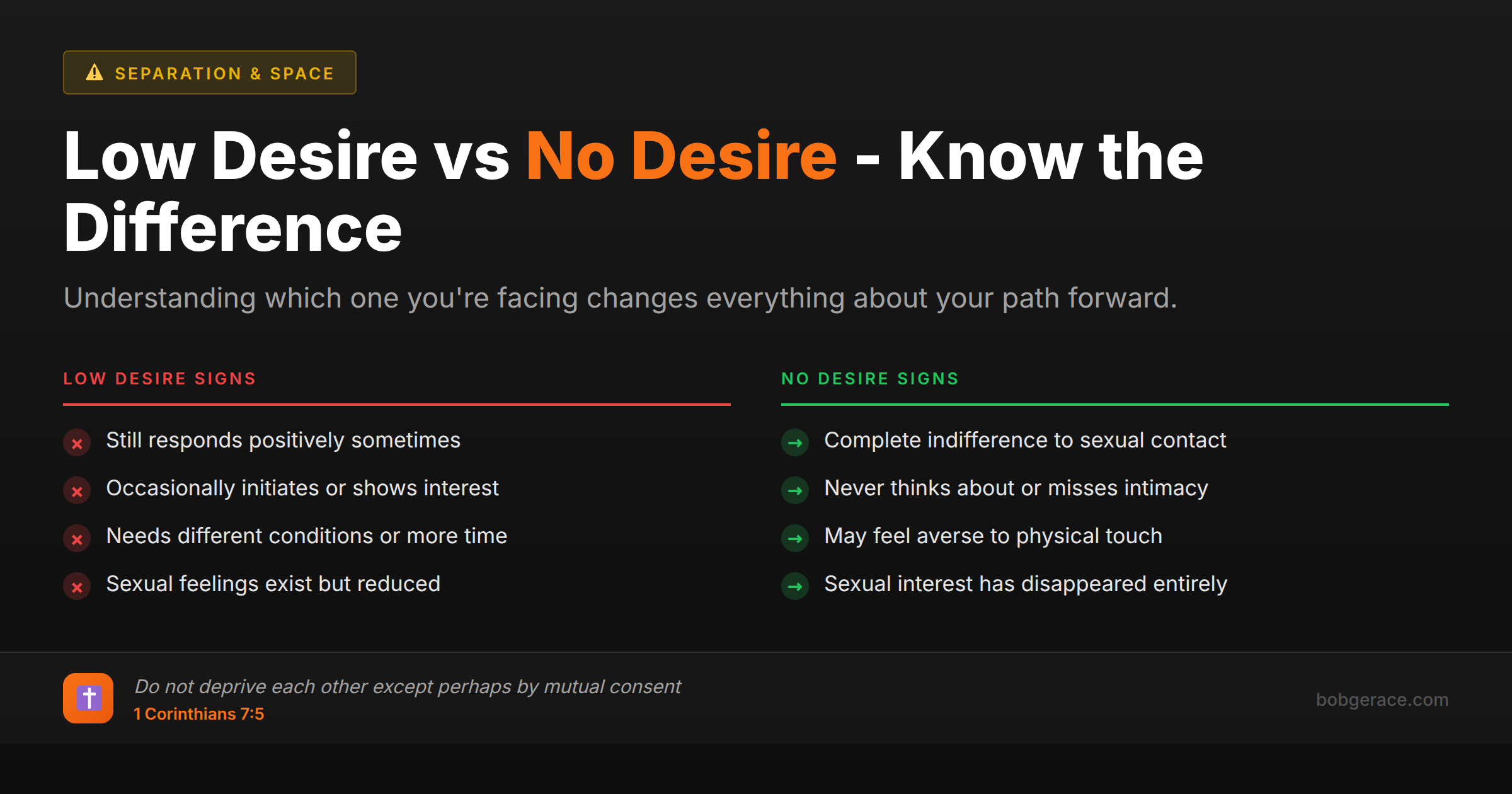
Low desire means your wife still experiences sexual feelings and attraction, but at a much reduced frequency or intensity than before. She might still initiate occasionally, respond positively to your advances sometimes, or express interest but need more time or different conditions. No desire, on the other hand, means sexual interest has essentially disappeared completely - she doesn't think about sex, doesn't miss it, and may feel indifferent or even averse to sexual contact. The difference matters tremendously because it affects both the underlying causes and the path forward. Low desire often stems from stress, hormonal changes, relationship issues, or life circumstances that can be addressed. No desire might indicate deeper issues like depression, trauma, medical conditions, or fundamental relationship disconnection that require more intensive intervention.
The Full Picture
Most husbands struggle to understand where their wife falls on the desire spectrum because the signs can overlap. But recognizing the difference between low desire and no desire is crucial for knowing how to respond appropriately.
Low desire typically shows up as: - Occasional interest that comes and goes - Responsiveness under the right circumstances - Ability to enjoy intimacy once it begins, even if she didn't initiate - Some level of missing physical connection, even if rarely expressed - Willingness to discuss intimacy issues, though maybe reluctantly
No desire presents differently: - Complete absence of sexual thoughts or interest - Consistent lack of responsiveness regardless of approach - Going through the motions without genuine engagement - Viewing sex as a chore or obligation - Avoiding conversations about intimacy entirely - Physical touch feeling foreign or unwelcome
The timeline matters too. Low desire often fluctuates - good weeks and bad weeks, better seasons and harder ones. No desire tends to be more consistently flat across time. Many women experience low desire during major life transitions: new babies, career stress, health issues, or hormonal changes. These situations often resolve with time and intentional effort.
No desire, however, usually signals something more fundamental has shifted. It might be the result of accumulated hurt, unresolved conflict, depression, medication side effects, or trauma. Sometimes it develops gradually as emotional connection erodes, while other times it appears suddenly after a specific incident or revelation.
Understanding which situation you're facing helps determine whether you need patience and gentle encouragement, or whether more serious intervention is required.
What's Really Happening
From a clinical perspective, the distinction between low desire and no desire often correlates with different underlying mechanisms in the brain and body. Low desire typically involves intact sexual response systems that are being suppressed or inhibited by external factors - stress hormones, fatigue, relationship tension, or competing priorities.
No desire, however, often indicates a more fundamental disruption in the neural pathways associated with sexual interest and arousal. This can result from hormonal imbalances (particularly testosterone deficiency in women), depression affecting dopamine and serotonin systems, or trauma responses that have created aversion patterns.
I frequently see couples where the husband interprets his wife's low desire as no desire because he's focusing on frequency rather than quality of response. A woman with low desire might still show physical responsiveness, emotional connection during intimacy, or express appreciation afterward - these are crucial indicators that the capacity for desire remains intact.
Conversely, women experiencing true absence of desire often describe feeling 'broken' or 'like a different person.' They may go through physical motions but report feeling disconnected from their own body or emotions during intimate moments. This phenomenological difference is significant and typically requires different therapeutic approaches.
The good news is that both conditions are treatable, but the interventions vary considerably. Low desire often responds well to lifestyle changes, stress management, and relationship improvements. No desire usually requires more comprehensive evaluation including medical assessment, possible medication review, and deeper therapeutic work to address underlying causes.
What Scripture Says
Scripture acknowledges that sexual desire and intimacy can face challenges while maintaining that physical union is a vital part of marriage. Understanding these challenges through a biblical lens helps us respond with both grace and intentionality.
Paul addresses fluctuations in sexual availability in 1 Corinthians 7:5: *"Do not deprive each other except perhaps by mutual consent and for a time, so that you may devote yourselves to prayer. Then come together again so that Satan will not tempt you because of your lack of self-control."* This suggests that temporary changes in sexual connection can occur for legitimate reasons, but the goal is always restoration.
Ecclesiastes 3:1-3 reminds us that *"To everything there is a season, and a time to every purpose under heaven... a time to embrace, and a time to refrain from embracing."* This acknowledges that seasons of low desire may be natural parts of life's rhythms, requiring patience and understanding.
However, Scripture also calls us to not remain passive when our marriages face challenges. Ephesians 4:2-3 instructs us to be *"completely humble and gentle; be patient, bearing with one another in love. Make every effort to keep the unity of the Spirit through the bond of peace."* Whether facing low desire or no desire, both spouses are called to work actively toward restoration.
Song of Solomon 2:7 says *"Do not arouse or awaken love until it so desires,"* which speaks to the importance of not pressuring or forcing sexual connection, but rather creating conditions where desire can naturally flourish. This requires wisdom to discern whether we're dealing with a temporary season requiring patience, or a deeper issue requiring active intervention and possibly professional help.
What To Do Right Now
-
1
Assess honestly - Track patterns over the past 3-6 months. Is there any evidence of interest, responsiveness, or enjoyment, even occasionally?
-
2
Create safety - Remove all pressure and expectations around sex for 2-4 weeks while you gather information and rebuild emotional connection.
-
3
Have the conversation - Ask directly: 'Help me understand what you're experiencing with physical intimacy. Do you miss it but feel blocked, or has interest disappeared completely?'
-
4
Address obvious barriers - Look for stress factors, health issues, medication effects, or relationship conflicts that might be suppressing natural desire.
-
5
Seek medical evaluation - If desire seems completely absent, encourage a medical exam to rule out hormonal, neurological, or medication-related causes.
-
6
Get professional help - If no desire persists despite addressing obvious factors, work with a qualified therapist who specializes in sexual health and trauma recovery.
Related Questions
- What is 'responsive desire' vs. 'spontaneous desire'?
- What kills female sexual desire in marriage?
- What is 'sexual aversion' and does she have it?
- What role does resentment play in sexual shutdown?
- What conditions need to be in place for desire to return?
- Could her sexual shutdown be trauma-related?
- What is 'accumulated resentment'?
- What is 'emotional disengagement'?
- Why does she seem numb/flat/dead inside?
- What does chronic stress do to her capacity for connection?
Also find Bob on
Subscribe for weekly videos on Christian marriage.
Bring Your Marriage to a Coach
Low desire or none? The answer changes everything about how you move forward. A coach who knows your story can help you see what's actually happening in your bedroom and build the right plan.
Talk to Bob →