How do I avoid 'separation drift'?
6 min read
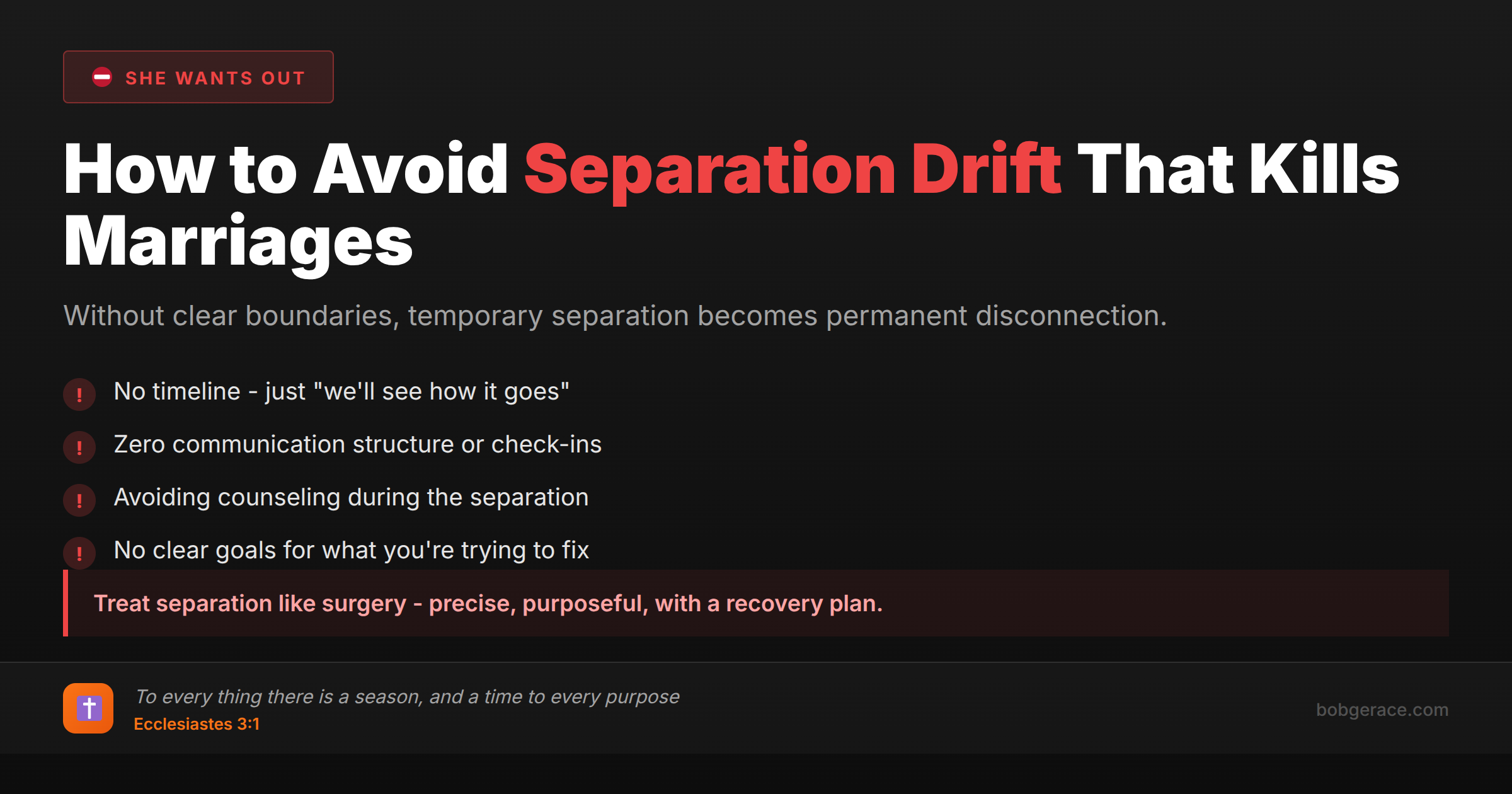
Separation drift happens when couples intend a temporary separation but gradually slip into permanent disconnection without realizing it. It's like emotional quicksand - the longer you stay still, the deeper you sink. The key is establishing clear boundaries, timelines, and communication protocols before you separate. Most couples think separation will naturally lead to clarity, but without intentional structure, it usually leads to emotional distance and eventual divorce. You avoid drift by treating separation like surgery - precise, purposeful, and with a clear recovery plan. This means setting specific goals, maintaining regular check-ins, and having an exit strategy that moves you toward reconciliation or decisive closure.
The Full Picture
Separation drift is one of the most dangerous traps couples fall into - and most don't see it coming. It starts innocently: you agree to some space to "figure things out," but weeks turn into months, and months turn into a new normal where you're essentially divorced without the paperwork.
Here's what typically happens: The first few weeks feel productive. You're both processing emotions, maybe sleeping better, feeling less conflict. But around week 6-8, something shifts. The urgency fades. You stop having those difficult but necessary conversations about your marriage. Instead, you start building separate lives.
The warning signs are subtle: • You stop asking when you'll talk next • Individual therapy replaces couples work • You make major decisions without consulting each other • Friends and family start treating you as single • Dating becomes a possibility you entertain • You avoid setting reunion dates
The psychology behind drift is simple: humans adapt. What feels painful and temporary at first becomes familiar and manageable. Your brain rewires around your new reality. Meanwhile, the work required to reconnect feels increasingly overwhelming.
Most separations that drift started with good intentions. Couples genuinely believed they needed space to heal and reconnect. But without clear structure, separation becomes the path of least resistance. It's easier to maintain the status quo than do the hard work of rebuilding.
The couples who avoid drift treat separation like a controlled experiment, not an escape hatch. They set parameters, measure progress, and have clear decision points.
What's Really Happening
From a psychological standpoint, separation drift represents a classic avoidance pattern that our brains are wired to embrace. When couples separate without clear structure, they're essentially choosing emotional numbing over the discomfort of active problem-solving.
Research on attachment theory shows that during separation, our nervous systems initially remain activated - we're hypervigilant about reconnection. But after 6-12 weeks, if there's no clear progress, our attachment system begins to deactivate as a protective mechanism. This neurobiological shift makes reconnection exponentially more difficult.
The Gottman Institute's research on separation outcomes reveals that couples with structured separations have a 58% reconciliation rate, while unstructured separations result in divorce 87% of the time. The difference isn't the severity of their problems - it's the presence of intentional connection points and clear timelines.
Cognitive behavioral therapy identifies separation drift as a form of 'behavioral avoidance' - we avoid short-term discomfort (difficult conversations, vulnerability, conflict resolution) in exchange for long-term dysfunction. The brain interprets the reduced daily conflict as progress, when it's actually just postponement.
I observe that couples in drift often experience what I call 'ambiguous loss' - they're grieving their marriage while it's still technically alive. This creates a psychological limbo that prevents both genuine reconciliation work and healthy closure. The result is often years of emotional stagnation that serves neither partner's long-term wellbeing.
What Scripture Says
Scripture calls us to intentionality in our relationships, not passive drift. Ecclesiastes 3:1 reminds us that "To every thing there is a season, and a time to every purpose under the heaven." Your separation should have a defined season and clear purpose - not an indefinite timeline that serves neither healing nor resolution.
Matthew 18:15 provides a framework for restoration: "If your brother sins against you, go and tell him his fault, between you and him alone." This principle applies to marriage - we're called to direct conversation and active reconciliation efforts, not indefinite distance. Drift violates this call to pursue resolution.
The book of Hosea illustrates God's persistent pursuit of His people despite their unfaithfulness. Hosea 2:14 shows God saying, "Therefore, behold, I will allure her, and bring her into the wilderness, and speak comfortably unto her." Even in separation, there's intentional pursuit and communication - not abandonment or drift.
1 Corinthians 7:5 addresses temporary separation: "Defraud ye not one the other, except it be with consent for a time, that ye may give yourselves to fasting and prayer; and come together again, that Satan tempt you not." Paul specifically warns against indefinite separation and calls for clear timelines and purposes.
Ephesians 4:26 instructs us to "not let the sun go down on your anger." While this doesn't mean rushing reconciliation, it does mean we shouldn't let issues fester indefinitely. Separation drift often becomes a way of avoiding the hard work of forgiveness and restoration that God calls us to pursue actively.
What To Do Right Now
-
1
Set a maximum separation timeline (typically 3-6 months) and communicate this clearly to your spouse
-
2
Schedule weekly check-in conversations with specific agenda items about your marriage progress
-
3
Define 3-5 concrete goals you both want to accomplish during separation before considering reunion
-
4
Establish boundaries about dating, major purchases, and social media to prevent further emotional distance
-
5
Book couples counseling sessions every 2 weeks during separation to maintain professional guidance
-
6
Create accountability with a trusted friend or mentor who will ask you about progress weekly
Related Questions
- What is 'structured separation' and does it work?
- What boundaries make separation therapeutic?
- What does healthy communication during separation look like?
- What's the difference between space to heal and space to exit?
- She wants separation — should I agree?
- Can we separate and still work on things?
- What boundaries should I set?
- How do I stay connected while enforcing boundaries?
- How do I not pursue while also not abandoning?
- What does 'detach with love' actually mean?
Also find Bob on
Subscribe for weekly videos on Christian marriage.
Your Separation Needs a Plan Today
Drift happens fast. A coach who knows your specific situation can help you set the boundaries and timelines that keep this from becoming permanent.
Talk to Bob →