What is 'litigation stress' and how do I cope?
6 min read
Litigation stress is the psychological and physical toll that divorce proceedings take on your mind and body. It's that crushing feeling when you wake up at 3 AM thinking about attorney fees, custody battles, and asset division. Your nervous system stays in constant fight-or-flight mode because the legal process feels like a never-ending threat to everything you care about. This isn't just regular stress – it's trauma-level intensity that can last months or years. You're not weak for struggling with it; you're human. The good news is that understanding what's happening to you is the first step toward managing it effectively and protecting both your sanity and your legal position.
The Full Picture
Litigation stress hits every area of your life like a wrecking ball. Your body rebels with headaches, insomnia, digestive issues, and that constant knot in your stomach. Your mind races with worst-case scenarios, legal strategies, and financial calculations that never add up the way you want them to.
The legal system amplifies this stress because it operates on timelines that have nothing to do with emotional healing. While you're still processing that your marriage is ending, lawyers are demanding financial records from 2015 and asking you to make decisions about your children's future.
Common manifestations include: • Obsessing over legal documents and case strategy • Losing sleep over attorney bills and court dates • Snapping at your kids or coworkers over minor issues • Making impulsive decisions to "get this over with" • Avoiding friends and family because explaining everything is exhausting
The financial pressure compounds everything. You're paying for two households, attorney fees, and potentially spousal support while your income stays the same. Every legal motion feels like another thousand dollars you don't have.
The hidden danger is that litigation stress clouds your judgment exactly when you need clear thinking most. Men often agree to bad settlements or make inflammatory statements just to escape the pressure. This is why managing the stress isn't just about feeling better – it's about protecting your future.
What's Really Happening
From a clinical perspective, litigation stress triggers what we call 'chronic activation' of your sympathetic nervous system. Unlike acute stress that comes and goes, litigation stress keeps your body in a prolonged state of hypervigilance that it's simply not designed to handle.
Research from the American Psychological Association shows that divorce-related legal proceedings rank among the top five most stressful life experiences, comparable to the death of a spouse or serious illness. The uncertainty and lack of control are particularly toxic to mental health.
Neurologically, several things happen: Your prefrontal cortex – responsible for rational decision-making – becomes impaired while your amygdala stays hyperactive. This is why you might find yourself agreeing to things you'd normally negotiate or becoming paralyzed by relatively simple decisions.
The stress hormone cortisol floods your system chronically, leading to memory problems, mood swings, and compromised immune function. Many of my clients report getting sick more often during litigation, which isn't coincidental.
Cognitively, you may experience: • Rumination patterns where your mind loops on legal scenarios • Catastrophic thinking about worst-case outcomes • Decision fatigue from constant legal choices • Intrusive thoughts about court proceedings
The adversarial nature of the legal system often retraumatizes men who are already dealing with the betrayal of their marriage ending. Your nervous system can't distinguish between a legal threat and a physical one, so it responds as if you're in constant danger.
What Scripture Says
Scripture doesn't minimize the reality of intense stress, but it does provide a framework for enduring it with faith and wisdom. Philippians 4:6-7 reminds us: "Do not be anxious about anything, but in every situation, by prayer and petition, with thanksgiving, present your requests to God. And the peace of God, which transcends all understanding, will guard your hearts and your minds in Christ Jesus."
This doesn't mean litigation stress disappears when you pray, but it means you have access to supernatural peace in the midst of chaos. 1 Peter 5:7 tells us to "Cast all your anxiety on him because he cares for you." God isn't surprised by your legal battles or financial pressures.
Psalm 46:1-2 declares: "God is our refuge and strength, an ever-present help in trouble. Therefore we will not fear, though the earth give way and the mountains fall into the heart of the sea." When your world feels like it's collapsing, God remains your steady foundation.
Proverbs 27:14 warns: "Starting a quarrel is like breaching a dam; so drop the matter before a dispute breaks out." Sometimes litigation stress drives us to fight battles that aren't worth fighting. Wisdom knows when to stand firm and when to let go.
James 1:5 promises: "If any of you lacks wisdom, you should ask God, who gives generously to all without finding fault, and it will be given to you." Legal decisions require discernment that goes beyond what any attorney can provide.
Romans 8:28 assures us: "And we know that in all things God works for the good of those who love him, who have been called according to his purpose." Even in legal battles, God is working for your ultimate good.
What To Do Right Now
-
1
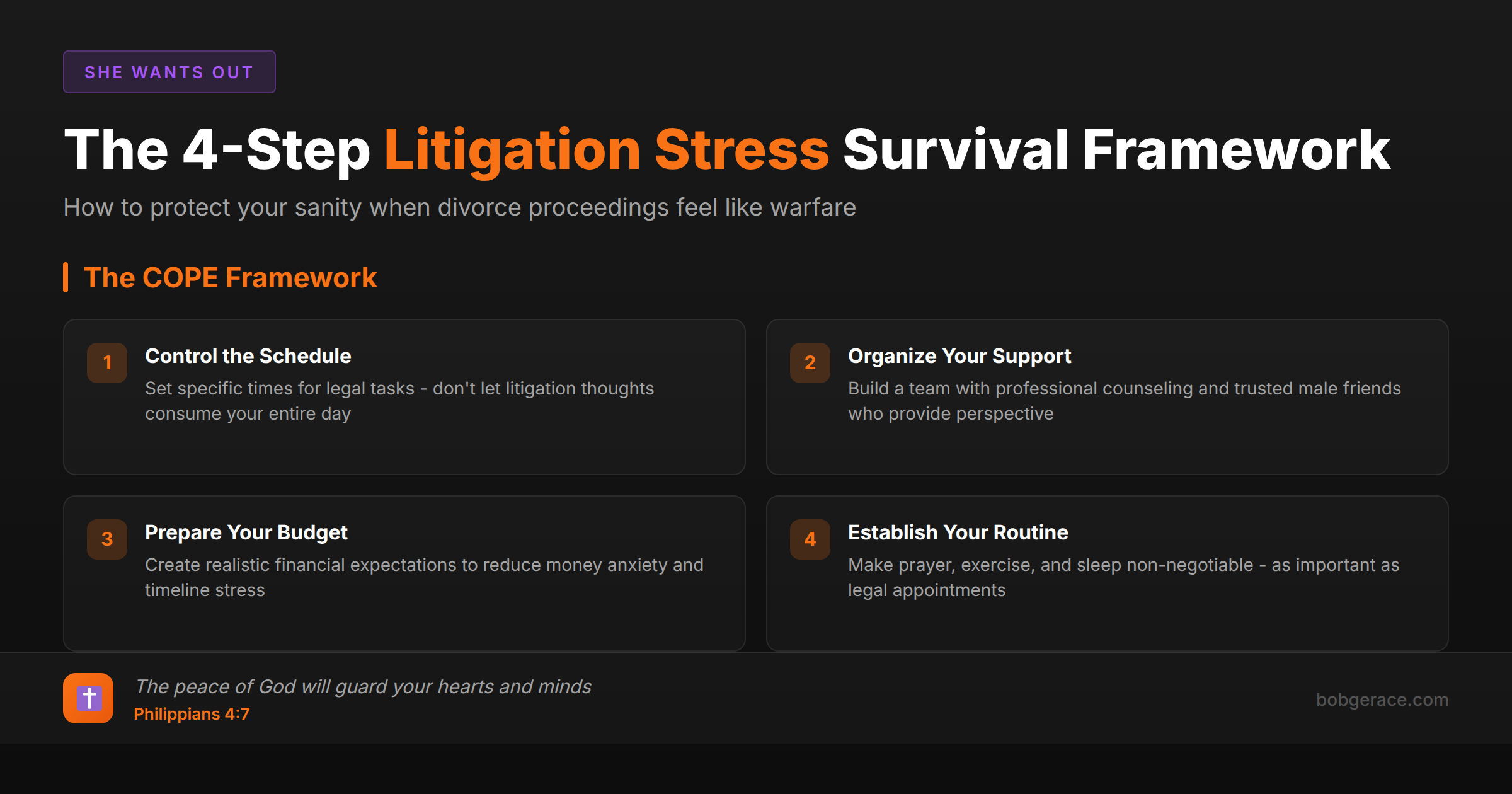
Establish a daily stress-management routine with prayer, exercise, and adequate sleep – treat this as non-negotiable as your legal appointments
-
2
Set specific times for legal discussions and document review – don't let litigation thoughts consume your entire day
-
3
Build a support team that includes both professional counseling and trusted male friends who can provide perspective
-
4
Create a litigation budget and timeline to reduce financial anxiety and give yourself realistic expectations
-
5
Practice the 24-hour rule before responding to inflammatory communications from your wife or her attorney
-
6
Schedule regular activities that have nothing to do with your divorce to maintain your identity beyond the legal proceedings
Related Questions
- How do I manage my nervous system through legal proceedings?
- Why do I feel like I'm being attacked?
- How do I stay grounded when everything feels adversarial?
- How do I not let lawyers poison what's left?
- What does self-care look like in this season?
- How do I grieve while also fighting?
- What is 'betrayal trauma' and do I have it?
- How do I function when my body won't calm down?
- What does trauma recovery look like?
- How do I regulate my own system?
Also find Bob on
Subscribe for weekly videos on Christian marriage.
Your Divorce Needs a Coach Who Gets It
Litigation stress doesn't respond to generic advice. A coach who knows your case, your triggers, and what's actually at stake can help you stay grounded when the legal system is designed to keep you flooded.
Talk to Bob →