What's the difference between hope and presumption?
6 min read
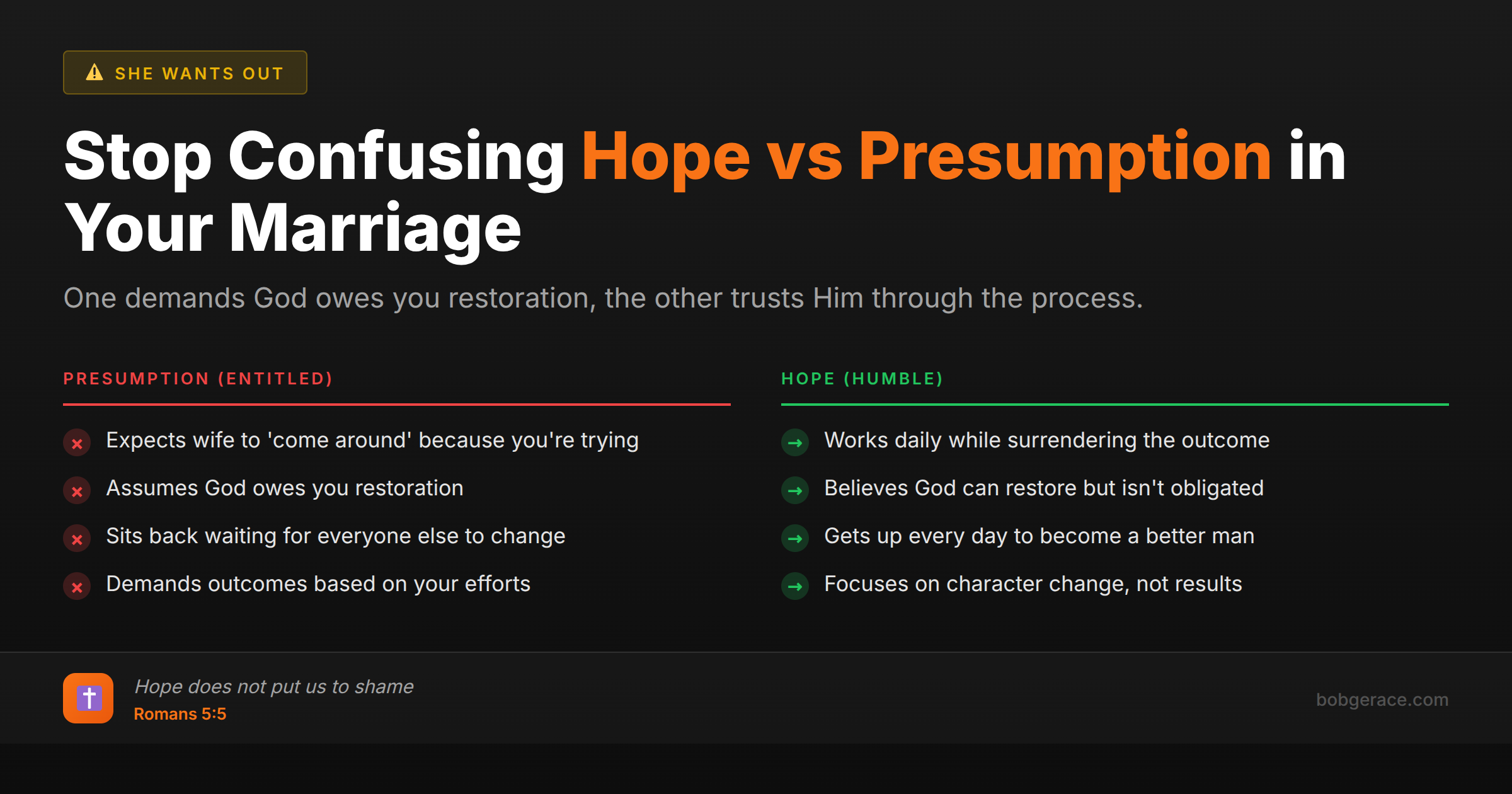
Hope is humble and active - it believes God can restore your marriage while recognizing He's under no obligation to do so. Hope works, waits, and trusts the process. Presumption is entitled and passive - it assumes God owes you a restored marriage because you're trying harder or because divorce would be inconvenient. Here's the brutal truth: if you're sitting back expecting your wife to "come around" because you've been going to therapy or reading books, that's presumption. Real hope gets up every day, does the work of becoming a better man, and surrenders the outcome. Hope changes you. Presumption demands everyone else change while you stay the same.
The Full Picture
The line between hope and presumption is often razor-thin, but the consequences of crossing it are massive. I've watched countless men destroy their last chances at reconciliation because they couldn't tell the difference.
Hope operates from humility. It says, "I believe God can do miracles, and I'm going to do everything in my power to cooperate with His work in me." Hope recognizes that restoration is a gift, not a guarantee. It drives you to action - better communication, genuine repentance, consistent character change.
Presumption operates from entitlement. It says, "I'm doing the work, so God better fix my marriage." Presumption treats faith like a vending machine - put in the right coins (prayer, therapy, good behavior) and expect your desired outcome to drop down.
Here are the warning signs you've crossed into presumption: • You're frustrated when your efforts don't produce immediate results • You reference your "good deeds" when arguing with your wife • You feel angry at God when things get worse instead of better • You're doing the "right things" but with a timeline and expected return • You dismiss the possibility that separation or divorce might be God's will
The danger of presumption is that it breeds resentment and stops growth. When you presume God owes you something, you stop being grateful for small mercies. You stop seeing your wife as a person with valid concerns and start seeing her as an obstacle to your entitled happiness.
True hope, on the other hand, keeps you humble, keeps you growing, and keeps you surrendered to outcomes beyond your control.
What's Really Happening
From a psychological standpoint, the distinction between hope and presumption reflects two entirely different cognitive frameworks that drive behavior and emotional regulation.
Hope is characterized by what researchers call "agency thinking" combined with "pathway thinking." Agency thinking is your belief in your ability to initiate and sustain effort toward goals. Pathway thinking involves your perceived ability to generate routes to achieve those goals. Healthy hope maintains what psychologists term an "internal locus of control" - you focus on what you can influence while accepting what you cannot.
Presumption, however, operates from what we call "external locus of control" paired with entitlement schemas. These are deeply rooted beliefs that you deserve certain outcomes based on your inputs. This creates what cognitive therapists identify as "should statements" - rigid expectations about how others (including God) must respond to your efforts.
Neurologically, presumption activates the same reward anticipation circuits as addiction. Your brain becomes chemically invested in a specific outcome, creating dopamine patterns that demand satisfaction. When reality doesn't match expectations, you experience what we call "reward prediction error" - the neurochemical equivalent of withdrawal.
Hope, conversely, engages what neuroscientists call the "salience network" - brain regions associated with adaptive attention and flexible response to changing circumstances. This neuroplasticity allows for resilience when outcomes differ from desires.
The therapeutic implication is clear: presumption creates emotional brittleness and relational toxicity, while hope builds emotional intelligence and relational capacity. Men stuck in presumption often exhibit what we term "covert contracts" - unspoken agreements they believe others should honor based on their behavior modifications.
What Scripture Says
Scripture draws a clear distinction between the hope that honors God and the presumption that dishonors both God and others.
Romans 5:3-5 reveals hope's true nature: "We glory in our sufferings, because we know that suffering produces perseverance; perseverance, character; and character, hope. And hope does not put us to shame, because God's love has been poured out into our hearts through the Holy Spirit." Biblical hope emerges from trials and produces character - it doesn't demand exemption from difficulty.
Psalm 25:21 shows hope's posture: "May integrity and uprightness protect me, because my hope, Lord, is in you." Notice the focus isn't on getting what you want, but on maintaining character while trusting God's sovereignty.
Presumption, however, is consistently condemned. James 4:13-16 addresses presumptuous planning: "Now listen, you who say, 'Today or tomorrow we will go to this or that city, spend a year there, carry on business and make money.' Why, you do not even know what will happen tomorrow... Instead, you ought to say, 'If it is the Lord's will, we will live and do this or that.' As it is, you boast in your arrogant schemes."
1 Corinthians 10:12 warns: "If you think you are standing firm, be careful that you don't fall!" Presumption assumes we've earned God's favor or guaranteed specific outcomes through our efforts.
Proverbs 27:1 is direct: "Do not boast about tomorrow, for you do not know what a day may bring." This isn't pessimism - it's humble recognition of our limitations.
The biblical pattern is clear: hope anchors us in God's character while releasing outcomes to His wisdom. Presumption anchors us in our own efforts while demanding God conform to our timeline and preferences.
What To Do Right Now
-
1
Audit your expectations - write down what you believe you 'deserve' from your efforts and surrender each one to God
-
2
Replace outcome-focused prayers with character-focused prayers - ask God to change you, not circumstances
-
3
Practice gratitude for small mercies instead of focusing on what hasn't changed yet in your marriage
-
4
Set process goals (being consistent, kind, honest) rather than outcome goals (wife's response, timeline for reconciliation)
-
5
Identify and confess any 'covert contracts' - unspoken deals you've made with God or your wife about deserved responses
-
6
Seek accountability from someone who will call out entitled attitudes and celebrate character growth over circumstantial wins
Related Questions
- How long do I wait before giving up?
- How do I know if I'm in denial or in faith?
- What does healthy hope look like vs. fantasy?
- When does standing become idolatry of the marriage?
- How do I discern between my will and God's will?
- Is there peace available before resolution?
- How do I discern God's will for my marriage?
- What does faithfulness require when she won't reciprocate?
- What does surrendered prayer look like?
- How do I trust a God who let this happen?
Also find Bob on
Subscribe for weekly videos on Christian marriage.
You Don't Have to Sort This Out Alone
A coach who knows your marriage can see where you're actually stuck — and what hope looks like in your specific situation.
Talk to Bob →