How do I lead without demanding submission?
6 min read
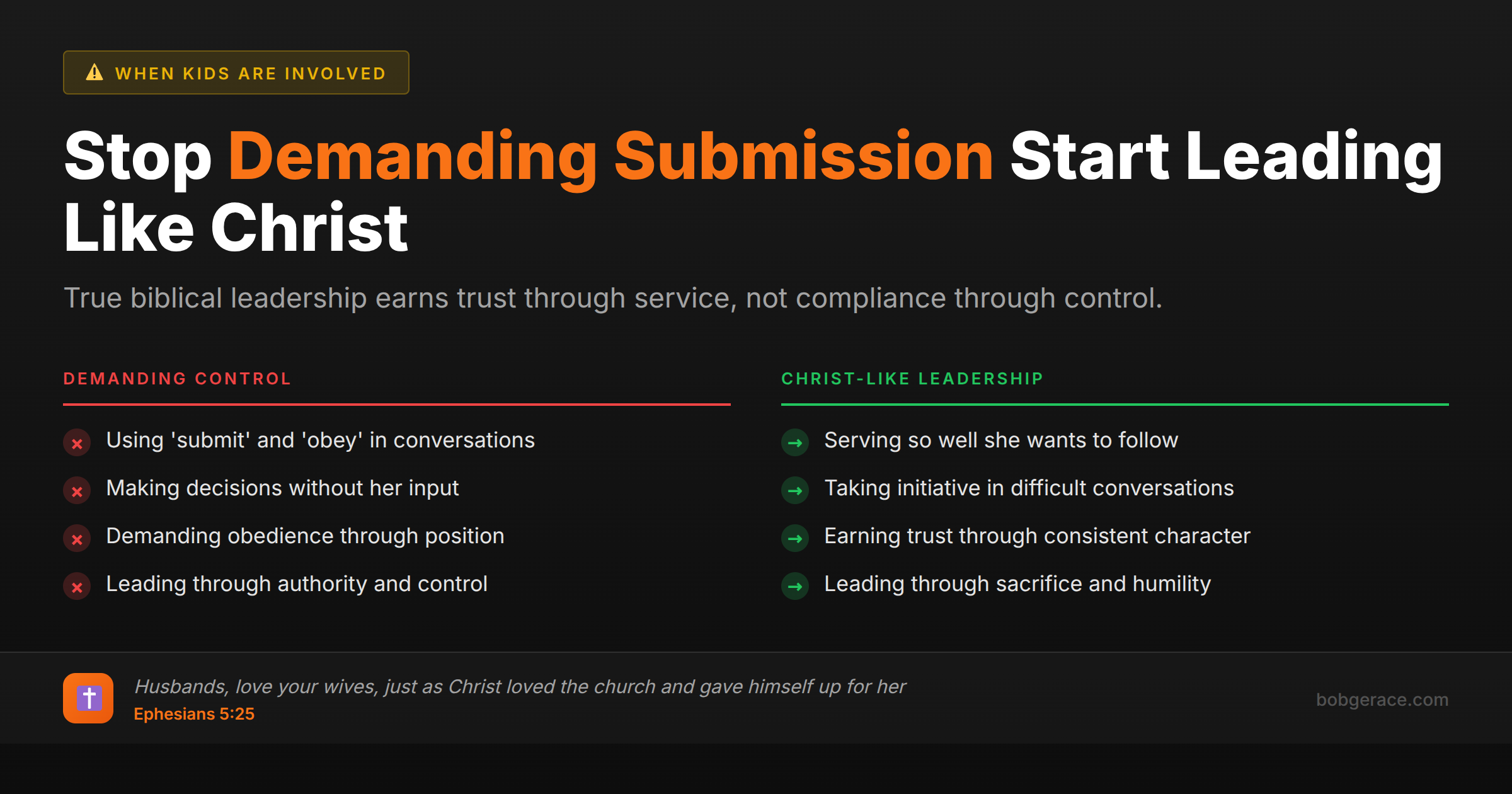
True biblical leadership in marriage isn't about demanding submission—it's about serving so well that your wife naturally wants to follow your lead. The moment you demand submission, you've stopped leading and started controlling. Christ-centered leadership means going first in sacrifice, humility, and love. Leadership without demanding submission looks like taking initiative in difficult conversations, making decisions with your wife's input and welfare in mind, and consistently choosing what's best for your family even when it costs you. It's about earning trust through consistent character, not demanding obedience through position. When you lead like Christ—who gave His life for the church—submission becomes a response to love, not compliance to authority.
The Full Picture
Here's what most men get wrong about biblical leadership: they think it's about having authority over their wives. That's not leadership—that's dictatorship. Real leadership in marriage is about taking responsibility for the direction and health of your relationship, not controlling your wife's every move.
Biblical leadership is servant leadership. Jesus didn't demand the disciples follow Him; He served them so well, loved them so deeply, and demonstrated such wisdom that they chose to follow. Your wife doesn't need another boss—she needs a partner who will step up when things get tough, make hard decisions when necessary, and always prioritize her wellbeing alongside the family's needs.
The difference between leading and demanding is this: leaders go first. They go first in apologizing. They go first in difficult conversations. They go first in sacrifice. They take initiative in solving problems rather than waiting for someone else to fix things. When you consistently demonstrate this kind of leadership, you create an environment where your wife feels safe to trust your judgment and follow your lead.
Demanding submission creates resistance. Think about it—when someone demands something from you, what's your natural response? You push back. But when someone serves you, loves you, and consistently demonstrates wisdom and care for your wellbeing, you naturally want to trust them and work with them.
True leadership in marriage is about creating unity, not compliance. It's about building a team where both partners contribute their strengths toward common goals, with the husband taking ultimate responsibility for the direction and outcomes.
What's Really Happening
From a psychological perspective, demanding submission activates what we call reactance theory—when people feel their autonomy is threatened, they push back harder. This creates a destructive cycle where the more a husband demands submission, the more his wife resists, leading to increased conflict and emotional distance.
Healthy leadership in marriage aligns with what research shows about effective leadership in any context: it's relational, not positional. Studies consistently show that the most effective leaders are those who demonstrate emotional intelligence, empathy, and servant-oriented behavior. These same principles apply in marriage.
When husbands lead through service rather than demand, it activates what psychologists call the reciprocity principle. When people feel genuinely cared for and served, they naturally want to reciprocate that care and cooperation. This creates a positive cycle of mutual respect and teamwork.
I often see couples where the husband's attempt to assert authority actually undermines his influence. True influence comes from trust, and trust is built through consistent demonstration of character, wisdom, and care for the other person's wellbeing. When a husband focuses on earning trust rather than demanding compliance, the entire dynamic of the marriage shifts toward partnership rather than power struggle.
The goal isn't submission for submission's sake—it's unity and teamwork where both partners feel valued and heard while having clear direction and decision-making processes.
What Scripture Says
Scripture gives us the perfect model for leadership in Ephesians 5:25-26: 'Husbands, love your wives, just as Christ loved the church and gave himself up for her to make her holy, cleansing her by the washing with water through the word.' Notice it doesn't say 'demand that your wives submit.' It says love them like Christ loved the church—sacrificially.
Jesus demonstrated true leadership in John 13:14-15: 'Now that I, your Lord and Teacher, have washed your feet, you also should wash one another's feet. I have set you an example that you should do as I have done for you.' Leadership means going first in service, not demanding others serve you.
Matthew 20:25-26 shows us the difference between worldly leadership and godly leadership: 'You know that the rulers of the Gentiles lord it over them, and their high officials exercise authority over them. Not so with you. Instead, whoever wants to become great among you must be your servant.' This applies directly to marriage leadership.
Philippians 2:3-4 gives us the heart attitude for true leadership: 'Do nothing out of selfish ambition or vain conceit. Rather, in humility value others above yourselves, not looking to your own interests but each of you to the interests of the others.'
Yes, Ephesians 5:22 talks about wives submitting to their husbands, but it's in the context of mutual submission (verse 21) and sacrificial love. Biblical submission is a response to loving leadership, not compliance to demanding authority. When you lead like Christ, submission becomes a natural response to love, not a burden imposed by position.
What To Do Right Now
-
1
Stop using words like 'submit' or 'obey' in conversations with your wife. Focus on serving and leading by example instead.
-
2
Take initiative in one area where your family needs leadership this week—whether it's planning finances, addressing a household issue, or having a difficult conversation.
-
3
Ask your wife's input on major decisions before making them, but take responsibility for the final decision and its outcomes.
-
4
Identify one way you can serve your wife today that demonstrates your love and commitment to her wellbeing.
-
5
Apologize first in your next disagreement, even if you don't think you're entirely wrong. Leaders go first in humility.
-
6
Have a conversation with your wife about your leadership style and ask how you can better serve her and your family's needs.
Related Questions
- What does 'love your wife as Christ loves the church' mean?
- What is biblical headship?
- What is 'servant leadership'?
- What does Christ's leadership model for husbands?
- What's the difference between authority and authoritarianism?
- How do I earn the right to lead?
- What does masculine leadership look like?
- How do I lead without controlling?
- What's the difference between leading and dominating?
- What does humble leadership look like?
Also find Bob on
Subscribe for weekly videos on Christian marriage.
Leading Your Actual Marriage
You don't need more theory—you need someone who knows your specific situation and can help you calibrate what servant leadership looks like in your home, with your wife, this week.
Talk to Bob →