What does initiating look like vs. dominating?
6 min read
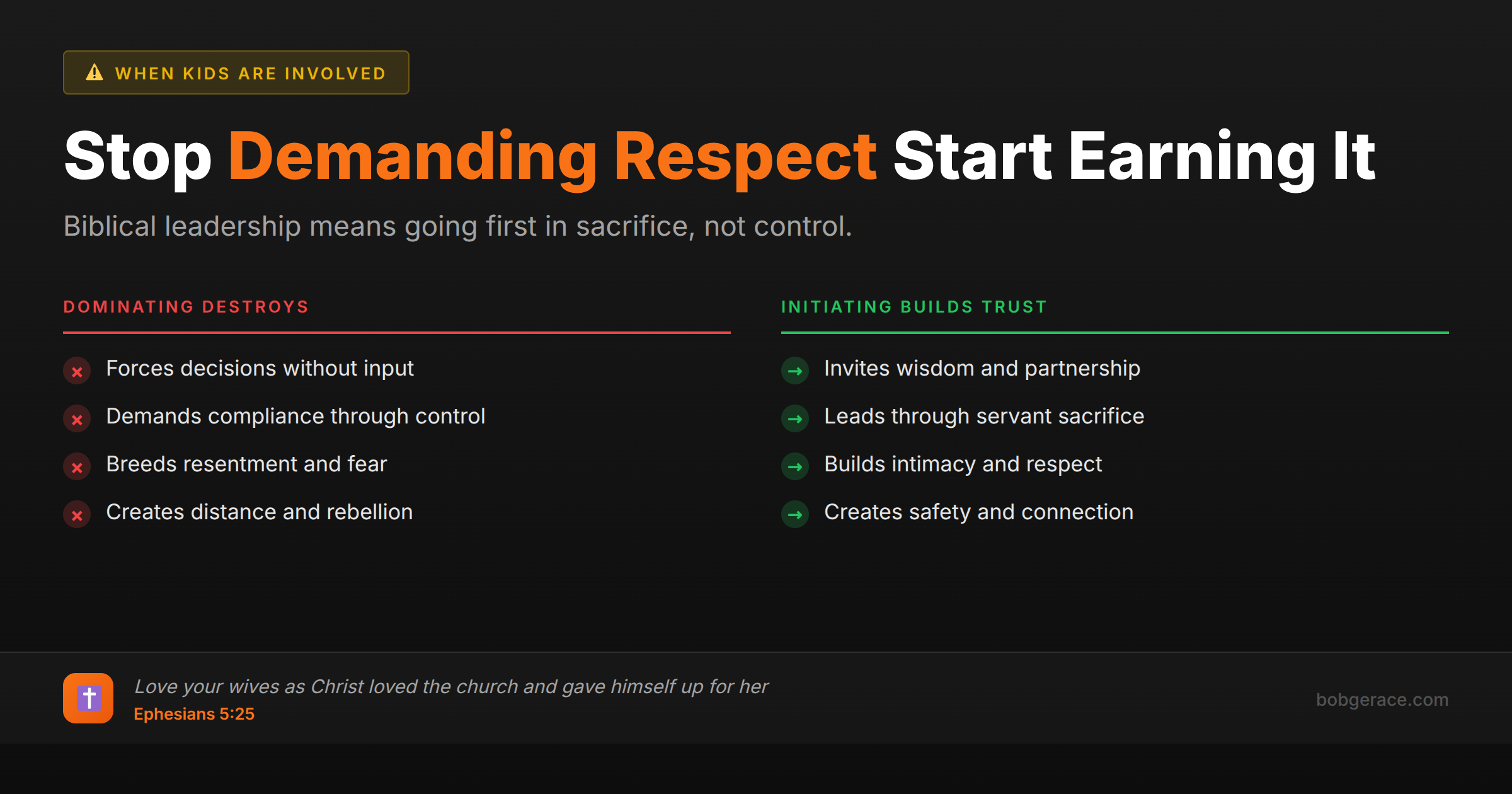
Initiating in marriage means taking loving responsibility to guide your family toward God's purposes through servant leadership, while dominating means forcing your will through control and selfishness. Biblical initiation invites input, considers your spouse's wisdom, and seeks what's best for the family. It looks like saying 'I think we should consider this direction - what are your thoughts?' rather than 'This is what we're doing.' The difference is profound: initiating builds trust and partnership, while dominating destroys intimacy and breeds resentment. True biblical leadership in marriage means you go first in sacrifice, service, and seeking God's will - not in demanding your way.
The Full Picture
The confusion between initiating and dominating has destroyed countless marriages. Many husbands think leadership means being the loudest voice in the room, making unilateral decisions, or always getting their way. Others swing to the opposite extreme, refusing to lead at all because they're afraid of being controlling.
Here's the truth: Biblical initiation is about taking responsibility, not taking control.
Initiating means you step up first. You're the one who brings up difficult conversations. You take the lead in planning your family's spiritual growth. You initiate conflict resolution when there's tension. You go first in apologizing when you're wrong. You take responsibility for the overall direction and health of your marriage.
Dominating, on the other hand, is about getting your way through force, manipulation, or intimidation. It's 'my way or the highway' thinking. It dismisses your spouse's input, ignores her wisdom, and treats her like a child rather than a partner.
The key difference is motive. Are you initiating to serve your family's best interests and God's purposes? Or are you pushing to get what you want? Are you leading your wife somewhere she wants to go, or dragging her somewhere she doesn't?
Healthy initiation actually creates more freedom for your spouse, not less. When you take loving responsibility for your marriage's direction, your wife feels secure enough to be fully herself. When you dominate, she either rebels or shuts down.
The strongest marriages have husbands who initiate with humility and wives who respond with trust. But this only works when the initiation comes from a heart of service, not selfishness.
What's Really Happening
From a psychological perspective, the difference between initiating and dominating lies in the underlying attachment patterns and emotional regulation. Men who dominate often operate from insecurity, using control as a way to manage their own anxiety about the relationship or their role as a husband.
Healthy initiation comes from secure attachment - the ability to take responsibility without needing to control outcomes. These men can handle their wife's disagreement or different perspective without feeling threatened. They understand that true influence comes through emotional connection, not coercion.
Dominating behaviors typically stem from one of two places: either deep insecurity masked by aggression, or learned patterns from family of origin where control was equated with love or safety. The man who dominates is often terrified of losing control because he's never learned to lead through relationship.
What I see in successful couples is that initiating husbands have developed emotional intelligence - they can read their spouse's emotional state, consider her perspective genuinely, and make decisions that account for both partners' needs. They've learned to regulate their own emotions first before trying to lead others.
The neurological research shows that when people feel controlled, their threat detection system activates, making them less likely to cooperate or connect. But when they feel invited and considered, their social engagement system comes online, fostering cooperation and intimacy.
This is why dominating 'works' in the short term but destroys relationships long-term, while healthy initiation builds stronger bonds over time.
What Scripture Says
Scripture gives us the perfect model for initiation without domination - and it's not what most people expect.
Ephesians 5:25-28 tells us *'Husbands, love your wives, just as Christ loved the church and gave himself up for her... In this same way, husbands ought to love their wives as their own bodies.'* Notice that Christ's leadership was defined by sacrifice, not control. He initiated our salvation by dying for us, not by forcing us to follow Him.
Philippians 2:3-4 says *'Do nothing out of selfish ambition or vain conceit. Rather, in humility value others above yourselves, not looking to your own interests but each of you to the interests of the others.'* True initiation considers your spouse's interests as more important than your own.
1 Peter 3:7 instructs husbands to *'be considerate as you live with your wives, and treat them with respect as the weaker partner and as heirs with you of the gracious gift of life.'* The word 'considerate' means to live with understanding - you can't dominate someone you're trying to understand.
Mark 10:42-44 shows Jesus saying *'You know that those who are regarded as rulers of the Gentiles lord it over them... Not so with you. Instead, whoever wants to become great among you must be your servant.'* Leadership in God's kingdom is about service, not superiority.
The biblical pattern is clear: initiate like Christ - with love, sacrifice, and service. Lead by going first in humility, not by demanding others follow through force.
What To Do Right Now
-
1
Before making any major decision, ask your wife: 'What are your thoughts on this?' and genuinely listen to her answer
-
2
Start initiating conversations about your marriage's direction: 'Where do you see us in five years?' rather than telling her where you think you should go
-
3
When conflict arises, initiate resolution by saying 'Help me understand your perspective' instead of defending your position first
-
4
Take responsibility for planning regular date nights and spiritual growth activities, but ask for her input on what she'd enjoy
-
5
Practice saying 'I was wrong' first when you mess up - initiate humility and reconciliation
-
6
Create a weekly 'marriage check-in' where you initiate conversations about how you're both feeling and what you both need
Related Questions
- What is biblical headship?
- What does 'love your wife as Christ loves the church' mean?
- What is 'servant leadership'?
- What's the difference between authority and authoritarianism?
- How do I lead without demanding submission?
- What does Christ's leadership model for husbands?
- What does masculine leadership look like?
- How do I lead without controlling?
- What's the difference between leading and dominating?
- What is 'secure-base leadership'?
Also find Bob on
Subscribe for weekly videos on Christian marriage.
Getting This Right in Your Marriage
You know the concept. But applying it to your actual wife, your specific dynamic, your history—that's where most men get stuck. A coach helps you see what you can't see alone.
Talk to Bob →