What does 'earning back' trust actually look like?
6 min read
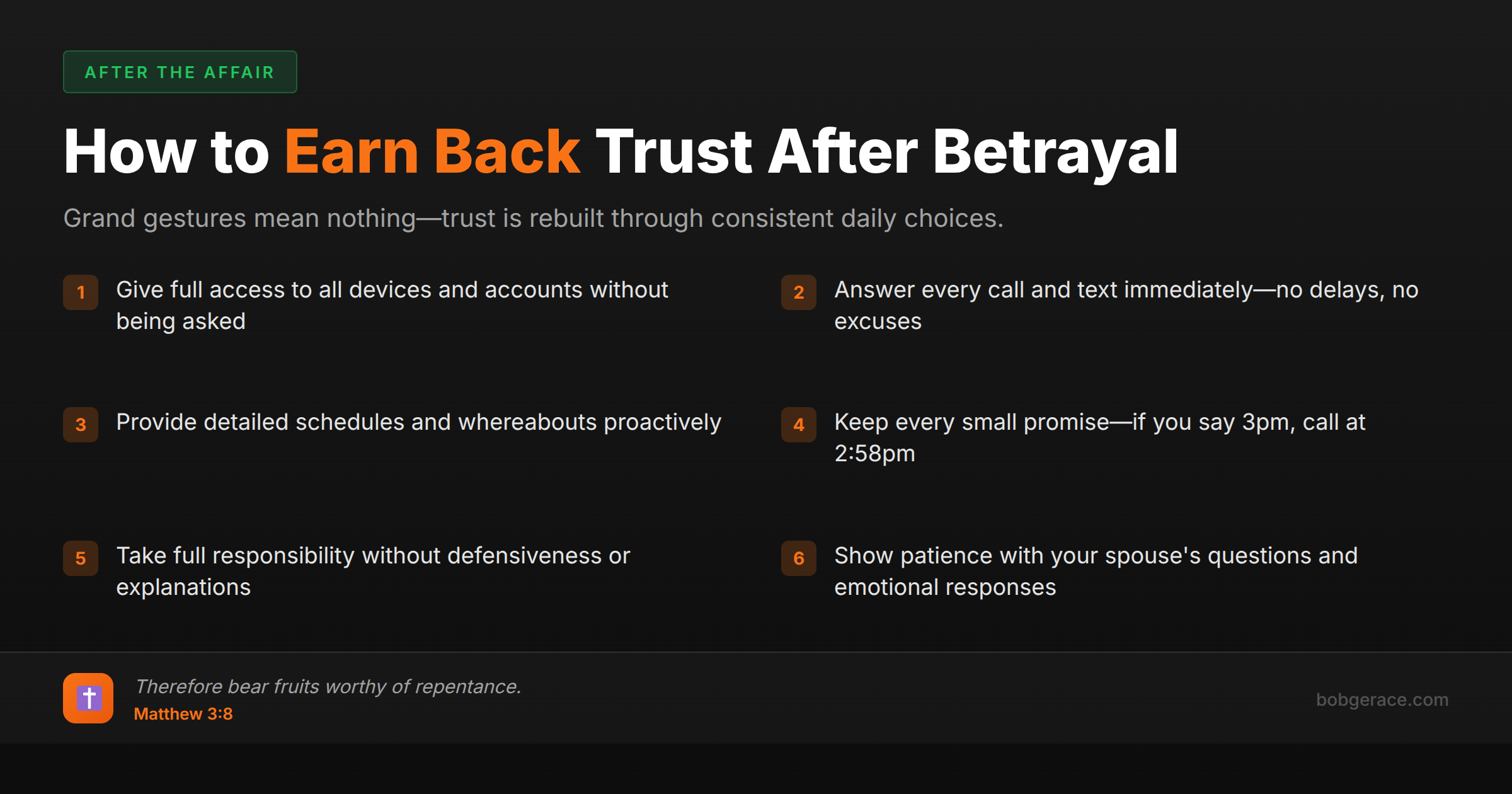
Earning back trust isn't about grand gestures or empty promises—it's about consistent, verifiable actions over time. The unfaithful spouse must demonstrate transparency through open access to devices, detailed accountability of time and whereabouts, and proactive communication without being asked. This includes immediately answering calls/texts, sharing passwords, and providing concrete evidence of changed behavior patterns. The process requires the betraying partner to take full responsibility without defensiveness, show genuine remorse through actions rather than words, and patiently endure the injured spouse's emotional responses without trying to control the timeline. Trust is rebuilt through predictable reliability in small daily choices, not dramatic declarations.
The Full Picture
Trust isn't an emotion you can manufacture—it's a conclusion your spouse reaches based on observable evidence over time. After infidelity, many couples get stuck because they're working with Hollywood notions of trust restoration rather than the clinical reality.
The unfaithful spouse often thinks: "I ended the affair, I'm being nice, I said I'm sorry—why doesn't she trust me yet?" This reveals a fundamental misunderstanding. Trust isn't restored by the absence of bad behavior; it's rebuilt through the consistent presence of trustworthy behavior.
The betrayed spouse experiences: A nervous system in hypervigilance mode, scanning for threats and inconsistencies. Their brain is literally rewired to detect deception. They're not being "paranoid"—they're being protective.
What earning trust actually requires: - Complete transparency in all communications and whereabouts - Immediate, detailed answers to all questions without defensiveness - Proactive sharing of information before being asked - Open access to all devices, accounts, and personal spaces - Consistent follow-through on every commitment, no matter how small - Patient endurance of the betrayed spouse's emotional responses - Professional help to address the character issues that enabled the affair
The timeline isn't weeks or months—it's typically 12-24 months of consistent behavior. You can't rush neurological healing or shortcut the process of proving your character has genuinely changed.
What's Really Happening
From a neurobiological perspective, betrayal trauma literally rewires the brain's threat detection system. The betrayed spouse's amygdala becomes hyperactive, constantly scanning for signs of deception. This isn't a choice—it's a survival mechanism.
Trust restoration requires what we call 'earned security.' The unfaithful partner must understand they're not just apologizing for past actions; they're proving their future reliability. This happens through three critical phases:
Phase 1: Crisis Stabilization (0-6 months) Complete transparency, immediate cessation of all deceptive behaviors, and consistent accountability. The unfaithful spouse must demonstrate they can be trusted with basic commitments.
Phase 2: Rebuilding Patterns (6-18 months) Proving reliability through daily choices, developing new communication patterns, and addressing underlying character issues through therapy or //blog.bobgerace.com/christian-marriage-coaching-investment-why-free-fails/:coaching.
Phase 3: Integration (18+ months) Demonstrating sustained change even when not being monitored, showing internalized values rather than compliance-based behavior.
The most common mistake is the unfaithful spouse becoming impatient with their partner's 'slow' progress. But the injured party's cautiousness isn't pathological—it's protective. Trust is rebuilt at the speed of safety, not the speed of the guilty party's guilt relief.
What Scripture Says
Scripture is clear that trust must be earned through consistent righteous living, not just requested through repentant words. The Bible shows us that genuine repentance produces observable fruit.
"Therefore bear fruits worthy of repentance." (Matthew 3:8) John the Baptist demanded evidence of changed hearts. Similarly, earning trust requires producing the 'fruit' of trustworthy behavior consistently over time.
"Let your yes be yes and your no be no." (Matthew 5:37) Jesus emphasized reliability in speech and commitment. Trust is rebuilt through absolute integrity in small daily promises—showing up when you say you will, calling when you promise to call.
"Whoever is faithful in very little is also faithful in much, and whoever is unrighteous in very little is also unrighteous in much." (Luke 16:10) Trust is earned through faithfulness in seemingly insignificant matters. Your spouse watches how you handle small commitments to assess your character.
"Above all else, guard your heart, for everything you do flows from it." (Proverbs 4:23) The heart work—addressing the character issues that enabled deception—is essential. External compliance without heart change won't produce lasting trust.
"The simple believe anything, but the prudent give thought to their steps." (Proverbs 14:15) Scripture validates the betrayed spouse's need for evidence and caution. Blind trust isn't biblical; proven trustworthiness is.
"A man's heart plans his way, but the Lord directs his steps." (Proverbs 16:9) Trust restoration requires both human effort and divine transformation of character.
What To Do Right Now
-
1
Implement radical transparency immediately - Give full access to phone, email, social media, and provide detailed daily schedules without being asked
-
2
Answer every question completely - No matter how many times asked, respond with patience and detailed honesty without defensiveness or sighing
-
3
Keep every small commitment - If you say you'll call at 3pm, call at 2:58pm. Reliability in little things rebuilds trust in big things
-
4
Take responsibility without excuses - Stop explaining why you did what you did and focus on proving who you're becoming
-
5
Get professional help for your character - Work with a coach or counselor to address the internal issues that enabled deception
-
6
Be patient with your spouse's timeline - Trust returns at the speed of safety, not the speed of your guilt relief. Their caution is wisdom, not weakness
Related Questions
- What does rebuilding trust require from her?
- What is the 'trust timeline' post-affair?
- What are markers of genuine remorse vs. guilt?
- How do I trust her again?
- What does affair recovery therapy look like?
- Should she cut all contact with him?
- What does real transformation look like?
- How do I know if he's really changing?
- What are the markers of genuine behavior change?
- What does proactive repair look like?
Also find Bob on
Subscribe for weekly videos on Christian marriage.
Stuck on What Trust Looks Like in Your Marriage?
A coach who knows your story can tell you what's actually working and what's theater. You don't have to guess if you're doing enough.
Talk to Bob →