What prayers help with forgiveness?
6 min read
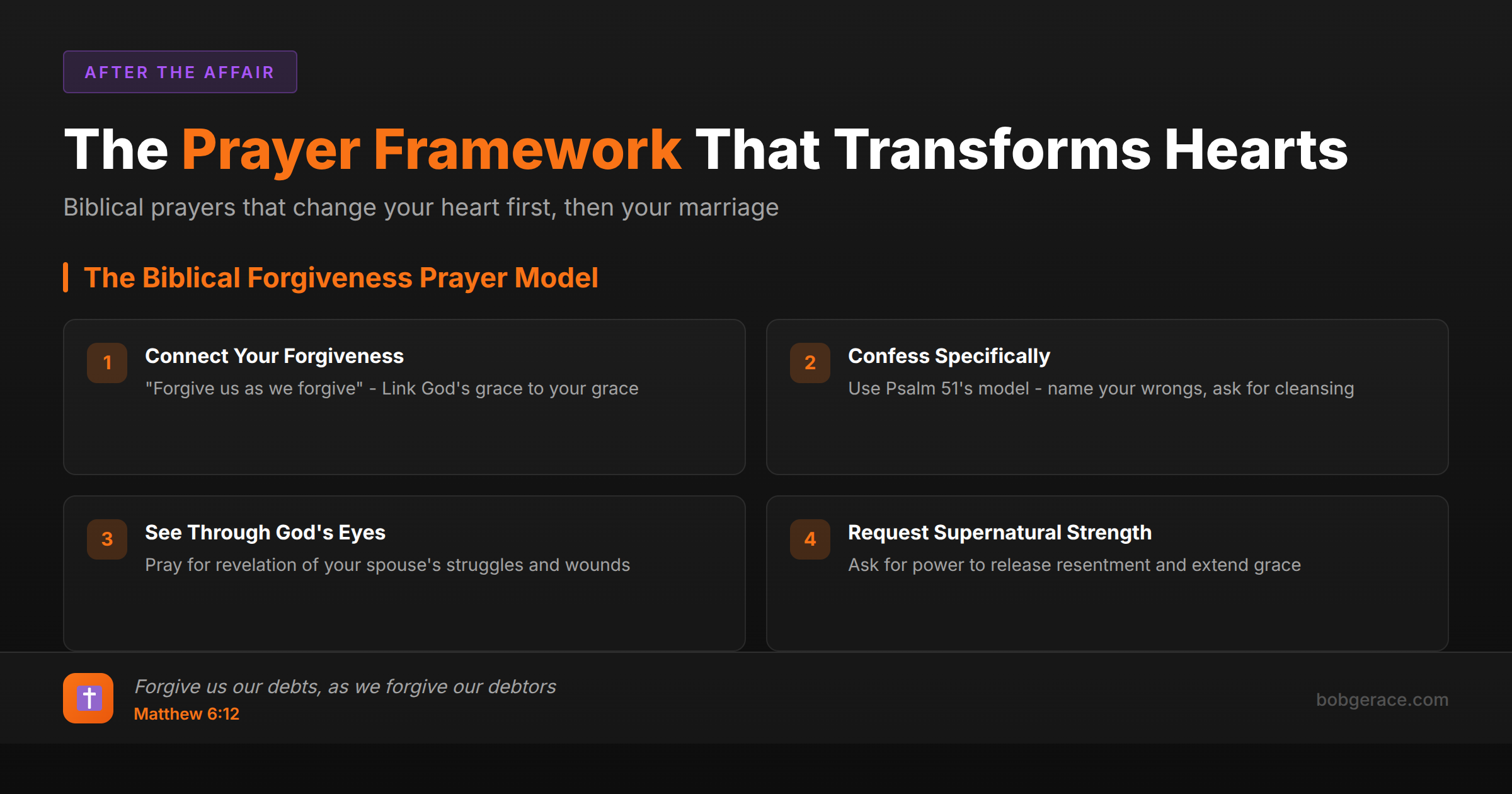
The most powerful prayers for forgiveness start with the Lord's Prayer model: "Forgive us our debts, as we forgive our debtors." This connects God's forgiveness to our willingness to forgive others. David's prayer in Psalm 51 provides another framework - acknowledging specific wrongs, asking for cleansing, and requesting a renewed heart. The key isn't finding perfect words, but praying with genuine humility and dependence on God's grace. Effective forgiveness prayers include confession of your own faults, asking God to help you see your spouse through His eyes, and requesting supernatural strength to release resentment. Prayer changes your heart first, which then transforms your ability to extend grace to your spouse.
The Full Picture
Prayer is the engine that powers genuine forgiveness in marriage. Without it, we're left trying to manufacture grace from our own limited emotional reserves - and that well runs dry fast when we're hurt. But here's what most couples miss: forgiveness prayers aren't about convincing God to fix your spouse. They're about positioning your heart to receive God's perspective and power.
The Lord's Prayer gives us the foundational model. When Jesus taught us to pray "forgive us our debts, as we forgive our debtors," He wasn't being poetic. He was establishing a spiritual law: our experience of God's forgiveness flows directly into our capacity to forgive others. This prayer reminds us that we're all debtors before God, which levels the playing field in marriage conflicts.
David's prayer in Psalm 51 shows us how to pray when we've been the one who caused harm. Notice his progression: he acknowledges his sin specifically, asks for cleansing, and requests a new heart. This isn't generic "I'm sorry" praying - it's surgical honesty that opens the door for real transformation.
But what about when you're the wounded party? Here, prayers like Stephen's final words - "Lord, do not hold this sin against them" - become your template. These aren't feelings-based prayers. They're faith declarations that God's justice and mercy are better than your desire for revenge. The prayer changes you first, then creates space for healing in your marriage.
What's Really Happening
From a therapeutic standpoint, prayer for forgiveness creates measurable changes in both brain function and emotional regulation. When clients engage in specific forgiveness prayers, we see decreased activation in the brain's anger centers and increased activity in areas associated with empathy and emotional control.
The structured nature of biblical prayers provides what we call "cognitive scaffolding" - a framework that helps organize chaotic emotions during //blog.bobgerace.com/romans-7-marriage-crisis-scripture-control/:crisis. When someone is deeply hurt, their ability to think clearly is compromised. Having prayer templates like the Lord's Prayer or Psalm 51 gives them concrete words when their own emotional vocabulary fails them.
More importantly, these prayers redirect focus from rumination about the offense to connection with a transcendent source of healing. Rumination - that endless mental replay of hurts - keeps couples stuck in victim-perpetrator cycles. Prayer interrupts this pattern by engaging what researchers call "meaning-making" - the process of finding purpose and perspective beyond immediate pain.
I've observed that couples who pray together for forgiveness, even when they don't feel like it, report faster emotional recovery and stronger relational bonds than those who rely solely on communication techniques. Prayer appears to access resources for healing that exist beyond our natural emotional capacity.
What Scripture Says
Scripture gives us specific prayer models for forgiveness, not vague spiritual platitudes. Matthew 6:12 - "Forgive us our debts, as we forgive our debtors." This isn't just part of a prayer; it's establishing the connection between receiving and giving grace. When you pray this over your marriage, you're acknowledging that your ability to forgive flows from your experience of being forgiven.
Psalm 51:10-12 shows David praying, "Create in me a clean heart, O God, and renew a right spirit within me... Restore to me the joy of your salvation." Notice he's not asking God to change Bathsheba or fix his circumstances. He's asking for internal transformation that will change how he relates to others.
Luke 23:34 records Jesus praying, "Father, forgive them, for they know not what they do." This prayer acknowledges that people who hurt us often don't fully understand the damage they're causing. It's a prayer that chooses mercy over justice, trusting God to handle what we cannot.
Ephesians 4:32 gives us both the command and the power source: "Be kind to one another, tenderhearted, forgiving one another, as God in Christ forgave you." Your prayers for forgiveness should regularly return to this truth - God's forgiveness of you is the fuel for forgiving your spouse.
1 John 1:9 provides the confession template: "If we confess our sins, he is faithful and just to forgive us our sins and to cleanse us from all unrighteousness." When you need to ask forgiveness, this verse guides both your prayer to God and your approach to your spouse.
What To Do Right Now
-
1
Start with the Lord's Prayer daily, specifically focusing on the forgiveness line and what it means for your marriage
-
2
Use Psalm 51 as a template when you need to confess your own wrongs - be specific about what you've done
-
3
Pray Jesus' words from the cross when your spouse has hurt you: 'Father, forgive them, for they don't fully understand'
-
4
Ask God to show you your spouse through His eyes - pray for revelation of their struggles and wounds
-
5
Pray together as a couple, even if it feels awkward - take turns using biblical prayer models
-
6
End each forgiveness prayer by thanking God for His forgiveness of you - this keeps your heart humble and gracious
Related Questions
- What does biblical forgiveness require of me?
- Can I forgive without trusting?
- How do I forgive when she hasn't fully repented?
- What does 'seventy times seven' mean practically?
- How do I forgive when I'm still hurt?
- What does real forgiveness look like?
- How do I pray through this?
- How do I pray when I'm angry at God?
- What is biblical lament?
- How do I pray for my wife when she's hurting me?
Also find Bob on
Subscribe for weekly videos on Christian marriage.
Praying it is one thing. Living it is another.
A coach who knows your marriage can help you turn forgiveness from a concept you pray about into something you actually do with her.
Talk to Bob →