Can adult attachment patterns change?
6 min read
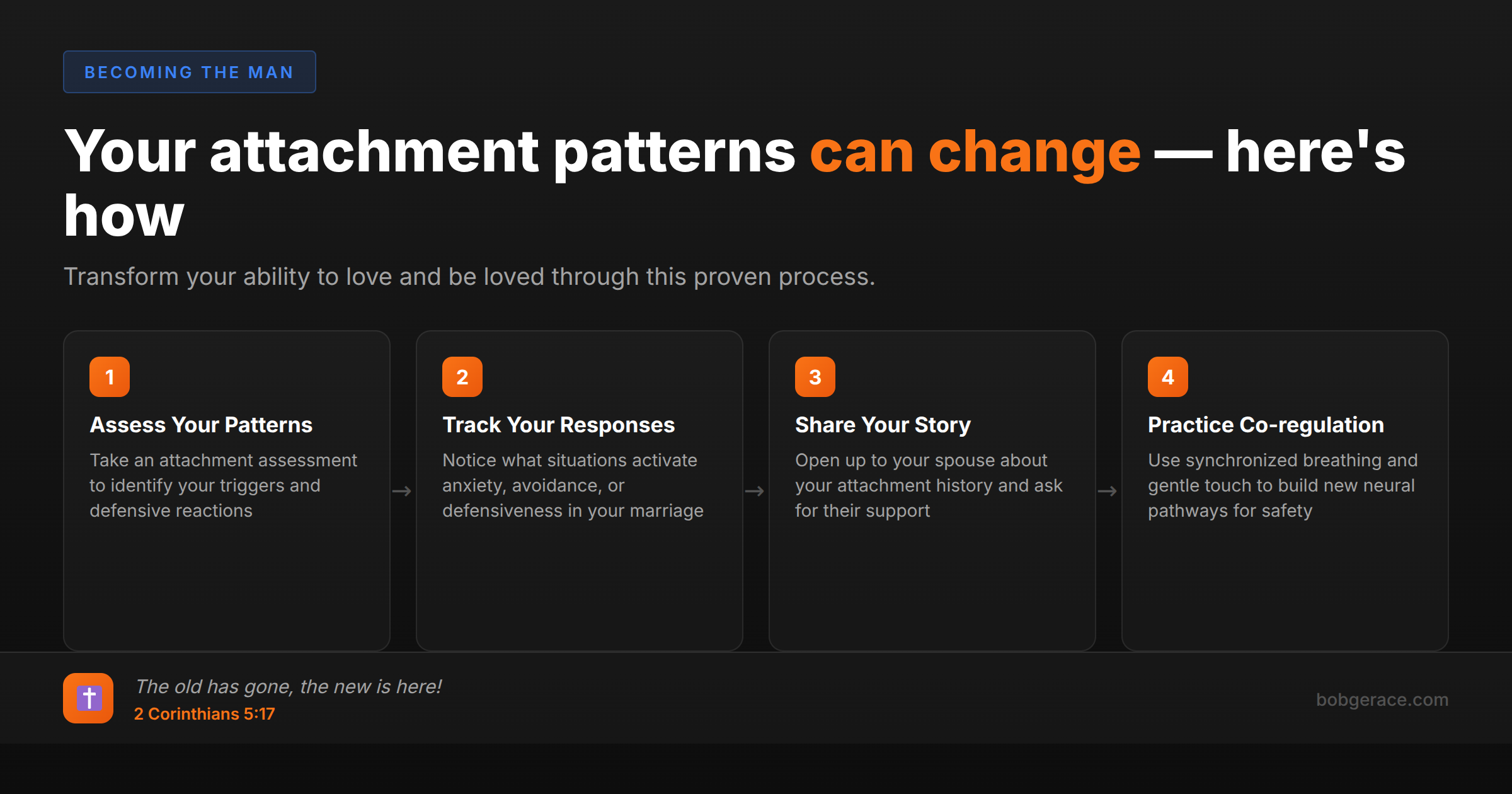
Yes, adult attachment patterns absolutely can change, but it requires intentional work and often significant time. Your early attachment experiences create neural pathways and relational templates, but these aren't set in stone. Through consistent, corrective relationship experiences - whether with a spouse, therapist, or trusted friends - you can literally rewire your brain for more secure attachment. The key is understanding that change happens gradually through repeated positive interactions that challenge your old assumptions about relationships. When you experience consistent safety, attunement, and reliability from others, your nervous system begins to relax its defensive patterns. This process, called "earned security," allows you to develop the capacity for deeper intimacy and emotional regulation that may have been missing from your early years.
The Full Picture
Your attachment style isn't your destiny - it's your starting point. Research shows that approximately 20-25% of adults naturally develop "earned security" over their lifetime, moving from insecure to secure attachment through healing relationships and personal growth work.
The science behind attachment change is compelling. Your brain maintains neuroplasticity throughout your life, meaning new experiences can literally reshape the neural networks that govern how you connect with others. The implicit memories and survival strategies you developed as a child can be updated with new information about safety and trust.
However, change isn't automatic or easy. Insecure attachment patterns developed as brilliant adaptations to difficult circumstances. Your anxious vigilance or avoidant self-protection served important purposes. These patterns feel familiar and safe, even when they're causing problems in your marriage.
The process typically involves three stages: First, developing awareness of your patterns and triggers. Second, learning to pause and choose different responses in activated moments. Third, gradually building new neural pathways through repeated experiences of safety and connection.
Your marriage can be a powerful healing laboratory. When your spouse learns to respond to your attachment needs with consistency and patience, it creates opportunities for corrective emotional experiences. But this requires both partners to understand the process and commit to doing their own work.
Professional support accelerates the process. Therapists trained in attachment theory can help you identify blind spots, process old wounds, and practice new ways of relating in a safe environment. The combination of individual healing work and couples therapy often produces the most sustainable change.
What's Really Happening
From a clinical perspective, attachment change is not only possible but predictable when certain conditions are met. The Adult Attachment Interview research demonstrates that individuals can move from insecure to secure attachment through what we call "earned security."
The neurobiological reality is that your attachment system remains active and adaptable throughout your lifetime. The right hemisphere of your brain, which houses attachment patterns, continues to develop well into your thirties and beyond. This means the implicit memories and emotional responses that drive your attachment behaviors can be modified through new relational experiences.
I observe three critical factors in successful attachment change: First, sufficient safety and regulation in your current relationships to allow your nervous system to come out of chronic defensive states. Second, conscious awareness of your attachment triggers and the ability to mentalize - to think about thinking and understand the mental states driving behavior. Third, repeated corrective experiences that challenge your Internal Working Models about self and others.
The process isn't linear. Clients often experience what feels like regression when stress increases or old triggers activate. This is normal and expected. Your nervous system will default to familiar patterns when overwhelmed, but recovery time typically decreases as new neural pathways strengthen.
Couples therapy provides an ideal context for attachment healing because it allows both partners to practice new ways of seeking and providing comfort in real-time, with professional guidance to navigate the inevitable ruptures and repairs that facilitate growth.
What Scripture Says
Scripture consistently affirms that transformation and renewal are not only possible but central to God's design for human flourishing. The Bible speaks directly to our capacity for change and healing in relationships.
God specializes in making all things new. "Therefore, if anyone is in Christ, the new creation has come: The old has gone, the new is here!" (2 Corinthians 5:17). This isn't just about salvation - it's about the ongoing transformation of how we think, feel, and relate to others.
Our minds can be literally renewed. "Do not conform to the pattern of this world, but be transformed by the renewing of your mind" (Romans 12:2). The Greek word for "transformed" (metamorphoo) suggests a complete change in form - the same process we see in attachment healing as new neural pathways replace old patterns.
Perfect love drives out fear. "There is no fear in love. But perfect love drives out fear, because fear has to do with punishment. The one who fears is not made perfect in love" (1 John 4:18). Insecure attachment is essentially organized around fear - fear of abandonment or engulfment. God's love, experienced through safe human relationships, gradually heals these fears.
We're designed for deep connection. "As iron sharpens iron, so one person sharpens another" (Proverbs 27:17). The friction and growth that happens in intimate relationships isn't just inevitable - it's part of God's design for our sanctification and healing.
Healing happens in community. "Carry each other's burdens, and in this way you will fulfill the law of Christ" (Galatians 6:2). Your attachment wounds were created in relationship, and they heal in relationship through the patient love of others who reflect God's character.
What To Do Right Now
-
1
Take an attachment assessment to identify your current patterns and triggers - awareness is the foundation of change.
-
2
Begin tracking your attachment responses in your marriage - notice what situations activate anxiety, avoidance, or defensive reactions.
-
3
Share your attachment history with your spouse and ask them to learn about how to support your healing process.
-
4
Practice co-regulation techniques like synchronized breathing or gentle touch to build new neural pathways for safety and connection.
-
5
Develop a daily mindfulness or prayer practice to increase your capacity for emotional awareness and self-regulation.
-
6
Consider working with a therapist trained in attachment theory to accelerate your healing process and address deeper wounds.
Related Questions
- What attachment style did I develop in childhood?
- What is 'earned secure' vs. 'earned insecure'?
- What is 'internal working model' and how do I change mine?
- How do childhood attachment wounds show up in marriage?
- What did I learn about love from my parents?
- What attachment injuries did I experience?
- What is 'attachment injury' and did I cause one?
- What are 'attachment injuries' and how many did I cause?
- How does attachment style relate to affair risk?
- What does secure attachment behavior look like in him?
Also find Bob on
Subscribe for weekly videos on Christian marriage.
Your Marriage Needs More Than Theory
Understanding attachment is one thing. Rewiring it in your specific relationship—with your wife's patterns, your triggers, your history—takes a coach who knows your story.
Talk to Bob →