How do I stop exploding?
6 min read
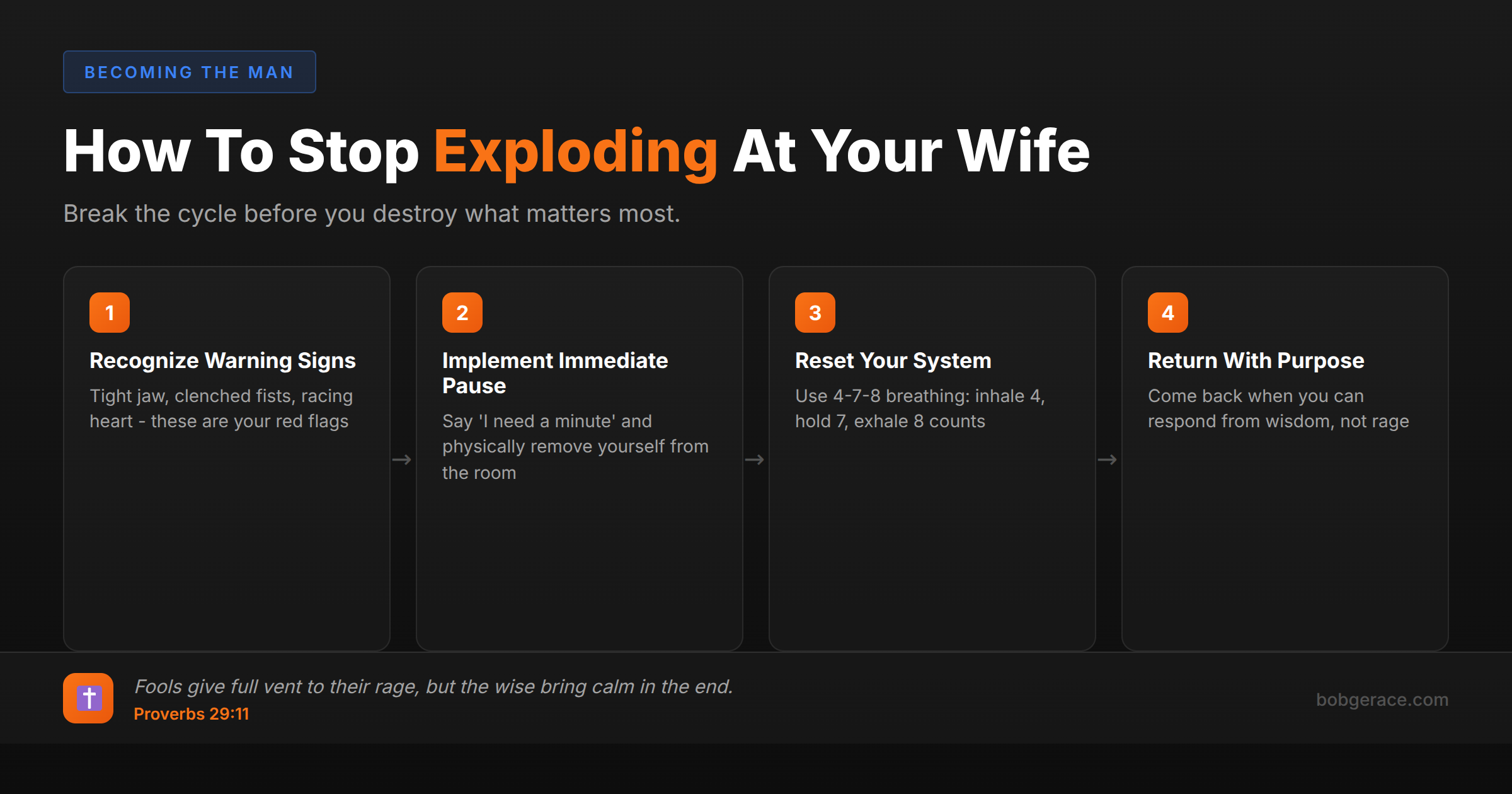
The key to stopping explosive anger is recognizing your triggers and implementing a pause system before you reach the point of no return. Start by identifying your physical warning signs - tight jaw, clenched fists, racing heart - and use these as your early warning system. When you feel these signals, immediately remove yourself from the situation and use deep breathing techniques to reset your nervous system. This isn't about suppressing anger forever - it's about creating space between the trigger and your response. Most explosions happen when we react from our emotional brain rather than our thinking brain. By developing specific strategies like counting to ten, taking a walk, or using a code word with your spouse, you can interrupt the explosion cycle and respond more thoughtfully.
The Full Picture
Explosive anger doesn't happen in a vacuum - it's usually the result of accumulated stress, unmet needs, and learned patterns that have been reinforced over time. Many people who struggle with anger explosions describe feeling like they go from zero to one hundred instantly, but the reality is there are always warning signs we've learned to ignore.
The Explosion Cycle typically follows this pattern: trigger event → physical tension → negative self-talk → point of no return → explosion → shame and regret. The good news is you can interrupt this cycle at multiple points, but it requires awareness and practice.
Common Triggers include feeling disrespected, overwhelmed, unheard, or criticized. Sometimes the trigger seems minor - a messy kitchen or forgotten errand - but it's often the final straw on top of deeper frustrations. Understanding your specific triggers helps you prepare better responses.
The Real Cost of explosive anger extends far beyond the immediate damage. Each explosion erodes trust in your relationship, teaches your spouse to walk on eggshells, and reinforces the neural pathways that make future explosions more likely. Your spouse may start avoiding important conversations or withdraw emotionally to protect themselves.
Physical Impact is significant too. Explosive anger floods your system with stress hormones, impacts your health, and can take hours or even days for your nervous system to fully calm down. During this time, you're more susceptible to additional triggers.
The path forward requires acknowledging that explosive anger is a choice - even when it doesn't feel like one - and committing to developing new response patterns that serve your marriage and your own well-being.
What's Really Happening
From a neurological perspective, explosive anger represents your amygdala (the brain's alarm system) hijacking your prefrontal cortex (your thinking brain). When you're triggered, your brain perceives a threat and floods your system with stress hormones like cortisol and adrenaline, preparing you for fight-or-flight.
This process happens in milliseconds, which is why explosions feel so automatic. However, there's actually a brief window - usually 6-20 seconds - between the initial trigger and the flood of chemicals that make rational thinking nearly impossible. This is your intervention window.
Trauma and Early Learning often play significant roles in explosive anger patterns. If you grew up in a household where explosive anger was modeled, your brain learned this as a normal response to stress. Additionally, individuals with histories of trauma may have hyperactive threat-detection systems, making them more prone to explosive reactions.
The Physiology of Recovery is equally important to understand. After an anger explosion, it takes 20-40 minutes for stress hormones to clear your system. This is why trying to resolve conflicts immediately after an explosion rarely works - your brain literally isn't capable of rational problem-solving during this time.
Neuroplasticity gives us hope: the brain can form new neural pathways at any age. Each time you successfully interrupt the explosion cycle, you're literally rewiring your brain's default responses. With consistent practice, what feels impossible now can become your new automatic response.
Successful anger management requires both top-down strategies (cognitive techniques like reframing thoughts) and bottom-up approaches (physical techniques like breathing and movement) to address the full spectrum of this neurobiological process.
What Scripture Says
Scripture doesn't condemn anger itself - even Jesus expressed anger when he cleansed the temple. However, God's Word is clear about the importance of controlling our anger and the destruction that comes from explosive rage.
Proverbs 29:11 tells us, "Fools give full vent to their rage, but the wise bring calm in the end." This verse distinguishes between foolish, uncontrolled anger and the wisdom of bringing calm to volatile situations. Explosive anger is often the response of someone who hasn't learned to process their emotions in healthy ways.
James 1:19-20 provides a practical framework: "My dear brothers and sisters, take note of this: Everyone should be quick to listen, slow to speak and slow to become angry, because human anger does not produce the righteousness that God desires." The order matters - listen first, speak carefully, and be slow to anger.
Ephesians 4:26-27 gives us crucial guidance: "In your anger do not sin: Do not let the sun go down while you are still angry, and do not give the devil a foothold." This passage acknowledges that anger is a normal emotion but warns against letting it control us or giving Satan an opportunity to create division.
Proverbs 16:32 reminds us of the strength required for self-control: "Better a patient person than a warrior, one with self-control than one who takes a city." God values the discipline of emotional regulation as a sign of true strength, not weakness.
Galatians 5:22-23 lists self-control as a fruit of the Spirit, meaning that as we grow in our relationship with God, He develops this capacity within us. This isn't about white-knuckling through anger, but allowing God's Spirit to transform our responses.
God desires to use even our struggle with anger to make us more like Christ, teaching us patience, humility, and love in the process.
What To Do Right Now
-
1
Create an early warning system by identifying your specific physical signs of building anger (tight shoulders, clenched jaw, rapid heartbeat)
-
2
Develop a pause protocol: when you notice warning signs, immediately say 'I need a minute' and remove yourself from the situation for 10-20 minutes
-
3
Practice the 4-7-8 breathing technique - inhale for 4 counts, hold for 7, exhale for 8 - to activate your parasympathetic nervous system
-
4
Identify your top 3 anger triggers and create specific response plans for each one before you're triggered again
-
5
Establish a repair ritual with your spouse for after explosions occur - specific steps for accountability, apology, and reconnection
-
6
Track your anger patterns for one week, noting triggers, warning signs, and outcomes to identify specific areas for improvement
Related Questions
Break the Explosion Cycle Before It's Too Late
Don't let explosive anger destroy your marriage. Get personalized strategies that actually work for your specific triggers and situation.
Get Help Now →