She's indifferent — not angry, just empty
6 min read
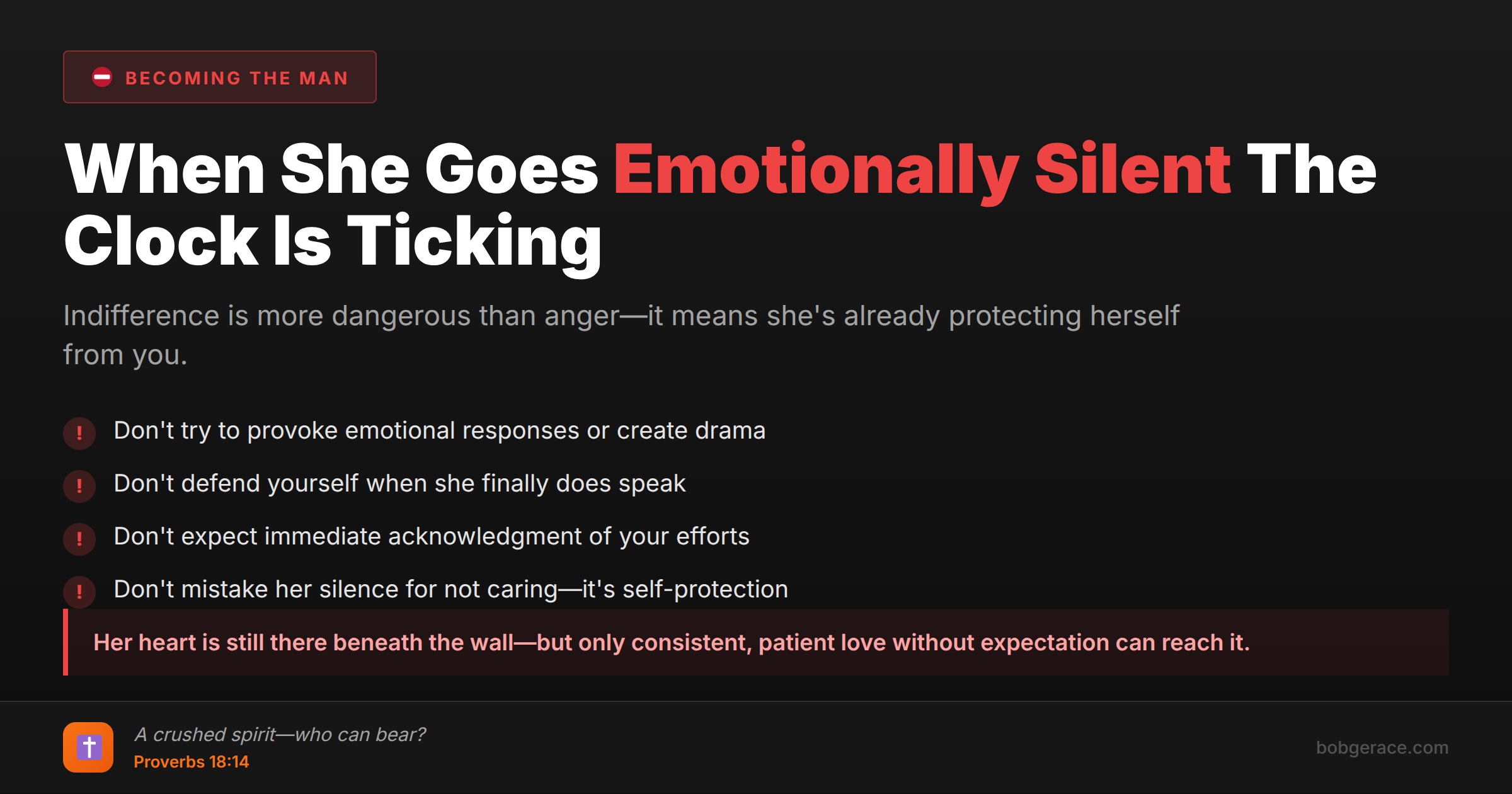
When your wife shows indifference instead of anger, you're witnessing emotional shutdown—a protective mechanism that kicks in when someone feels overwhelmed, unheard, or hopeless about change. This emptiness is actually more concerning than anger because anger shows she still cares enough to fight. Indifference suggests she's protecting herself by disconnecting emotionally. This emotional wall didn't appear overnight. It's the result of repeated disappointments, unresolved conflicts, or feeling like her voice doesn't matter. She's not trying to punish you—she's trying to survive emotionally. The good news is that underneath that protective barrier, her heart is still there, waiting for safety and genuine connection to return.
The Full Picture
Indifference is the sound of a heart protecting itself. When your wife appears emotionally empty rather than angry, you're seeing the end result of a process that's been building for months or even years. She didn't start here—she likely began with attempts to communicate, express needs, or work through issues. When those efforts repeatedly fell flat or were met with defensiveness, minimization, or empty promises, something inside began to shut down.
This emotional withdrawal serves a purpose. It's her psyche's way of protecting her from further disappointment and pain. Getting angry requires emotional energy and hope that things can change. Indifference requires neither. It's a survival mode that allows her to function while keeping her heart safe from additional wounds.
The transition from engagement to emptiness follows a predictable pattern. First comes frustration and attempts to be heard. Then anger as those attempts are dismissed or ineffective. Next comes bargaining—maybe lowering expectations or trying different approaches. When nothing works, depression and sadness set in. Finally, to protect herself from the constant cycle of hope and disappointment, emotional numbness takes over.
This isn't about you being a terrible person. It's about patterns of interaction that have created an environment where she doesn't feel safe to be emotionally open. Maybe conversations consistently turn into arguments. Perhaps promises for change are made but not followed through. Or it could be that everyday stresses have overwhelmed your connection, leaving her feeling like a roommate rather than a cherished wife.
The challenge is that indifference feels safer than vulnerability. Once someone reaches this emotional state, taking down the wall feels risky. Why open up again just to potentially get hurt? This is why your approach to reconnection matters so much—it needs to demonstrate genuine change, not just good intentions.
What's Really Happening
From a clinical perspective, emotional indifference in relationships often represents what we call 'emotional numbing'—a dissociative response to chronic relational stress. When someone experiences repeated emotional injuries without adequate repair, the nervous system adapts by essentially turning down the volume on all emotions, not just the painful ones.
This isn't conscious rejection—it's neurobiological protection. The brain's limbic system, responsible for emotional processing, begins to interpret the relationship as a source of threat rather than safety. When this happens, the person unconsciously creates emotional distance as a form of self-preservation. They're not choosing to be empty; their system is choosing survival over connection.
The absence of anger is particularly significant. Anger is what we call a 'secondary emotion'—it typically masks hurt, fear, or disappointment. When anger disappears and indifference takes its place, it often means the person has moved beyond feeling hurt to feeling hopeless about the possibility of change. They've essentially given up on the relationship meeting their emotional needs.
Recovery requires creating what we term 'earned security.' This means consistently demonstrating through actions—not words—that emotional safety exists in the relationship. The indifferent partner needs to experience, repeatedly and over time, that vulnerability won't be met with dismissal, defensiveness, or broken promises. This process requires patience because the nervous system changes slowly, and trust is rebuilt through consistent experience, not good intentions.
The good news is that emotional connection can be restored. Even when someone appears completely checked out, the capacity for intimacy remains—it's simply been suppressed for protection. With the right approach and genuine change in relational patterns, that emotional wall can come down.
What Scripture Says
Scripture speaks directly to the heart's response to repeated wounds and the path to healing. In Proverbs 18:14, we read, 'The human spirit can endure in sickness, but a crushed spirit—who can bear?' This captures exactly what you're witnessing—a spirit that has been worn down to the point of emotional withdrawal.
God understands the protective nature of the heart. Proverbs 4:23 instructs us to 'Above all else, guard your heart, for everything you do flows from it.' Your wife's indifference isn't rebellion—it's her heart following this biblical principle of protection. When trust has been broken repeatedly, the heart naturally guards itself.
The pathway forward requires the humility that Christ modeled. Philippians 2:3-4 calls us to 'Do nothing out of selfish ambition or vain conceit. Rather, in humility value others above yourselves, not looking to your own interests but each of you to the interests of the others.' This means setting aside your desire for immediate emotional reconnection and focusing on her need for safety and healing.
Restoration is possible through persistent, Christ-like love. 1 Corinthians 13:4-7 reminds us that 'Love is patient, love is kind... it is not easily angered, it keeps no record of wrongs... it always protects, always trusts, always hopes, always perseveres.' This kind of love can penetrate even the strongest emotional walls, but it requires time and consistency.
God specializes in reviving what appears dead. Ezekiel 36:26 promises, 'I will give you a new heart and put a new spirit in you; I will remove from you your heart of stone and give you a heart of flesh.' What seems impossible to you—bringing life back to her emotional emptiness—is exactly the kind of restoration God delights in accomplishing through surrendered hearts and transformed relationships.
What To Do Right Now
-
1
Stop trying to provoke an emotional response. Resist the urge to create drama or push for reactions. Her indifference is protection, not punishment—respect it while you work on change.
-
2
Begin consistent small acts of service without expectation. Do things that make her life easier—handle chores, take care of details, show up practically without asking for acknowledgment or emotional response.
-
3
Listen without defending when she does speak. If she shares anything—complaints, observations, needs—receive it without justification, explanation, or counter-argument. Just listen and acknowledge.
-
4
Address your own patterns that contributed to her withdrawal. Honestly examine what behaviors, responses, or failures to follow through helped create this emotional distance. Get help if needed.
-
5
Create safety through predictable positive behavior. Be consistent in your words, actions, and emotional regulation. She needs to see sustained change, not temporary effort.
-
6
Give her space while remaining emotionally available. Don't crowd or pressure her for connection, but make it clear through your actions that you're committed to being the husband she needs.
Related Questions
- She stopped fighting — is that worse?
- She seems happier when I'm not around
- She's physically present but emotionally gone
- Nothing I do seems to matter to her
- She responds to me like I'm a stranger
- She won't talk about our problems
- What is 'emotional disengagement'?
- What is 'deactivation' and did I cause it?
- Why does indifference feel worse than anger?
- What does 'dorsal vagal shutdown' look like in marriage?
Also find Bob on
Subscribe for weekly videos on Christian marriage.
You Can't Generic-Strategy Your Way Back
Her indifference has a story. A coach who knows your marriage—not just the pattern—can help you find the door she left unlocked.
Talk to Bob →