Should I be on medication?
6 min read
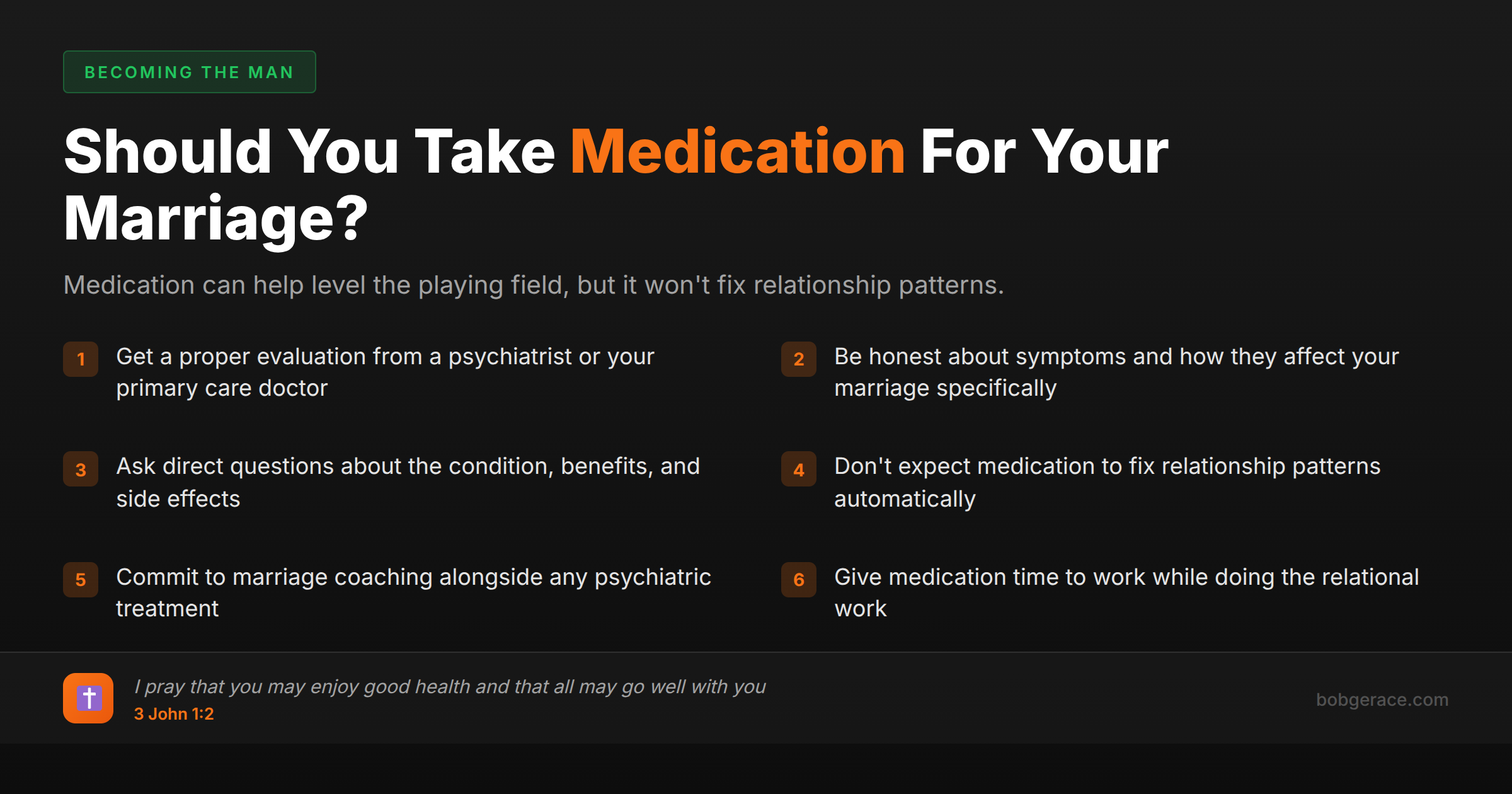
Medication can be a valuable tool when underlying mental health conditions are sabotaging your marriage, but it's not a magic fix for relationship problems. If you're dealing with clinical depression, anxiety disorders, ADHD, or other psychiatric conditions that affect your ability to connect with your spouse, medication might help stabilize your mood and thinking patterns. However, medication alone won't teach you how to communicate better, resolve conflict, or rebuild trust. Think of it like this: if your brain chemistry is making it impossible to engage in the hard work of marriage repair, medication can level the playing field. But you still need to do the relational work.
The Full Picture
Here's the truth about medication and marriage: it's complicated, and there's no one-size-fits-all answer.
When medication might help: - You're dealing with severe depression that makes it impossible to engage emotionally - Anxiety is so overwhelming you can't have normal conversations - ADHD is causing chronic forgetfulness and seeming indifference - Mood swings are creating chaos in your relationship - You're having intrusive thoughts or obsessive behaviors
When medication probably won't help: - Communication patterns that developed over years - Trust issues from past betrayals - Different values or life goals - Poor conflict resolution skills - Emotional immaturity or selfishness
The key question isn't "Will this fix my marriage?" but rather "Will this help me become capable of doing the work my marriage needs?"
The reality check: I've seen couples where one spouse gets on antidepressants and suddenly has the emotional bandwidth to engage in real change. I've also seen people use medication as an excuse to avoid taking responsibility for their choices.
Medication works best when combined with therapy, coaching, and genuine commitment to change. It's a tool, not a solution. And here's something most people don't consider: sometimes the "problem" isn't in your brain chemistry—it's in your marriage dynamics, and those require different interventions entirely.
What's Really Happening
From a clinical perspective, we need to distinguish between psychiatric symptoms that interfere with relationship functioning versus normal emotional responses to relationship distress.
True clinical conditions like major depression, generalized anxiety disorder, ADHD, or bipolar disorder create neurobiological barriers to healthy relating. When someone is clinically depressed, their brain literally processes social information differently—they're more likely to interpret neutral expressions as negative, struggle with emotional regulation, and lack the energy for relationship investment.
However, feeling anxious because your marriage is struggling, or being depressed because you're disconnected from your spouse, might be appropriate emotional responses rather than psychiatric disorders requiring medication.
The diagnostic process should include: - Comprehensive mental health evaluation - Assessment of symptom timeline (did depression precede marriage problems?) - Medical screening for underlying conditions - Evaluation of substance use - Careful consideration of medication benefits versus side effects
It's worth noting that some psychiatric medications can affect libido, emotional numbing, or weight gain—potentially creating new relationship challenges. The decision requires weighing these factors carefully with a qualified psychiatrist who understands the marriage context.
What Scripture Says
Scripture doesn't directly address psychiatric medication, but it does give us principles for stewarding our bodies and minds well.
God cares about our whole being: *"Dear friend, I pray that you may enjoy good health and that all may go well with you, even as your soul is getting along well"* (3 John 1:2). This includes our mental health.
We're called to use wisdom: *"The simple believe anything, but the prudent give thought to their steps"* (Proverbs 14:15). This means getting proper evaluation and making informed decisions about treatment.
Our bodies are temples: *"Do you not know that your bodies are temples of the Holy Spirit, who is in you, whom you have received from God?"* (1 Corinthians 6:19). Taking medication to address legitimate medical conditions can be an act of stewardship.
But transformation comes from renewal: *"Do not conform to the pattern of this world, but be transformed by the renewing of your mind"* (Romans 12:2). Medication might help stabilize brain chemistry, but spiritual and relational growth requires intentional work.
We're responsible for our choices: *"Each of you should use whatever gift you have to serve others, as faithful stewards of God's grace in its various forms"* (1 Peter 4:10). This includes using medical resources wisely while taking responsibility for our actions and attitudes.
Love requires sacrifice: *"Husbands, love your wives as Christ loved the church"* and *"Submit to one another out of reverence for Christ"* (Ephesians 5:25, 21). Whether or not you take medication, you're still called to sacrificial love in marriage.
What To Do Right Now
-
1
Get a proper evaluation from a psychiatrist or your primary care doctor—don't self-diagnose or rely on online assessments
-
2
Be honest about your symptoms, including when they started and how they affect your marriage specifically
-
3
Ask direct questions: What condition are we treating? How will this help my relationships? What are the side effects?
-
4
Don't expect medication to fix relationship patterns—commit to marriage coaching or therapy alongside any psychiatric treatment
-
5
Give medication time to work (usually 4-8 weeks) but stay connected with your prescriber about effects and side effects
-
6
Keep working on your marriage skills—communication, conflict resolution, emotional intelligence—regardless of medication decisions
Related Questions
- Do I have a personality disorder?
- Is there something wrong with me?
- Do I need therapy, coaching, or both?
- What is 'complex trauma' and do I have it?
- What role might ADHD/depression/anxiety play?
- What medication might actually help vs. avoid?
- What is 'betrayal trauma' and do I have it?
- I can't control my anger
- Why can't I stop obsessing over details?
- How do I function when my body won't calm down?
Also find Bob on
Subscribe for weekly videos on Christian marriage.
Get a Coach Who Knows Your Story
Medication questions don't exist in a vacuum. A coach who hears what's actually happening in your marriage can help you figure out what's chemical, what's relational, and what to do next.
Talk to Bob →