What spiritual disciplines address anger?
6 min read
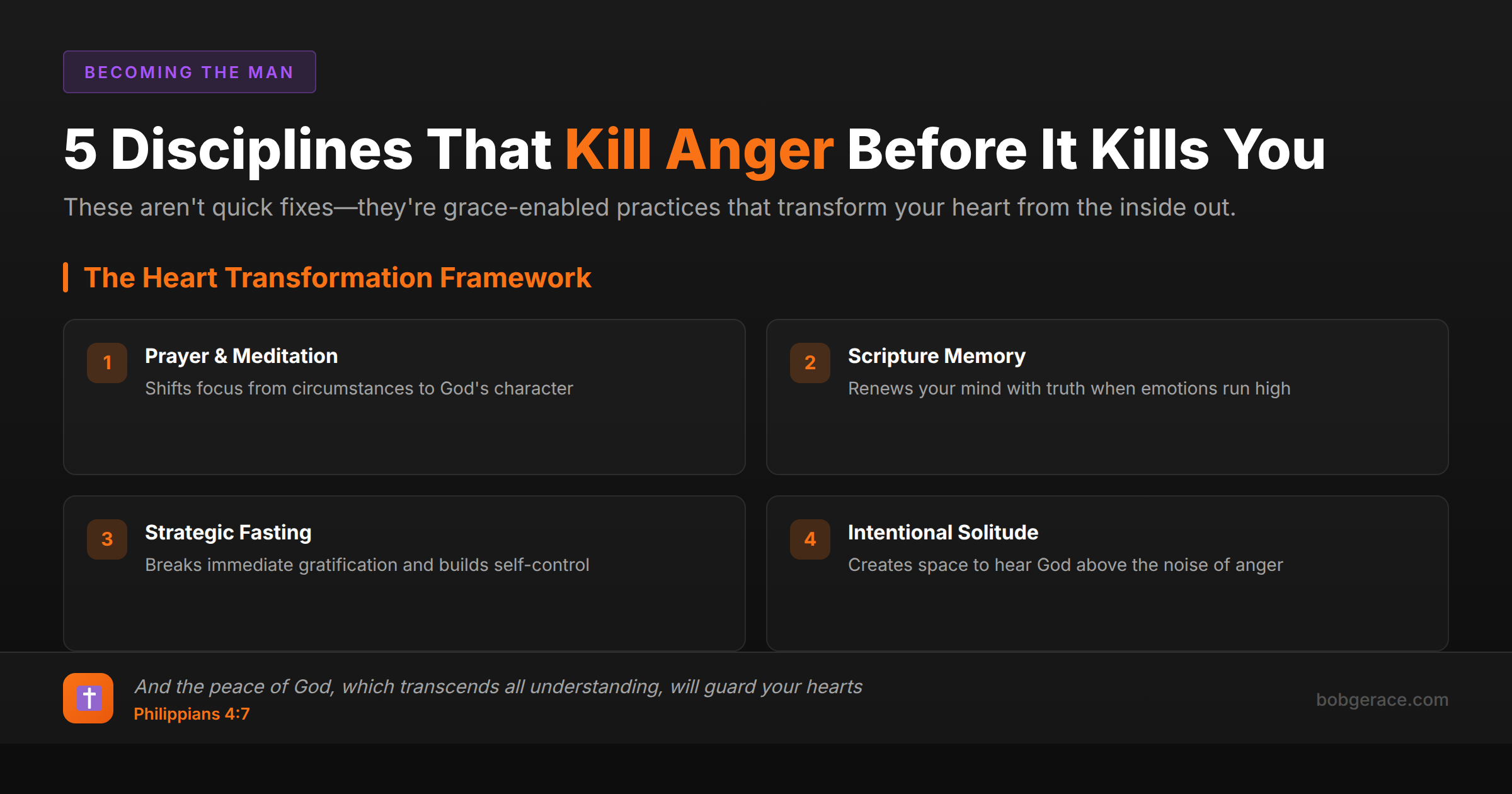
The most effective spiritual disciplines for addressing anger include prayer and meditation, Scripture memorization, fasting, solitude, and confession. These practices create space for God's Spirit to transform your heart from the inside out. Prayer shifts your focus from your circumstances to God's character. Scripture memorization renews your mind with truth when emotions run high. Fasting breaks the power of immediate gratification and builds self-control. Solitude allows you to hear God's voice above the noise of your anger. Confession keeps your heart soft and accountable to both God and others.
The Full Picture
Anger isn't just an emotional problem—it's a spiritual problem that requires spiritual solutions. When you're constantly blowing up at your wife, the issue runs deeper than stress or communication problems. Your anger reveals what's really ruling your heart.
Spiritual disciplines aren't magic formulas or religious hoops to jump through. They're proven practices that create space for God to do heart surgery on you. Think of them as tools that position you to receive God's transforming power.
Prayer and meditation form the foundation. When you're regularly connecting with God, you're less likely to be ruled by your emotions. You start seeing situations from His perspective instead of just your own wounded ego.
Scripture memorization gives you ammunition when anger strikes. Instead of reacting from your flesh, you have God's truth readily available in your mind. Verses like Ephesians 4:26-27 become weapons against destructive anger patterns.
Fasting breaks the power of immediate gratification. If you can say no to food, you can say no to explosive reactions. It builds the spiritual muscle of self-control that transfers to every area of life.
Solitude removes you from the triggers and distractions that fuel your anger. In quiet, you can actually hear what God is trying to tell you about the root issues in your heart.
Confession keeps your heart soft. When you regularly acknowledge your failures to God and trusted friends, pride loses its grip. Pride is often the fuel that turns normal frustration into destructive rage.
What's Really Happening
From a clinical perspective, spiritual disciplines work because they address anger at multiple neurological and psychological levels simultaneously. When we practice these disciplines consistently, we're literally rewiring our brains for better emotional regulation.
Prayer and meditation activate the parasympathetic nervous system, which counteracts the fight-or-flight response that drives explosive anger. Regular practice actually changes brain structure, strengthening areas associated with emotional control while reducing reactivity in the amygdala.
Scripture memorization utilizes cognitive behavioral principles—replacing destructive thought patterns with truth-based thinking. When men memorize verses about patience and self-control, they're creating new neural pathways that compete with anger-driven reactions.
Fasting creates what psychologists call 'distress tolerance'—the ability to experience discomfort without immediately reacting to eliminate it. This skill directly transfers to marriage conflicts where the impulse is to explode rather than work through difficult emotions.
Solitude provides what trauma therapists call 'co-regulation'—but instead of regulating with another person, you're learning to find emotional stability through connection with God. This builds internal resources for managing intense emotions.
Confession works by preventing what clinicians call 'emotional numbing.' When men regularly acknowledge their failures, they maintain emotional flexibility instead of hardening their hearts through denial and defensiveness.
What Scripture Says
Scripture is clear that spiritual transformation requires intentional practices that position us to receive God's power. These aren't works-based solutions—they're grace-enabled disciplines.
Philippians 4:6-7 shows us prayer's power: "Do not be anxious about anything, but in every situation, by prayer and petition, with thanksgiving, present your requests to God. And the peace of God, which transcends all understanding, will guard your hearts and your minds in Christ Jesus."
Psalm 119:11 reveals Scripture's role: "I have hidden your word in my heart that I might not sin against you." When God's truth is embedded in your mind, it's available when emotions run high.
Matthew 17:21 connects fasting to spiritual breakthrough: "This kind does not go out except by prayer and fasting." Some strongholds require more than casual effort—they need the kind of focused seeking that fasting provides.
Mark 1:35 shows Jesus practicing solitude: "Very early in the morning, while it was still dark, Jesus got up, left the house and went off to a solitary place, where he prayed." If Jesus needed solitude for spiritual strength, how much more do we?
James 5:16 emphasizes confession: "Therefore confess your sins to each other and pray for each other so that you may be healed. The prayer of a righteous person is powerful and effective."
Galatians 5:22-23 promises the result: "But the fruit of the Spirit is love, joy, peace, forbearance, kindness, goodness, faithfulness, gentleness and self-control." These disciplines position you to receive this transformation.
What To Do Right Now
-
1
Start with 10 minutes of morning prayer, asking God to control your reactions throughout the day
-
2
Memorize one verse about anger or self-control this week (start with Ephesians 4:26)
-
3
Schedule 30 minutes of solitude twice this week—no phone, just you and God
-
4
Confess your anger patterns to a trusted friend or mentor who will hold you accountable
-
5
Try a 24-hour fast from food, using hunger pangs as reminders to pray for self-control
-
6
End each day by journaling three things you're grateful for instead of rehearsing frustrations
Related Questions
Ready to Break Free from Destructive Anger?
These spiritual disciplines work, but they're more powerful when you have guidance and accountability. Let's work together to build the practices that will transform your heart.
Get Help Now →