Why does anger feel like the only accessible emotion?
6 min read
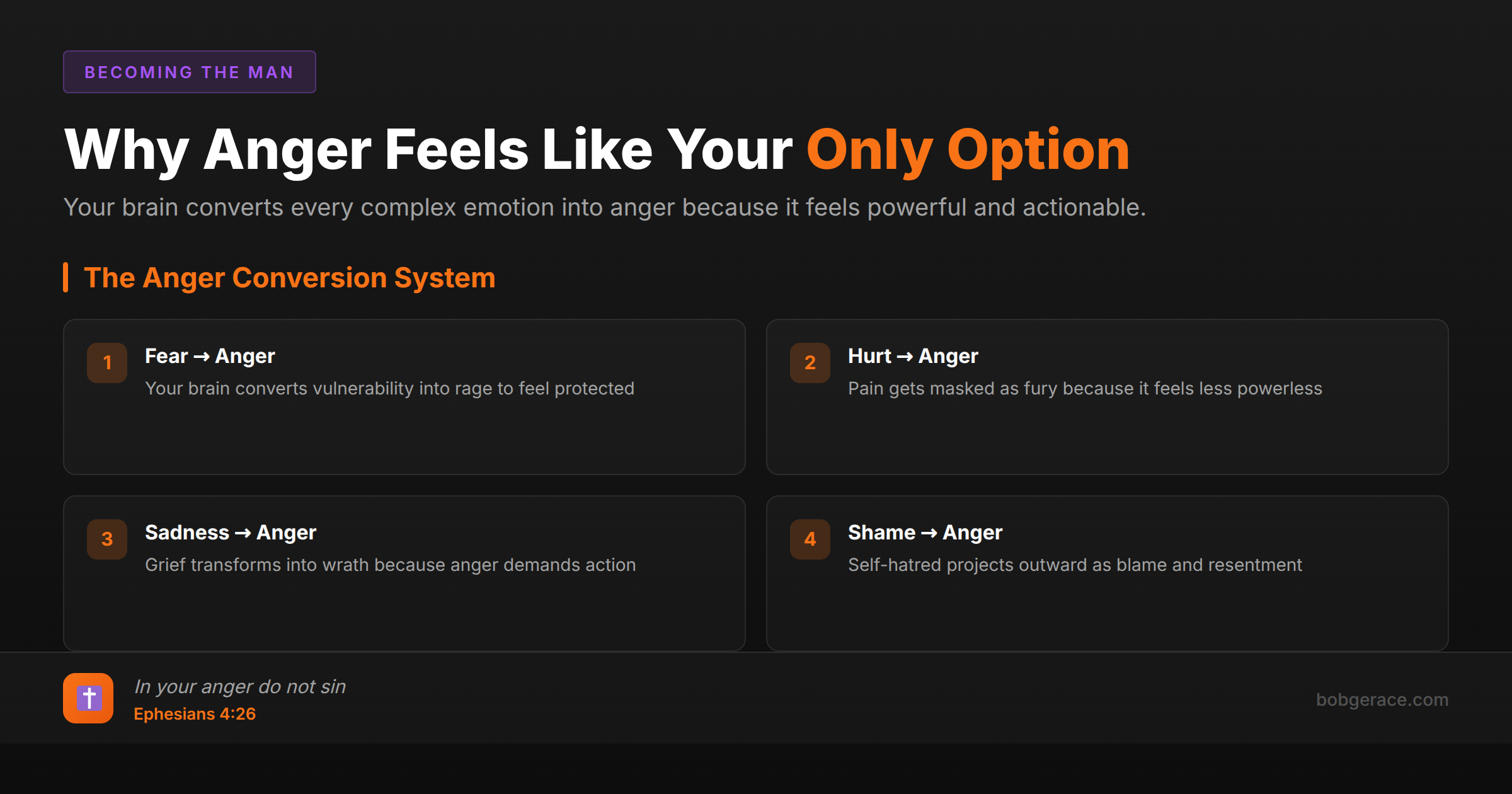
Anger feels like your only accessible emotion because your brain is designed for survival, not emotional nuance. When you're stressed, hurt, or overwhelmed, your amygdala hijacks your system and converts complex feelings like fear, sadness, or disappointment into anger—because anger feels powerful and actionable. This neurological shortcut served our ancestors well when facing physical threats, but it wreaks havoc in marriage. Your brain interprets your spouse's criticism or withdrawal as danger, flooding you with stress hormones that narrow your emotional range to fight-or-flight responses. Meanwhile, vulnerable emotions like hurt or loneliness get buried under anger's intensity, making it seem like rage is all you have access to.
The Full Picture
Your emotional system isn't broken—it's actually working exactly as designed, just not for modern marriage. Here's what's really happening when anger dominates your emotional landscape.
The Neurological Highway System
Think of your brain as having two main emotional highways: the express lane (amygdala) and the scenic route (prefrontal cortex). When you're triggered, your brain automatically takes the express lane, bypassing the areas responsible for emotional complexity and nuance.
Anger travels this highway because it's a secondary emotion—meaning it's almost always covering up something more vulnerable underneath. Fear, hurt, loneliness, shame, and disappointment don't feel safe to express, so your brain converts them into anger because anger feels strong and protective.
The Stress Response Cycle
When your nervous system is chronically activated (which happens in troubled marriages), your emotional range actually narrows. You lose access to the subtle emotions that require safety and regulation to emerge. It's like trying to paint a masterpiece while someone's chasing you with a baseball bat—you're going to grab the biggest, boldest brush available.
The Familiarity Factor
If anger was modeled in your family of origin, or if it's been your go-to emotion for years, those neural pathways become superhighways. Your brain defaults to what's familiar, not necessarily what's helpful. The more you use anger, the more accessible it becomes, while other emotional muscles atrophy from lack of use.
The Illusion of Control
Anger gives you the illusion that you're doing something about your problems. It feels active rather than passive, powerful rather than vulnerable. But this illusion keeps you stuck in cycles that damage your marriage while never addressing the underlying issues that really need attention.
What's Really Happening
From a clinical perspective, when anger feels like your only accessible emotion, you're experiencing what we call emotional constriction—a neurobiological response to chronic stress and relational threat.
The Polyvagal Response
Your autonomic nervous system has three main states: social engagement (calm connection), sympathetic activation (fight-or-flight), and dorsal shutdown (collapse/withdrawal). When you're stuck in sympathetic activation, anger becomes the dominant emotional experience because your system is primed for defense, not connection.
Attachment Injuries and Emotional Range
Repeated conflicts or betrayals in marriage create what we call attachment injuries. These injuries keep your nervous system in a state of hypervigilance, constantly scanning for threat. In this state, vulnerable emotions feel too risky—they require trust and safety that your system doesn't currently experience.
The Trauma Response Connection
Many people don't realize that chronic marital conflict creates ongoing traumatic stress. When you're in a trauma response, your emotional vocabulary literally shrinks. The parts of your brain responsible for emotional complexity go offline, leaving you with basic survival emotions—and anger is the most accessible of these.
Neuroplasticity and Hope
The encouraging news is that brains can change. Through intentional practice, you can create new neural pathways that give you access to your full emotional range. This requires both individual nervous system regulation work and creating safety within your marriage relationship. When your system feels genuinely safe, those buried emotions naturally begin to surface, giving you access to the emotional complexity that healthy relationships require.
What Scripture Says
Scripture doesn't ignore the reality of anger—instead, it gives us a framework for understanding and managing it in ways that honor God and our marriages.
Anger as a Secondary Emotion
*"In your anger do not sin: Do not let the sun go down while you are still angry"* (Ephesians 4:26). This verse acknowledges that anger itself isn't sinful, but what we do with it can be. The key is not letting anger camp out in our hearts, becoming the dominant emotional resident.
The Heart Behind the Anger
*"Above all else, guard your heart, for everything you do flows from it"* (Proverbs 4:23). Your heart holds all your emotions—not just anger. When anger feels like the only option, it's often because you're not guarding the more vulnerable parts of your heart that need attention and care.
God's Model of Emotional Complexity
*"The Lord is compassionate and gracious, slow to anger, abounding in love and faithfulness"* (Psalm 86:15). Notice that God experiences anger, but it's balanced with compassion, grace, love, and faithfulness. He has access to His full emotional range, and He calls us to the same emotional maturity.
The Renewal of Your Mind
*"Do not conform to the pattern of this world, but be transformed by the renewing of your mind"* (Romans 12:2). Your brain's default to anger is part of the "pattern of this world"—a survival mechanism that doesn't reflect God's design for marriage. Renewal involves creating new patterns of emotional response.
Perfect Love Casts Out Fear
*"There is no fear in love. But perfect love drives out fear"* (1 John 4:18). Often, anger is fear in disguise. As you experience God's perfect love and learn to create safety in your marriage, those underlying fears lose their power, giving you access to emotions beyond anger.
What To Do Right Now
-
1
Name the emotion underneath - Next time you feel angry, pause and ask: 'What am I really feeling beneath this anger? Am I hurt? Scared? Disappointed?' Practice identifying the primary emotion.
-
2
Regulate your nervous system first - Before trying to access other emotions, calm your system with deep breathing, progressive muscle relaxation, or a brief walk. You can't access emotional complexity when you're dysregulated.
-
3
Create an emotion wheel - Print out an emotion wheel and keep it handy. When anger hits, use it to identify more specific feelings. This literally helps rebuild your emotional vocabulary.
-
4
Practice the 24-hour rule - Don't make any major relationship decisions or have serious conversations when anger is your only accessible emotion. Give yourself time for other feelings to emerge.
-
5
Start a feelings journal - Each day, write down three emotions you experienced beyond anger. This trains your brain to notice the full spectrum of your emotional experience.
-
6
Seek professional help - If anger continues to dominate despite your efforts, consider working with a therapist who understands trauma and nervous system regulation. Sometimes we need professional support to access our full emotional range.
Related Questions
- What's underneath my anger?
- What is 'secondary emotion' and is anger covering something?
- I can't control my anger
- What is 'window of tolerance' and how do I widen mine?
- How do I become emotionally intelligent?
- What is 'alexithymia' and do I have it?
- Why do I feel physically sick?
- What is 'betrayal trauma' and do I have it?
- What's happening to my nervous system right now?
- What does chronic anger do to my nervous system?
Also find Bob on
Subscribe for weekly videos on Christian marriage.
You Don't Have to Figure This Out Alone
A coach who knows your marriage can help you identify what's actually underneath the anger—and what to do about it in your specific situation.
Talk to Bob →