What about mental illness as grounds?
6 min read
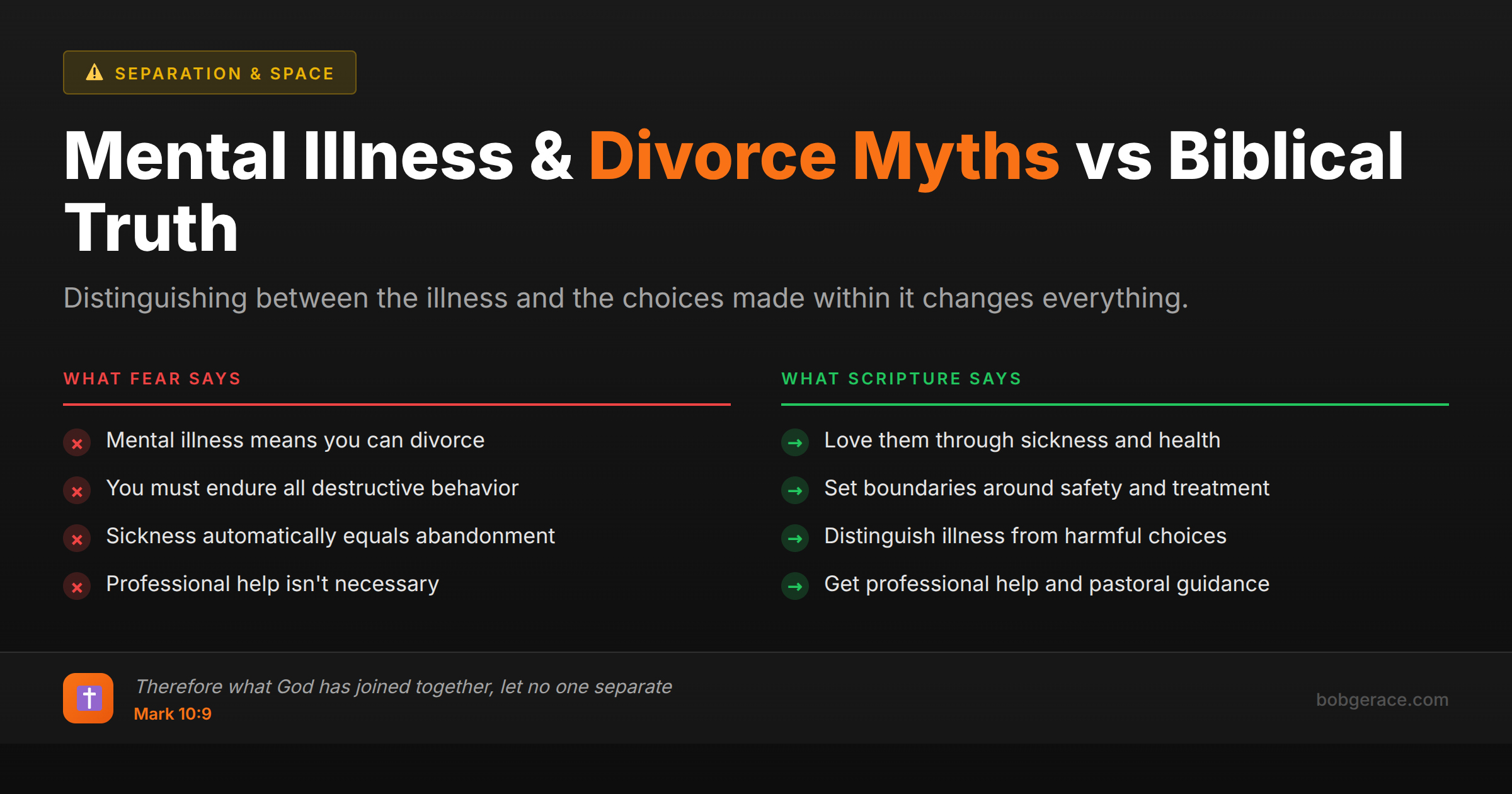
Mental illness alone is not biblical grounds for divorce. Scripture calls us to love "in sickness and in health," and mental illness falls under sickness. However, this doesn't mean you're called to endure abuse or destructive behaviors that sometimes accompany untreated mental illness. The key distinction is this: mental illness itself isn't abandonment or adultery - the two clear biblical grounds. But when mental illness leads to genuine abandonment (complete rejection of marriage responsibilities) or creates genuinely unsafe conditions, you need wisdom, professional help, and pastoral guidance. Your commitment is to your spouse, not to enabling destructive patterns or sacrificing your safety.
The Full Picture
Let me be straight with you - this is one of the most heartbreaking situations I encounter in marriage coaching. You're watching someone you love struggle with something beyond their control, and you're wondering if staying means enabling or if leaving means abandoning.
Mental illness is sickness, not sin. Depression, bipolar disorder, anxiety, PTSD - these are medical conditions. When you said "in sickness and in health," this is exactly what you were committing to. The person you married is still there, even when the illness makes them hard to recognize.
But here's where it gets complicated: untreated or poorly managed mental illness can create behaviors that genuinely threaten a marriage. Emotional abuse, financial recklessness, complete withdrawal from family responsibilities, or even physical violence - these behaviors, while stemming from illness, still have real consequences.
The illness isn't grounds for divorce, but the behaviors might create situations requiring separation for safety. There's a difference between supporting someone through their struggle and becoming a casualty of their untreated condition.
I've seen marriages survive and even thrive through mental illness when both spouses commit to treatment, boundaries, and professional support. I've also seen situations where the ill spouse completely refuses help, leaving their partner in an impossible situation.
Your calling isn't to be a martyr or an enabler. It's to love wisely, set healthy boundaries, and seek God's guidance for your specific situation.
What's Really Happening
Mental illness creates a unique challenge in marriage because it affects the very faculties we need for healthy relationships - emotional regulation, communication, decision-making, and sometimes reality testing itself.
What I see clinically is that marriages can absolutely survive mental illness when there's acknowledgment, treatment compliance, and mutual commitment to working through challenges. The key factors are: the ill spouse's willingness to engage in treatment, the healthy spouse's understanding and boundary-setting, and both partners' commitment to the marriage despite the illness.
However, untreated severe mental illness can create what I call "functional abandonment." The spouse is physically present but emotionally, relationally, and sometimes practically absent from the marriage. This creates genuine hardship for the healthy spouse and children.
The most destructive pattern I observe is when mental illness becomes an excuse for harmful behavior. Yes, depression makes everything harder. But depression doesn't make someone choose to have an affair. Anxiety is real and challenging, but anxiety doesn't justify financial infidelity or emotional abuse.
My clinical recommendation is always: separate the person from the illness, but don't ignore the impact of untreated symptoms on the marriage. Support treatment, maintain boundaries, and don't sacrifice your own mental health or your children's wellbeing in the name of loyalty.
What Scripture Says
Scripture calls us to extraordinary compassion and commitment in marriage, especially during suffering. "Therefore what God has joined together, let no one separate" (Mark 10:9). This includes separation due to illness.
"Husbands, love your wives as Christ loved the church and gave himself up for her" (Ephesians 5:25). Christ's love for us doesn't waver when we're struggling, broken, or difficult. This is the standard for marriage love.
"Bear one another's burdens, and so fulfill the law of Christ" (Galatians 6:2). Mental illness creates genuine burdens that spouses are called to help carry. But notice the next verse: "For each will have to bear his own load" (Galatians 6:5). There's a difference between helping carry burdens and enabling someone to avoid their responsibilities.
"Above all, love each other deeply, because love covers over a multitude of sins" (1 Peter 4:8). Love covers sins - and mental illness often isn't sin at all, it's sickness requiring even more grace.
However, Scripture also teaches wisdom in relationships. "Be wise as serpents and innocent as doves" (Matthew 10:16). Sometimes loving someone with mental illness means setting firm boundaries or requiring treatment as a condition of staying together.
The biblical framework calls for sacrificial love while maintaining wisdom, commitment while setting healthy boundaries, and grace while still holding people accountable for their choices within their limitations.
What To Do Right Now
-
1
Get professional assessment - distinguish between the illness and choices your spouse is making within their illness
-
2
Set clear boundaries around treatment - make ongoing professional help non-negotiable for the marriage to continue
-
3
Establish safety protocols - if there's any risk to you or your children, create a safety plan immediately
-
4
Build your support network - you cannot handle this alone; get counseling, pastoral support, and trusted friends involved
-
5
Educate yourself about the specific mental illness - understanding the condition helps you respond wisely rather than reactively
-
6
Seek pastoral counseling together - get biblical guidance for your specific situation from someone who understands both Scripture and mental health
Related Questions
- What does Scripture say about divorce?
- What about emotional abuse as grounds?
- What about addiction as grounds?
- What about perpetual unfaithfulness?
- Does adultery justify divorce?
- How do I discern what's right for me?
- Is there something wrong with me?
- Should I be on medication?
- Do I need therapy, coaching, or both?
- What does 'godly sorrow' look like in practice?
Also find Bob on
Subscribe for weekly videos on Christian marriage.
This Requires a Human in Your Corner
Mental illness in your marriage isn't a formula problem. It's specific to your situation, your spouse, your history. A coach who knows your story can help you separate commitment from enabling.
Talk to Bob →