What are the different denominational positions?
6 min read
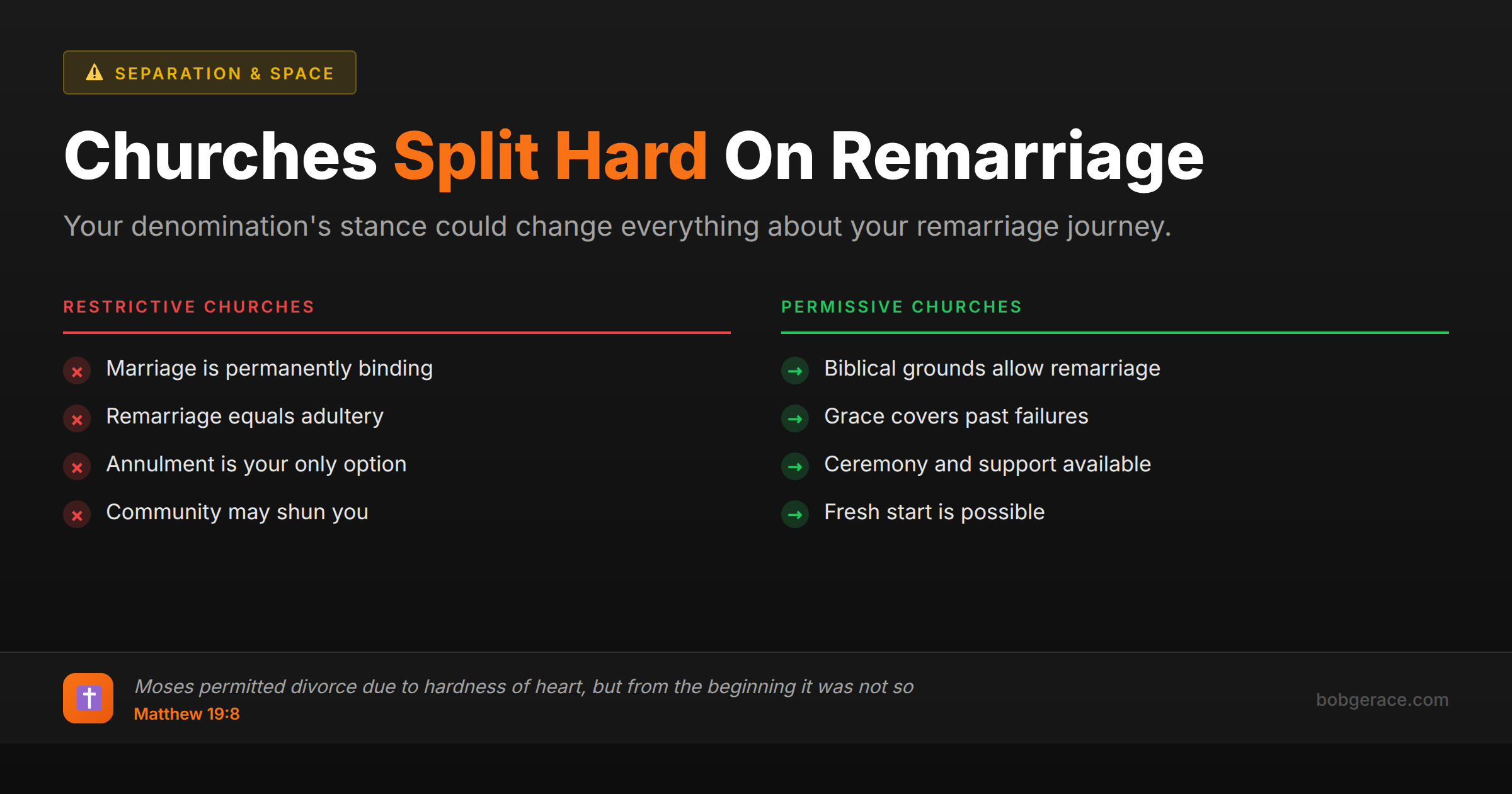
Different Christian denominations hold varying positions on remarriage after divorce, ranging from highly restrictive to more permissive approaches. The Catholic Church maintains the strictest stance, generally prohibiting remarriage unless the first marriage is annulled, viewing marriage as an indissoluble sacrament. Most Protestant denominations allow remarriage on biblical grounds such as adultery or abandonment, though they vary in their interpretation and application. Orthodox churches typically permit remarriage but with increasing restrictions for subsequent marriages. Understanding these differences is crucial because your denominational context will significantly impact the pastoral guidance you receive, the ceremonies available to you, and the community support you can expect during this sensitive time.
The Full Picture
The landscape of denominational positions on remarriage reflects centuries of theological development, biblical interpretation, and pastoral concern. Catholic Position: The Roman Catholic Church holds that valid marriages are indissoluble, making remarriage impossible unless the previous marriage is declared null through annulment. This position stems from their interpretation of Jesus' words in Matthew 19:6 and their understanding of marriage as a sacrament that creates an unbreakable bond.
Protestant Variations: Most Protestant denominations permit remarriage but differ in their requirements. Conservative Evangelical churches often allow remarriage only for biblical grounds like adultery (Matthew 19:9) or abandonment by an unbelieving spouse (1 Corinthians 7:15). Mainline Protestant denominations typically take a more pastoral approach, considering the circumstances while maintaining biblical principles. Pentecostal and Charismatic churches vary widely, with some being restrictive and others emphasizing grace and restoration.
Orthodox Churches follow economia (pastoral discretion), generally allowing second marriages with penitential elements but viewing them as less than ideal. Third marriages are rare and heavily restricted. Anglican/Episcopal churches occupy a middle ground, often requiring pastoral consultation and considering the welfare of children and circumstances of the divorce. These differences aren't merely academic—they profoundly impact real families seeking to rebuild their lives while maintaining their faith community connections.
What's Really Happening
The psychological impact of denominational differences on remarriage can't be understated. I've counseled countless individuals who experience profound distress when their personal circumstances conflict with their denomination's official position. This creates what we call "spiritual cognitive dissonance"—a painful tension between deeply held faith and life circumstances.
Many clients report feeling trapped between their need for companionship and their desire to remain faithful to their church community. Some develop religious trauma, viewing themselves as permanently damaged or unworthy of God's blessing. Others church-shop, seeking denominations that align with their circumstances rather than their theological convictions.
The healthiest approach I've observed involves understanding that denominational positions represent human interpretations of divine truth, each seeking to honor Scripture while addressing pastoral realities. Those who thrive typically engage in honest theological study, seek wise counsel from multiple perspectives, and make decisions based on personal conviction rather than institutional pressure.
It's crucial to recognize that your denominational background will influence not just remarriage possibilities but also the healing process from divorce. Some traditions emphasize confession and penance, others focus on grace and restoration, and still others stress community discernment. Understanding these frameworks helps individuals navigate their journey with greater self-awareness and realistic expectations about the support they'll receive.
What Scripture Says
Scripture provides the foundation for all denominational positions, though interpretations vary significantly. Matthew 19:3-9 records Jesus' primary teaching on divorce, where He states that Moses permitted divorce due to hardness of heart, but "from the beginning it was not so." The exception clause—"except for sexual immorality"—is interpreted differently across denominations, with some seeing it as permission for remarriage and others viewing it as grounds for separation only.
1 Corinthians 7:10-16 adds Paul's apostolic guidance, particularly the "Pauline Privilege" allowing remarriage when an unbelieving spouse abandons the marriage. Orthodox and Protestant churches generally accept this as legitimate grounds for remarriage, while Catholics apply it only to unbaptized persons.
Romans 7:2-3 explains that marriage bonds are dissolved by death, leading some to argue that spiritual death of the marriage through serious sin creates similar freedom. 1 Corinthians 7:27-28 suggests that remarriage isn't sinful: "Are you bound to a wife? Do not seek to be loosed. Are you loosed from a wife? Do not seek a wife. But even if you do marry, you have not sinned."
Malachi 2:16 states God hates divorce, emphasizing marriage's sacred nature, while Jeremiah 3:8 metaphorically describes God as giving faithless Israel a certificate of divorce, suggesting even God recognizes some marriages cannot continue. The key is understanding that these passages must be interpreted within their historical context while applying their principles to modern situations with wisdom and pastoral sensitivity.
What To Do Right Now
-
1
Research your denomination's official position on remarriage through their governing body's statements and pastoral guidelines
-
2
Meet with your pastor or spiritual advisor to understand how these positions apply to your specific circumstances
-
3
Study the relevant biblical passages independently, using multiple translations and commentaries from different perspectives
-
4
Consider consulting with clergy or theologians from other denominations to broaden your understanding
-
5
Examine your motivations for remarriage—ensure they're rooted in healthy desires rather than loneliness or reaction
-
6
Develop a personal theological position based on Scripture, prayer, and wise counsel rather than convenience or pressure
Related Questions
- What does Scripture say about divorce?
- What did Jesus say about divorce?
- What is Paul's teaching in 1 Corinthians 7?
- How have these texts been interpreted historically?
- What are the main evangelical positions on divorce?
- Does divorce always prohibit remarriage?
- Does the Bible require me to stay after an affair?
- What does biblical forgiveness require of me?
- What does faithfulness require when she won't reciprocate?
Also find Bob on
Subscribe for weekly videos on Christian marriage.
Your Marriage Isn't Theoretical
Denominational positions matter, but your actual situation matters more. A coach who knows your story can help you apply what's true to what's real in your marriage.
Talk to Bob →