What does healing from sexual disconnection look like?
6 min read
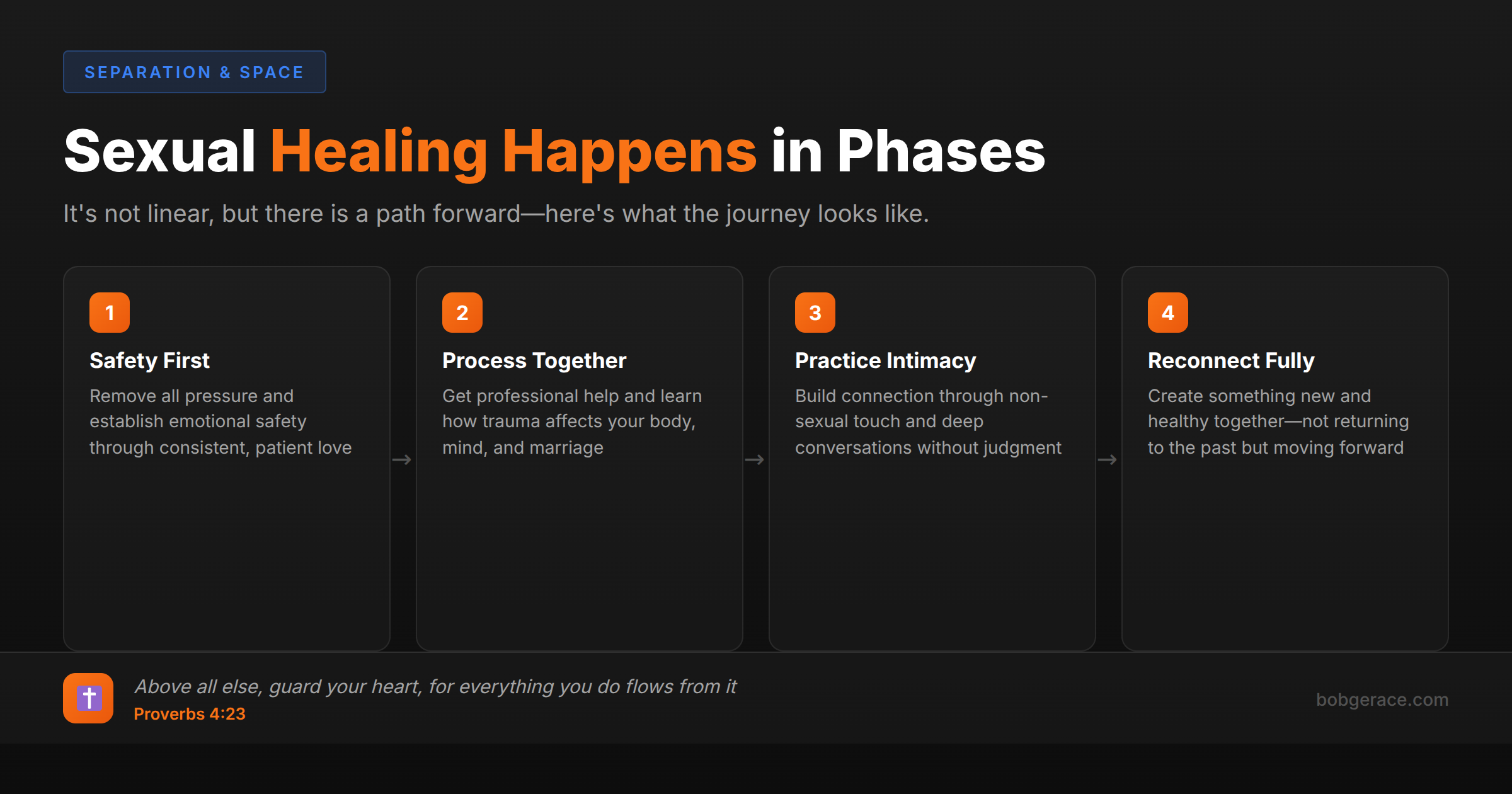
Healing from sexual disconnection is a gradual journey that moves through distinct phases: safety and stabilization, processing and understanding, and reconnection and integration. It's not linear—expect setbacks, breakthroughs, and everything in between. The process starts with establishing emotional and physical safety, often involving professional therapy and trauma-informed approaches. As healing progresses, couples learn to communicate about their needs, boundaries, and fears without judgment. True restoration happens when both partners can be present with each other—emotionally, spiritually, and eventually physically—without the shadow of past trauma dictating the relationship. This isn't about returning to how things were; it's about creating something new and healthy together.
The Full Picture
Sexual disconnection in marriage often stems from deep wounds—childhood trauma, past abuse, betrayal trauma, or other painful experiences that make intimacy feel dangerous. When someone has "checked out" sexually, they're not being difficult or unloving; they're protecting themselves the only way they know how.
Understanding the disconnection begins with recognizing that sexual intimacy involves the whole person—body, mind, and spirit. When trauma occurs, these parts fragment. The body remembers danger even when the mind knows it's safe. The spirit feels contaminated or broken. Healing requires addressing all three dimensions.
The stages of healing aren't neat and tidy. Stage one focuses on safety—creating an environment where the traumatized spouse feels secure enough to begin the work. This often means taking physical intimacy off the table temporarily while emotional intimacy grows. Stage two involves processing the trauma with professional help, understanding its impact, and developing healthy coping mechanisms. Stage three is about gradually rebuilding intimacy at a pace that honors both partners' needs.
What healing actually looks like varies dramatically between couples. For some, it's learning to communicate about triggers without shame. For others, it's the first time they can be touched without flashbacks. It might be the ability to stay present during intimate moments or feeling desire return after years of numbness.
The role of the non-traumatized spouse is crucial but challenging. They must learn to support without pressuring, to understand without taking the disconnection personally. This often requires their own healing and growth, learning patience, and sometimes grieving the intimate relationship they thought they'd have while working toward the one they can build together.
What's Really Happening
From a trauma-informed perspective, sexual disconnection is the nervous system's attempt to protect itself from perceived threat. When someone has experienced sexual trauma, their brain's alarm system becomes hypervigilant, interpreting even loving touch as potentially dangerous.
The healing process involves rewiring these neural pathways through safety and positive experiences. Polyvagal theory helps us understand that the body must feel safe before the mind can engage in intimate connection. We work with the autonomic nervous system, helping clients recognize when they're in fight-or-flight mode versus when they're genuinely calm and present.
Somatic approaches are particularly effective because trauma lives in the body. Traditional talk therapy alone isn't sufficient—we need to help clients reconnect with their bodies in safe, controlled ways. This might involve breathwork, mindfulness practices, or gentle movement therapies.
The window of tolerance is a key concept I work with. This is the zone where a person can experience arousal and activation without becoming overwhelmed or shutting down. Healing involves gradually expanding this window, allowing for more intimacy without triggering trauma responses.
It's important to understand that healing isn't about forgetting or "getting over" trauma. It's about integration—learning to carry the experience without being controlled by it. For couples, this means developing new patterns of connection that honor both partners' needs and limitations while fostering genuine intimacy and trust.
What Scripture Says
God's design for marriage includes the beautiful gift of sexual intimacy, but He also understands our brokenness and need for healing. Scripture provides a framework for understanding both the purpose of intimacy and the process of restoration.
Marriage as a place of safety: "Above all else, guard your heart, for everything you do flows from it" (Proverbs 4:23). In marriage, we're called to guard not just our own hearts but our spouse's heart as well. This means creating an environment where vulnerability is safe and trauma can heal.
The process of healing: "He heals the brokenhearted and binds up their wounds" (Psalm 147:3). God doesn't promise instant healing, but He promises to be present in the process. Healing takes time, and rushing it dishonors both God's design and our spouse's journey.
Sacrificial love in action: "Husbands, love your wives as Christ loved the church and gave himself up for her" (Ephesians 5:25). This isn't about sexual demands—it's about laying down our own desires to serve our spouse's healing. Sometimes love means waiting. Sometimes it means seeking professional help. Always it means putting their wellbeing above our own comfort.
The restoration of all things: "He who was seated on the throne said, 'I am making everything new!'" (Revelation 21:5). Sexual disconnection isn't the end of the story. God specializes in making all things new, including the intimate bond between husband and wife.
Community and support: "Therefore confess your sins to each other and pray for each other so that you may be healed" (James 5:16). Healing often requires the support of trusted counselors, pastors, or Christian community who can walk alongside the journey with wisdom and care.
What To Do Right Now
-
1
Establish safety first - Remove all pressure for sexual intimacy and focus on creating emotional safety through consistent, patient love
-
2
Seek professional help - Find a trauma-informed Christian counselor who specializes in sexual trauma and can guide the healing process
-
3
Learn about trauma - Both spouses should educate themselves about how trauma affects the body, mind, and relationships
-
4
Practice emotional intimacy - Build connection through non-sexual touch, deep conversations, and shared spiritual practices
-
5
Develop healthy communication - Learn to discuss triggers, boundaries, and needs without shame or defensiveness
-
6
Be patient with the process - Accept that healing takes time and may include setbacks, celebrating small victories along the way
Related Questions
- She doesn't want to be touched
- We haven't had sex in months/years
- What kills female sexual desire in marriage?
- What's the relationship between emotional safety and sexual desire?
- What conditions need to be in place for desire to return?
- How do I rebuild emotional intimacy first?
- How do I reclaim our intimacy?
- What is post-affair sexual healing?
- How do I become emotionally intelligent?
- What does emotional attunement look like?
Also find Bob on
Subscribe for weekly videos on Christian marriage.
Your Marriage Isn't a Textbook Case
Sexual disconnection has roots—yours are specific to your story, your wife, your history. A coach who knows your situation can help you navigate what a general framework can't.
Talk to Bob →