What would make her want to risk opening up?
6 min read
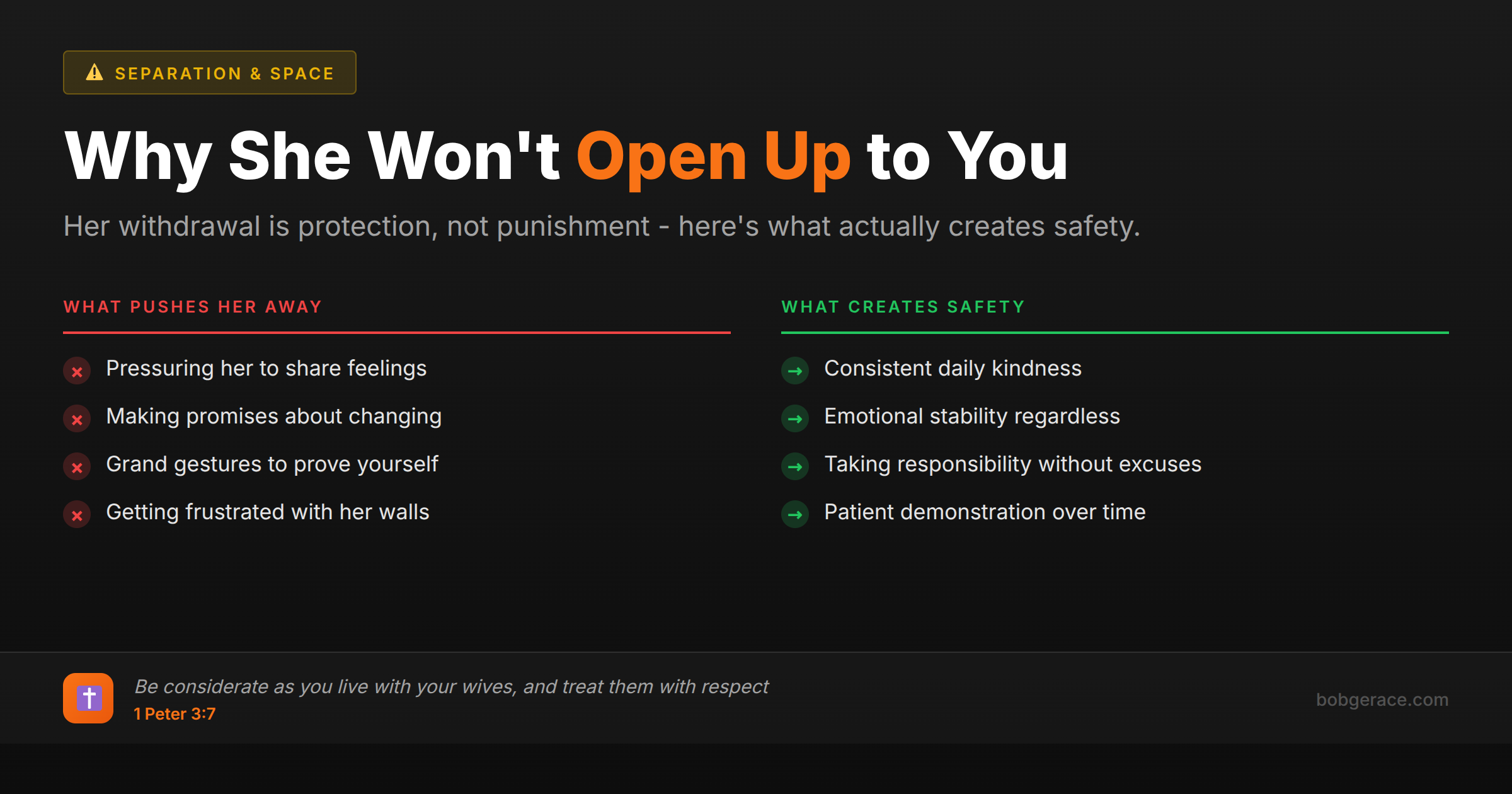
A wife who's checked out will only risk opening up when she experiences consistent safety over time. This isn't about grand gestures or promises - it's about demonstrating through daily actions that you're trustworthy, emotionally stable, and genuinely changed. She needs to see that her vulnerability won't be weaponized against her or dismissed. The key is understanding that her withdrawal is protective, not punitive. She's safeguarding her heart from further damage. To lower those defenses, she must witness sustained evidence that emotional intimacy with you is safe. This requires patience, consistency, and often professional guidance to navigate the delicate process of rebuilding trust after it's been broken.
The Full Picture
When a wife has emotionally checked out, her reluctance to open up isn't stubbornness - it's survival instinct. Her heart has been hurt, dismissed, or overwhelmed to the point where vulnerability feels dangerous. Understanding what would motivate her to risk opening up again requires recognizing the complex emotional landscape she's navigating.
Safety is the foundation. She needs to experience consistent emotional safety before she'll consider lowering her defenses. This means no more explosive reactions when she shares difficult feelings, no more minimizing her concerns, and no more using her vulnerabilities against her during arguments. She's been burned before, and her psyche is protecting her from further damage.
Consistency over time matters more than intensity. Many husbands try to win back their wives with grand gestures or passionate declarations, but what actually moves the needle is sustained behavioral change. She needs to witness weeks and months of you responding differently to stress, conflict, and her emotions. One good conversation doesn't erase years of feeling unsafe.
She needs to see genuine change, not performance. Women are incredibly perceptive about authenticity. If you're putting on an act to win her back, she'll sense it. The changes need to be real - rooted in your own growth and commitment to becoming a better man, not just tactics to get her to open up.
Professional help often accelerates the process. Sometimes a neutral third party can help navigate the delicate rebuilding process and address the deeper issues that led to her withdrawal.
What's Really Happening
From an attachment perspective, a woman who's emotionally withdrawn has likely shifted into what we call "deactivated attachment." This is a protective strategy where she suppresses her attachment needs to avoid further hurt. Her nervous system has essentially concluded that seeking connection from you is unsafe.
To reactivate her attachment system, she needs to experience what therapists call "earned security." This happens through consistent, attuned responses to her emotional bids over time. When she makes small attempts at connection - even subtle ones - your response either reinforces her protective withdrawal or begins to rebuild her trust.
Neurologically, her brain has likely developed heightened sensitivity to threat cues from you. This means she's unconsciously scanning for signs that it's unsafe to be vulnerable. Even minor negative reactions from you can trigger this threat detection system and reinforce her protective walls.
The path back to emotional intimacy requires what we call "corrective emotional experiences" - repeated instances where vulnerability is met with safety, understanding, and appropriate responsiveness. This literally rewires her neural pathways around attachment and safety with you.
It's crucial to understand that this process can't be rushed. Attempting to pressure or manipulate her into vulnerability will only reinforce her protective strategies. The timeline for rebuilding attachment security is measured in months and years, not days or weeks.
What Scripture Says
Scripture provides profound wisdom about creating the conditions for vulnerability and trust in marriage. Ephesians 5:29 reminds us that "no one ever hated their own body, but they feed and care for their body, just as Christ does the church." This nourishing, caring approach is exactly what a withdrawn wife needs to experience safety.
1 Peter 3:7 instructs husbands to "be considerate as you live with your wives, and treat them with respect as the weaker partner and as heirs with you of the gracious gift of life, so that nothing will hinder your prayers." This verse emphasizes the delicate, honoring approach required to rebuild trust with a wounded heart.
The principle of Proverbs 27:5-6 applies powerfully here: "Better is open rebuke than hidden love. Wounds from a friend can be trusted, but an enemy multiplies kisses." Your wife needs to know your love is genuine, not manipulative. Authentic change speaks louder than empty words.
Galatians 5:22-23 describes the fruit of the Spirit: "love, joy, peace, forbearance, kindness, goodness, faithfulness, gentleness and self-control." These qualities create the emotional climate where vulnerability can flourish. Your wife needs to witness these fruits consistently in your character.
Finally, Romans 2:4 teaches that "God's kindness is intended to lead you to repentance." Just as God's patient kindness draws us to Him, your consistent gentleness and trustworthiness will gradually draw her heart back toward connection. Pressure creates resistance, but kindness creates safety for the heart to soften.
What To Do Right Now
-
1
Stop pressuring her to open up - Any attempt to force vulnerability will backfire and reinforce her protective walls
-
2
Focus on your own emotional regulation - Work on staying calm and stable regardless of her responses or lack thereof
-
3
Demonstrate consistency in small daily interactions - Be kind, respectful, and emotionally safe in ordinary moments
-
4
Acknowledge past failures without excuses - Take full responsibility for ways you've contributed to her withdrawal
-
5
Seek professional help for yourself - Work with a counselor or coach to address your own issues and blind spots
-
6
Give her time and space while staying engaged - Don't pursue aggressively, but don't withdraw completely either
Related Questions
- What is 'attachment shutdown'?
- How do I become a safe person again?
- What does 'earned security' mean and how do I help her get there?
- What did I do that made vulnerability feel unsafe?
- What would help her nervous system feel safe again?
- What does safety look like to her nervous system?
- How do I become a safe emotional presence?
- What does 'holding space' actually mean?
- How do I listen without fixing?
- What does 'taking responsibility' actually look like?
Also find Bob on
Subscribe for weekly videos on Christian marriage.
You Can't Wing This Part Alone
Rebuilding safety with a wife who's shut down takes precision—knowing what she's actually tracking, what moves build trust versus trigger more distance. A coach who knows your specific situation sees what you can't.
Talk to Bob →