How do I grieve a marriage that isn't dead yet?
5 min read
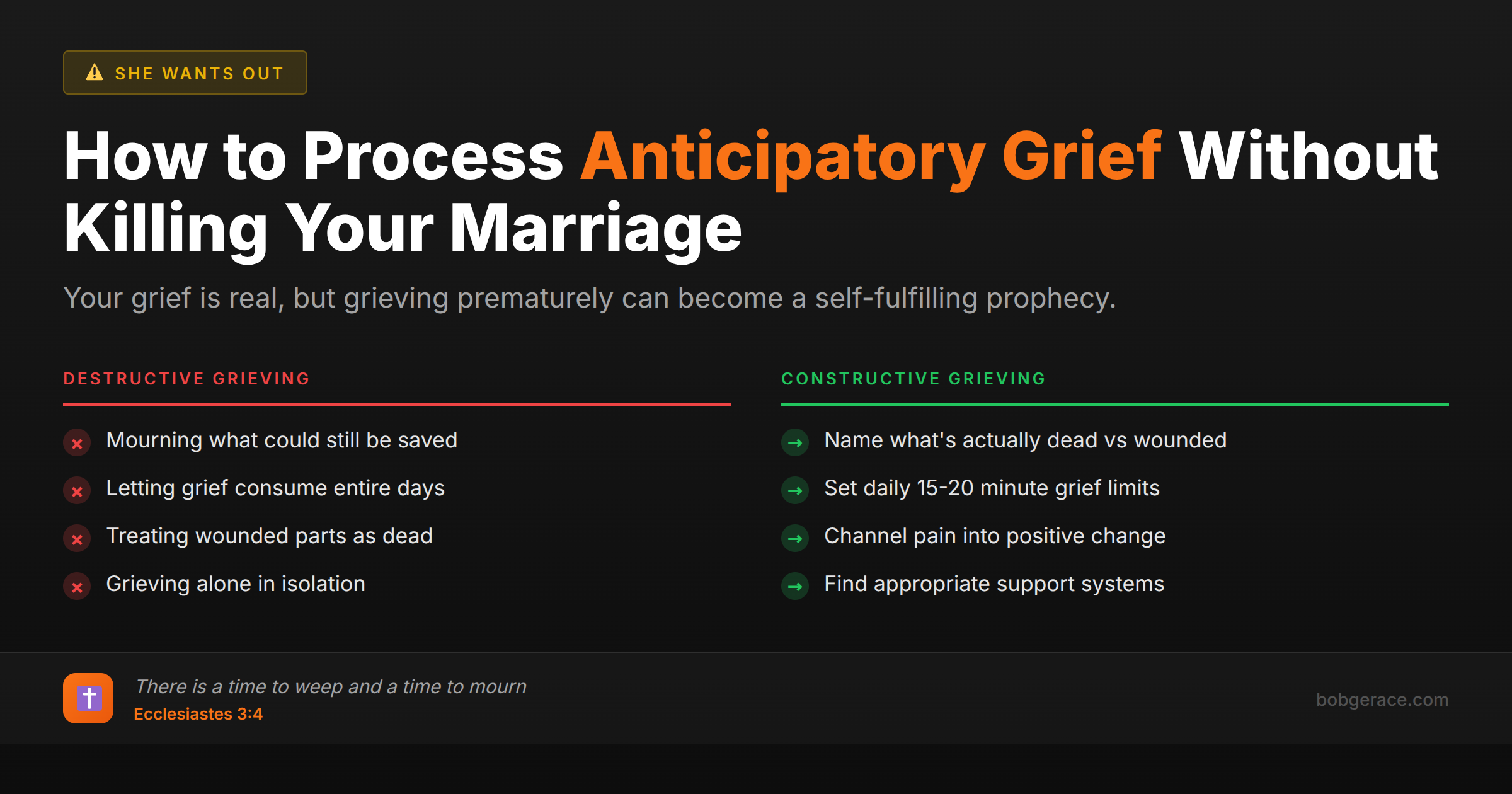
You're experiencing what therapists call anticipatory grief - mourning a loss that hasn't fully occurred yet. This is normal when your marriage feels like it's dying, even if you're still living together. The grief is real because parts of your relationship have already died: the intimacy, the partnership, the future you planned together. Here's what you need to know: grieving prematurely can become a self-fulfilling prophecy, but denying your pain won't save your marriage either. The key is learning to grieve what's genuinely lost while refusing to grieve what could still be saved. This requires brutal honesty about what's actually dead versus what's just wounded.
The Full Picture
Anticipatory grief in marriage is more common than most people realize. You're mourning the relationship you once had, the intimacy that's disappeared, and the future that seems increasingly unlikely. This grief feels confusing because your spouse is still physically present, but emotionally and relationally, significant parts of your marriage may have already died.
The danger lies in two extremes. Some men grieve so completely that they emotionally check out, essentially killing the marriage themselves. Others deny any grief, pretending everything is fine while building resentment and bitterness. Both approaches destroy what remains of the relationship.
Smart grief acknowledges real losses while maintaining hope for restoration. Maybe the carefree early years are gone - that deserves grief. Maybe the physical intimacy has died - that's a genuine loss. Maybe trust has been shattered - that needs to be mourned. But the capacity for love, growth, and rebuilding? That might still be very much alive.
Common mistakes include: • Grieving the entire marriage when only parts are wounded • Using grief as an excuse to stop fighting for the relationship • Expecting your spouse to comfort you while they're pulling away • Making permanent decisions based on temporary grief
The goal isn't to stop grieving - it's to grieve accurately and constructively, mourning what's genuinely lost while nurturing what remains.
What's Really Happening
Anticipatory grief is a well-documented psychological phenomenon that occurs when we perceive an impending loss. In marriages, this often manifests as mourning the relationship before it's actually over, creating a complex emotional landscape that can either facilitate healing or accelerate decline.
Neurologically, your brain is processing real loss. The attachment system that bonded you to your spouse recognizes threats to that connection and activates grief responses - even when the relationship technically still exists. This explains why the pain feels so real and why simple logic doesn't make it go away.
The challenge is that anticipatory grief can become what we call 'complicated grief' when it lacks boundaries. Unlike normal grief, which has a clear event and timeline, anticipatory grief exists in limbo. Without proper processing, it can lead to learned helplessness, where you stop taking constructive action because you've already emotionally accepted defeat.
Research shows that anticipatory grief can actually be adaptive when it motivates necessary changes. The key is maintaining what therapists call 'dual processing' - simultaneously acknowledging loss while remaining open to restoration. This requires cognitive flexibility: holding both the reality of current pain and the possibility of future healing.
I often see men get stuck in anticipatory grief because they're trying to control an uncertain outcome. The therapeutic goal isn't to eliminate the grief but to channel it productively - letting it inform necessary changes without letting it dictate premature surrender.
What Scripture Says
Scripture acknowledges that grief can begin before death occurs. Ecclesiastes 3:4 tells us there is 'a time to weep and a time to mourn,' recognizing that sorrow has its proper place and timing. Your grief over what's been lost in your marriage isn't faithlessness - it's human.
2 Corinthians 7:10 distinguishes between 'godly sorrow' that leads to repentance and 'worldly sorrow' that leads to death. Godly grief over your marriage should drive you toward positive change, confession, and restoration. Worldly grief leads to despair, withdrawal, and giving up. The difference isn't in feeling the pain but in how you respond to it.
Romans 8:28 reminds us that 'God works all things together for good' - even our deepest marriage pain. This doesn't minimize your suffering or guarantee your marriage will be saved, but it assures you that God can use even this grief for something meaningful. Perhaps it's driving you to become the man you were meant to be.
Psalm 30:5 declares that 'weeping may endure for a night, but joy comes in the morning.' This doesn't mean quick fixes, but it does mean that your current grief isn't the end of the story. God specializes in resurrection - bringing life from death, hope from despair.
1 Peter 5:7 instructs us to cast our anxieties on God because He cares for us. Your grief about your marriage's future is exactly the kind of burden God wants to carry with you. He's not afraid of your pain or your questions about what's coming.
What To Do Right Now
-
1
Name specifically what you're grieving - write down what parts of your marriage have genuinely died versus what's wounded but recoverable
-
2
Set daily grief limits - allow yourself 15-20 minutes to fully feel the loss, then shift focus to constructive action
-
3
Separate past losses from future fears - grieve what's actually gone, not what you're afraid might happen
-
4
Channel grief energy into positive change - let your pain motivate the personal growth your marriage needs
-
5
Find appropriate support - process your grief with a counselor, coach, or trusted friend, not your spouse
-
6
Practice resurrection thinking - daily remind yourself that God specializes in bringing dead things back to life
Related Questions
- What is 'closure' and do I need it to move on?
- What does the 'ambiguous loss' of marital limbo do to a person?
- How long do I wait before giving up?
- How do I know if I'm in denial or in faith?
- What does healthy hope look like vs. fantasy?
- When does waiting become enabling?
- What is 'betrayal trauma' and do I have it?
- How do I live with uncertainty?
- Is my suffering redemptive?
Also find Bob on
Subscribe for weekly videos on Christian marriage.
You Don't Have to Sort This Out Alone
Grieving while still fighting for your marriage is a tightrope. A coach who knows your specific situation helps you grieve what's actually lost without killing what could still be saved.
Talk to Bob →