What's the difference between trauma-driven leaving and conscious uncoupling?
6 min read
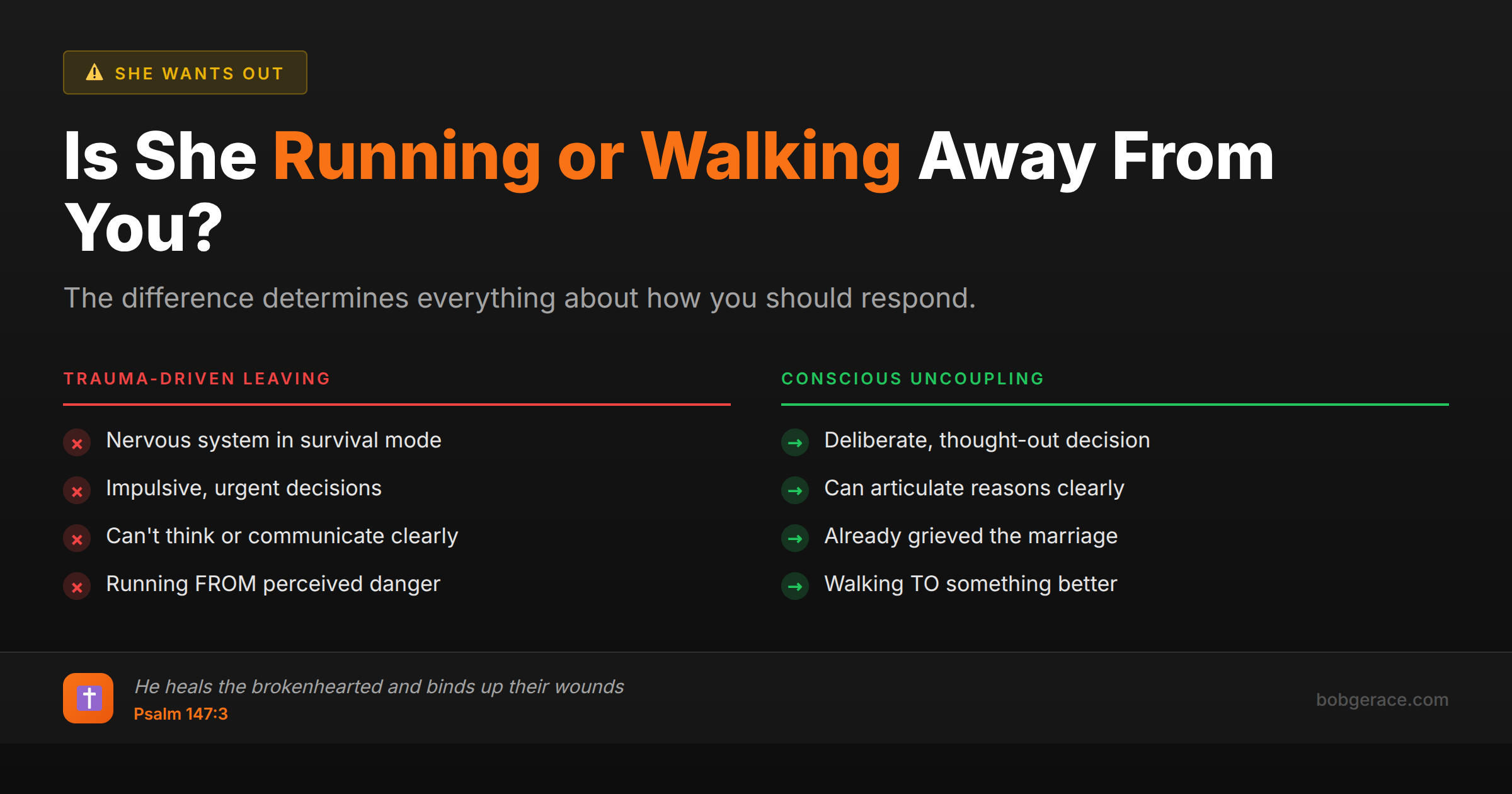
The difference is profound and changes everything about how you should respond. Trauma-driven leaving happens when your wife's nervous system is in survival mode - she's fleeing what feels like danger, often impulsively, with little ability to think clearly or communicate rationally. Her decisions feel urgent and non-negotiable because her brain perceives staying as a threat. Conscious uncoupling, on the other hand, is a deliberate, thought-out decision where she's mentally and emotionally processed the relationship's end. She can articulate her reasons clearly, has likely grieved the marriage already, and approaches separation with planning rather than panic. The trauma-driven wife is running FROM something; the consciously uncoupling wife is walking TO something she believes is better.
The Full Picture
Trauma-driven leaving looks chaotic because it IS chaos. Your wife might suddenly demand separation after a fight, pack bags impulsively, or make dramatic pronouncements about never being happy. She may struggle to explain her reasons beyond "I can't do this anymore" or "I need to get out." Her timeline feels urgent - she wants out NOW. This often follows a pattern of emotional dysregulation, hypervigilance, or feeling constantly unsafe in the relationship.
Key signs of trauma-driven departure: • Sudden, seemingly out-of-nowhere decision • Extreme emotional reactions that don't match the situation • Black-and-white thinking ("all bad" vs "all good") • Physical symptoms like panic attacks or insomnia • History of past trauma being triggered • Inability to discuss things rationally
Conscious uncoupling feels different entirely. She's been thinking about this for months or years. She can calmly explain her reasons, has researched divorce attorneys, and talks about co-parenting plans. She's not running from fear - she's walking toward what she believes is a better life. This woman has done the mental and emotional work to reach her conclusion.
Signs of conscious uncoupling: • Detailed explanations of her decision • Calm, business-like approach to separation • Already emotionally detached from the marriage • Practical planning around logistics and children • Clear boundaries about what she will and won't discuss • Sometimes even kindness toward you as a person
The mistake most men make is treating both situations the same way. You cannot reason with trauma, but you also cannot emotionally manipulate someone who's made a conscious choice.
What's Really Happening
From a neurobiological perspective, these represent fundamentally different brain states. Trauma-driven leaving activates the amygdala - the brain's alarm system - flooding the body with stress hormones like cortisol and adrenaline. The prefrontal cortex, responsible for rational decision-making, goes offline. This is why reasoning with a trauma-activated spouse feels impossible - their brain literally cannot process logic the same way.
Attachment theory helps us understand this further. Trauma-driven leaving often stems from attachment injuries - moments when the primary relationship feels unsafe or threatening. The person's attachment system activates, triggering either fight-or-flight responses. Past relational trauma compounds this, making current relationship stress feel life-threatening even when it isn't.
Conscious uncoupling, conversely, involves active prefrontal cortex engagement. This person has moved through the emotional stages of relationship dissolution - often including anger, bargaining, and grief - before making their decision. They've likely experienced what psychologists call "emotional divorce" months or years before the physical separation.
The therapeutic approach differs dramatically. Trauma-driven situations require nervous system regulation, safety-building, and often individual trauma work before meaningful couples work can happen. The goal is helping both partners move out of reactive states. Conscious uncoupling situations may benefit more from discernment counseling - helping couples determine if the decision is truly final or if there's motivation to rebuild. Understanding which scenario you're facing is crucial for choosing appropriate interventions and managing your own expectations realistically.
What Scripture Says
Scripture acknowledges both the reality of human brokenness and the power of patient love. When dealing with trauma-driven responses, we see God's heart for the wounded: "He heals the brokenhearted and binds up their wounds" (Psalm 147:3). This reminds us that trauma responses aren't character flaws but wounds needing healing, not judgment.
"A gentle answer turns away wrath, but a harsh word stirs up anger" (Proverbs 15:1) speaks directly to responding to trauma-driven behavior. Meeting panic with pressure only escalates the situation. God models this gentleness with us in our own brokenness.
For conscious uncoupling situations, we're reminded that "Above all else, guard your heart, for everything you do flows from it" (Proverbs 4:23). Sometimes what appears to be a calculated decision flows from a heart that's been guarded so long it's become hardened. The challenge is discerning between wisdom and self-protection.
"Love is patient, love is kind... it keeps no record of wrongs" (1 Corinthians 13:4-5) doesn't mean accepting abuse or enabling dysfunction, but it does call us to respond to both situations with patience rather than manipulation or control. Whether she's fleeing from trauma or walking away consciously, your response should reflect Christ's character.
"Therefore, as God's chosen people, holy and dearly loved, clothe yourselves with compassion, kindness, humility, gentleness and patience" (Colossians 3:12). This verse guides our approach regardless of her motivation for leaving. Our calling is to embody these qualities whether she's in crisis or has made a calculated decision.
The goal isn't using scripture to change her mind but letting God's truth transform how we respond to her pain or decision.
What To Do Right Now
-
1
Stop trying to convince her of anything and focus on observing her behavior patterns without judgment
-
2
Create physical and emotional safety by removing pressure, ultimatums, and attempts to control the timeline
-
3
Document her specific words and behaviors to identify whether you're seeing trauma responses or conscious decisions
-
4
Get professional help - trauma-informed therapy if it's trauma-driven, discernment counseling if it's conscious uncoupling
-
5
Work on your own emotional regulation so you can respond rather than react to her state
-
6
Pray for wisdom to discern when to pursue and when to step back, asking God to reveal His timing and your role
Related Questions
- Is she triggered or is this a rational decision?
- What is 'stacked trauma' and does she have it?
- How does PTSD affect her perception of our marriage?
- What does 'survival brain' look like in her right now?
- Is her leaving connected to past trauma?
- Did I retraumatize her without knowing?
- What is 'betrayal trauma' and do I have it?
- What does betrayal do to the brain?
- What is 'complex trauma' and do I have it?
- What does trauma recovery look like?
Also find Bob on
Subscribe for weekly videos on Christian marriage.
Not Sure Which One You're Dealing With?
A coach who knows your marriage can tell you what's actually happening here—and what to do about it in the next 30 days.
Talk to Bob →