What does betrayal do to my attachment system?
6 min read
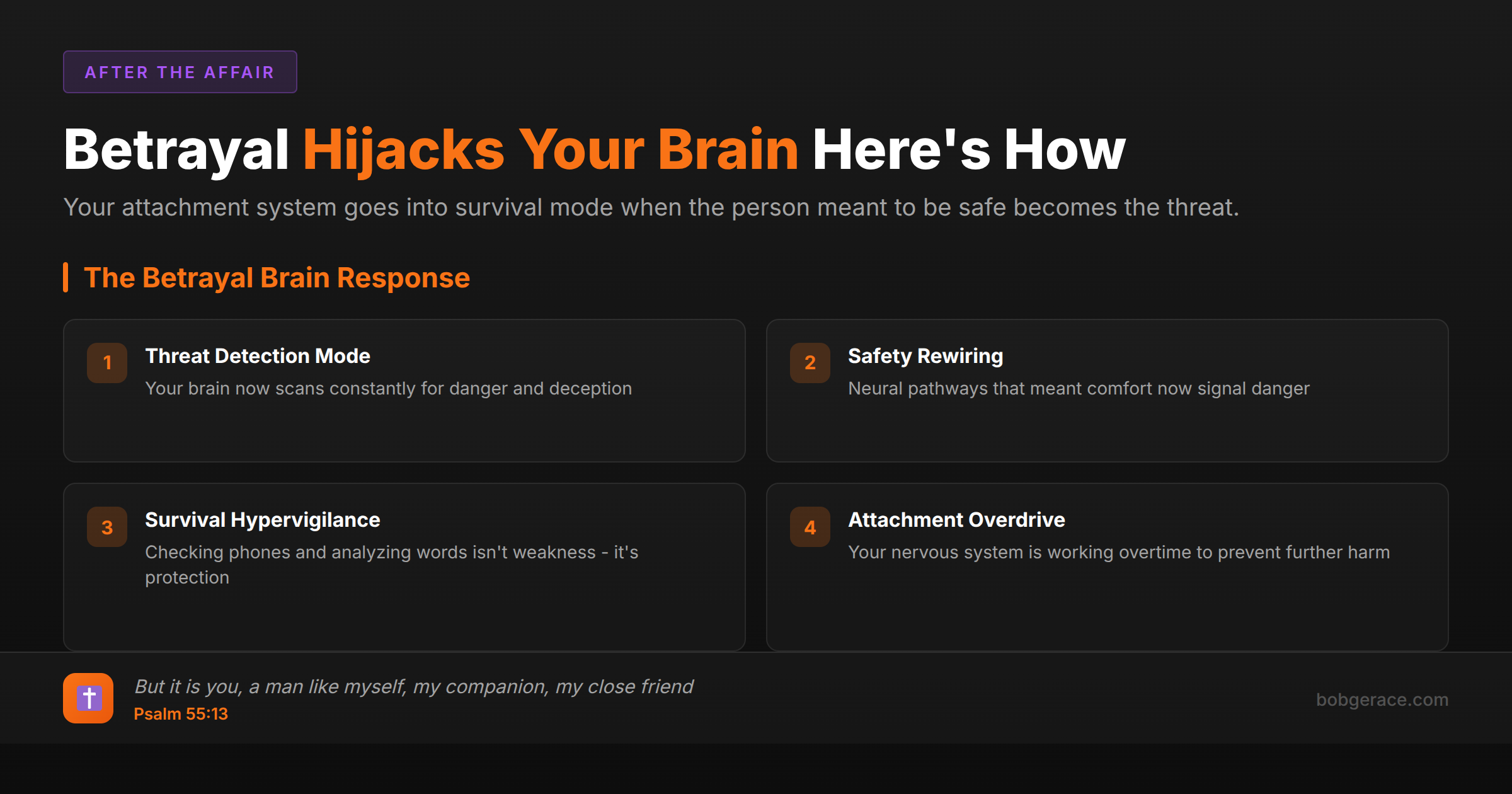
Betrayal devastates your attachment system by destroying the fundamental trust and safety that healthy relationships require. When your spouse betrays you, your brain interprets this as a life-threatening event because we're wired to need secure bonds for survival. This trauma hijacks your nervous system, causing hypervigilance, anxiety, and an inability to feel safe with the person who was supposed to be your secure base. Your attachment system goes into overdrive, constantly scanning for threats and signs of deception. You may find yourself checking phones, analyzing every word, or feeling panicked when your spouse is away. This isn't weakness - it's your brain trying to protect you from further harm. The neural pathways that once associated your spouse with safety and comfort have been rewired to associate them with danger and unpredictability.
The Full Picture
Your attachment system is your brain's built-in mechanism for forming and maintaining close emotional bonds. It developed in your earliest relationships and continues to operate throughout your life, especially in marriage. When functioning properly, secure attachment allows you to trust, be vulnerable, and find comfort in your spouse during times of stress.
Betrayal shatters this system completely. The person who was supposed to be your safe harbor becomes the source of your greatest pain. Your nervous system can't reconcile this contradiction, leading to what researchers call an "attachment injury" - a wound so deep it affects every aspect of how you connect with others.
The neurobiological impact is severe. Your amygdala (fear center) becomes hyperactive while your prefrontal cortex (reasoning center) goes offline. You're literally living in a state of chronic fight-or-flight, unable to think clearly or feel calm. Sleep becomes elusive, concentration suffers, and you may experience physical symptoms like headaches, digestive issues, or heart palpitations.
Your internal working model of relationships gets completely scrambled. The beliefs you held about love, commitment, and safety are now in question. If the person closest to you could deceive you so thoroughly, who can you trust? This creates what I call "attachment chaos" - you desperately need connection to heal, but you're terrified of being vulnerable again.
The ripple effects extend beyond your marriage. You may find yourself questioning all relationships, becoming suspicious of friends, or struggling to connect with your children. Your ability to be present and emotionally available becomes compromised because your system is constantly on high alert, scanning for the next potential threat to your safety and security.
What's Really Happening
From a clinical perspective, betrayal trauma creates what we call "disorganized attachment" - your attachment system wants to both approach and avoid your spouse simultaneously. This creates an impossible bind that keeps you stuck in a cycle of anxiety and confusion.
The neuroscience is clear: betrayal activates the same brain regions as physical pain. When we scan the brains of betrayed partners, we see inflammation in areas associated with emotional regulation and threat detection. Your hippocampus (memory center) becomes impaired, which is why you might have trouble remembering details or feel like you're living in a fog.
What's particularly damaging is that betrayal violates our "assumptive world" - the basic beliefs that help us feel safe and make sense of reality. When these assumptions crumble, your nervous system doesn't know how to regulate itself. You're dealing with both the trauma of discovery and the ongoing stress of trying to rebuild safety with someone who caused the trauma.
The good news is that attachment injuries can heal, but it requires specific interventions. Your brain's neuroplasticity means new neural pathways can form, but this only happens through //blog.bobgerace.com/marriage-consistency-christian-husband-stop-excuses/:consistent, safe experiences over time. The betraying partner must become a source of safety and predictability, not just remorse and promises. This is why accountability, transparency, and professional guidance are essential for true healing to occur.
What Scripture Says
Scripture acknowledges the deep pain of betrayal and God's desire to restore broken relationships. The Bible doesn't minimize the damage that betrayal causes to our hearts and our ability to trust.
Psalm 55:12-14 captures the unique pain of betrayal by someone close: *"If an enemy were insulting me, I could endure it; if a foe were rising against me, I could hide. But it is you, a man like myself, my companion, my close friend, with whom I once enjoyed sweet fellowship at the house of God, as we walked about among the worshipers."* David understood that betrayal by someone we love cuts deeper than any other wound.
Proverbs 27:6 reminds us that *"Wounds from a friend can be trusted, but an enemy multiplies kisses."* When betrayal happens, it's crucial to distinguish between authentic repentance and empty gestures. Your attachment system needs genuine safety, not just sweet words.
Jeremiah 17:9 acknowledges the reality of human nature: *"The heart is deceitful above all things and beyond cure. Who can understand it?"* This isn't meant to create hopelessness, but to ground our expectations in biblical truth rather than naive optimism.
Isaiah 61:1-3 promises that God *"binds up the brokenhearted"* and gives *"a crown of beauty instead of ashes, the oil of joy instead of mourning, and a garment of praise instead of a spirit of despair."* Your attachment wounds are not beyond God's healing power.
1 Peter 5:7 invites us to *"Cast all your anxiety on him because he cares for you."* While your attachment to your spouse may be damaged, your attachment to God can become a source of stability and healing during this traumatic time.
What To Do Right Now
-
1
Acknowledge the trauma - Stop minimizing what happened to you. Betrayal is a legitimate trauma that affects your nervous system. Give yourself permission to feel the full impact.
-
2
Prioritize nervous system regulation - Practice deep breathing, gentle movement, or grounding techniques daily. Your brain needs to feel safe before it can heal.
-
3
Create physical and emotional safety - Establish clear boundaries and consequences. Your spouse must demonstrate trustworthiness through actions, not just words.
-
4
Document your experience - Keep a journal of your thoughts, feelings, and your spouse's behaviors. This helps combat gaslighting and tracks real progress over time.
-
5
Build external support - Connect with trusted friends, family, or support groups. Your attachment system needs multiple sources of safety and connection during healing.
-
6
Seek professional help - Work with a therapist who understands betrayal trauma. Your attachment wounds require specialized treatment, not generic marriage advice.
Related Questions
You Don't Have to Navigate This Alone
Betrayal trauma requires specialized support and proven strategies. Let's work together to help you heal your attachment wounds and rebuild safety in your relationship.
Get Support Now →