What does 'seventy times seven' mean practically?
6 min read
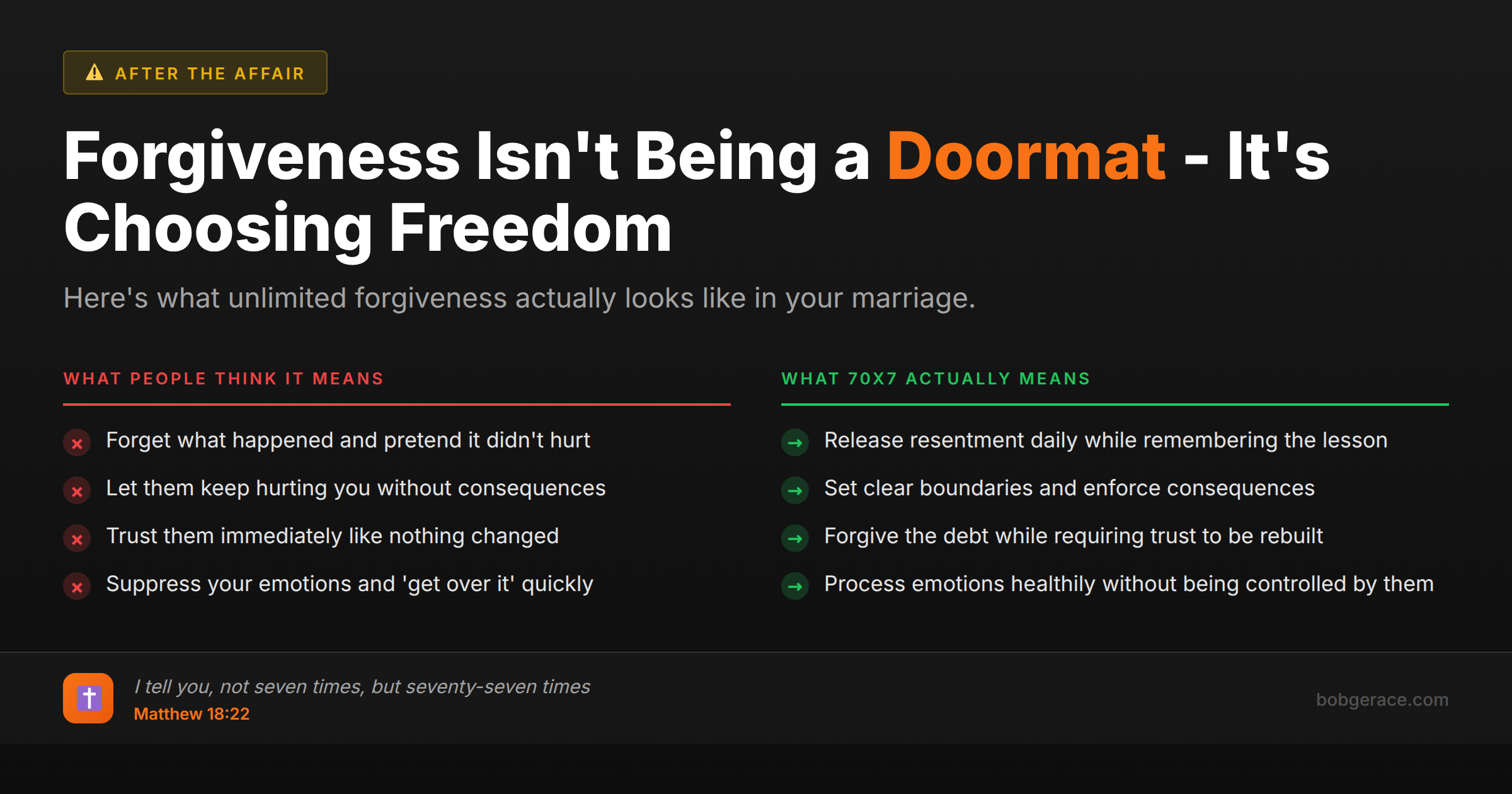
When Jesus said to forgive 'seventy times seven,' He wasn't giving us a math problem - He was calling us to unlimited forgiveness. This doesn't mean being a doormat or ignoring consequences. It means choosing to release resentment and bitterness repeatedly, as often as they resurface, while still maintaining healthy boundaries. Practically, this looks like forgiving your spouse again when triggered by a memory, choosing grace when they stumble in recovery, and releasing the debt of their betrayal daily. It's not about forgetting or minimizing the hurt - it's about refusing to let unforgiveness poison your heart and your marriage's future.
The Full Picture
The 'seventy times seven' command comes from Matthew 18:22, where Peter asks Jesus if forgiving seven times is enough. Jesus responds with 'seventy times seven' - essentially saying forgiveness should be limitless. But let's get real about what this means in a marriage devastated by infidelity.
This isn't about being naive or weak. Biblical forgiveness doesn't mean pretending the affair didn't happen or that it wasn't devastating. It doesn't mean immediately trusting again or removing all consequences. What it means is making a daily, sometimes hourly, choice to release your spouse from the debt they owe you.
Forgiveness is a process, not a one-time event. You'll likely need to forgive the same offense multiple times as new layers of hurt surface, as triggers arise, and as you discover additional details. Each time you choose forgiveness over bitterness, you're living out Christ's command.
It requires both grace and boundaries. You can forgive your spouse while still requiring accountability, transparency, and professional help. You can release resentment while maintaining healthy boundaries. Forgiveness opens the door to reconciliation, but reconciliation requires repentance, change, and rebuilt trust.
The number 490 (seventy times seven) represents completeness in Hebrew culture - unlimited, perfect forgiveness. Christ is calling us to mirror His forgiveness toward us, which has no limits or expiration date.
What's Really Happening
From a clinical perspective, the 'seventy times seven' principle aligns perfectly with what we know about trauma recovery and neuroplasticity. When betrayal trauma occurs, our brains create strong neural pathways associated with hurt, anger, and self-protection. Each time we choose forgiveness over resentment, we're literally rewiring our brains.
Forgiveness is neurologically healing. Research shows that choosing forgiveness reduces cortisol levels, decreases anxiety, and improves overall mental health. The repetitive nature of forgiveness - having to do it 'seventy times seven' - actually strengthens these new neural pathways.
Triggers will continue to surface. It's completely normal to need to forgive the same offense repeatedly. Your brain is designed to protect you from future harm, so memories and triggers will resurface. This doesn't mean you're weak or that your previous forgiveness wasn't genuine - it means you're human.
Forgiveness doesn't equal immediate trust. Clinically, we distinguish between forgiveness (releasing resentment) and reconciliation (rebuilding relationship). Trust is rebuilt through consistent actions over time, not through forgiveness //blog.bobgerace.com/christian-marriage-teamwork-stop-fighting-alone/:alone. You can forgive completely while still requiring proof of change.
The beauty of Christ's model is that it gives permission for the ongoing nature of healing. You don't have to 'get over it' in one dramatic moment. You can take this journey one choice at a time, as many times as necessary.
What Scripture Says
Scripture provides clear guidance on the heart and practice of unlimited forgiveness:
Matthew 18:21-22 - *'Then Peter came to Jesus and asked, 'Lord, how many times shall I forgive my brother or sister who sins against me? Up to seven times?' Jesus answered, 'I tell you, not seven times, but seventy-seven times.'* This establishes the principle of unlimited forgiveness.
Ephesians 4:32 - *'Be kind and compassionate to one another, forgiving each other, just as in Christ God forgave you.'* Our forgiveness should mirror God's forgiveness toward us - complete and ongoing.
Colossians 3:13 - *'Bear with each other and forgive one another if any of you has a grievance against someone. Forgive as the Lord forgave you.'* We're called to extend the same grace we've received.
Matthew 6:14-15 - *'For if you forgive other people when they sin against you, your heavenly Father will also forgive you. But if you do not forgive others their sins, your Father will not forgive your sins.'* Unforgiveness blocks our own relationship with God.
Luke 17:3-4 - *'If your brother or sister sins against you, rebuke them; and if they repent, forgive them. Even if they sin against you seven times in a day and seven times come back to you saying 'I repent,' you must forgive them.'* Notice this includes both accountability ('rebuke them') and forgiveness.
These passages show that biblical forgiveness is both unlimited and wise - extending grace while maintaining truth.
What To Do Right Now
-
1
Make a daily choice to forgive, especially when triggers or resentment surface
-
2
Distinguish between forgiveness (your choice) and trust (earned through consistent action)
-
3
Set clear boundaries and consequences while maintaining a forgiving heart
-
4
Pray for your spouse's genuine repentance and transformation, not just behavior modification
-
5
Seek counseling support to process your emotions without being controlled by them
-
6
Remember that choosing forgiveness repeatedly is strength, not weakness
Related Questions
Need Help Living Out Biblical Forgiveness?
Walking the path of 'seventy times seven' forgiveness after betrayal requires support and guidance. Let's work together to help you forgive without compromising your healing.
Get Support →