When does giving space become abandonment?
5 min read
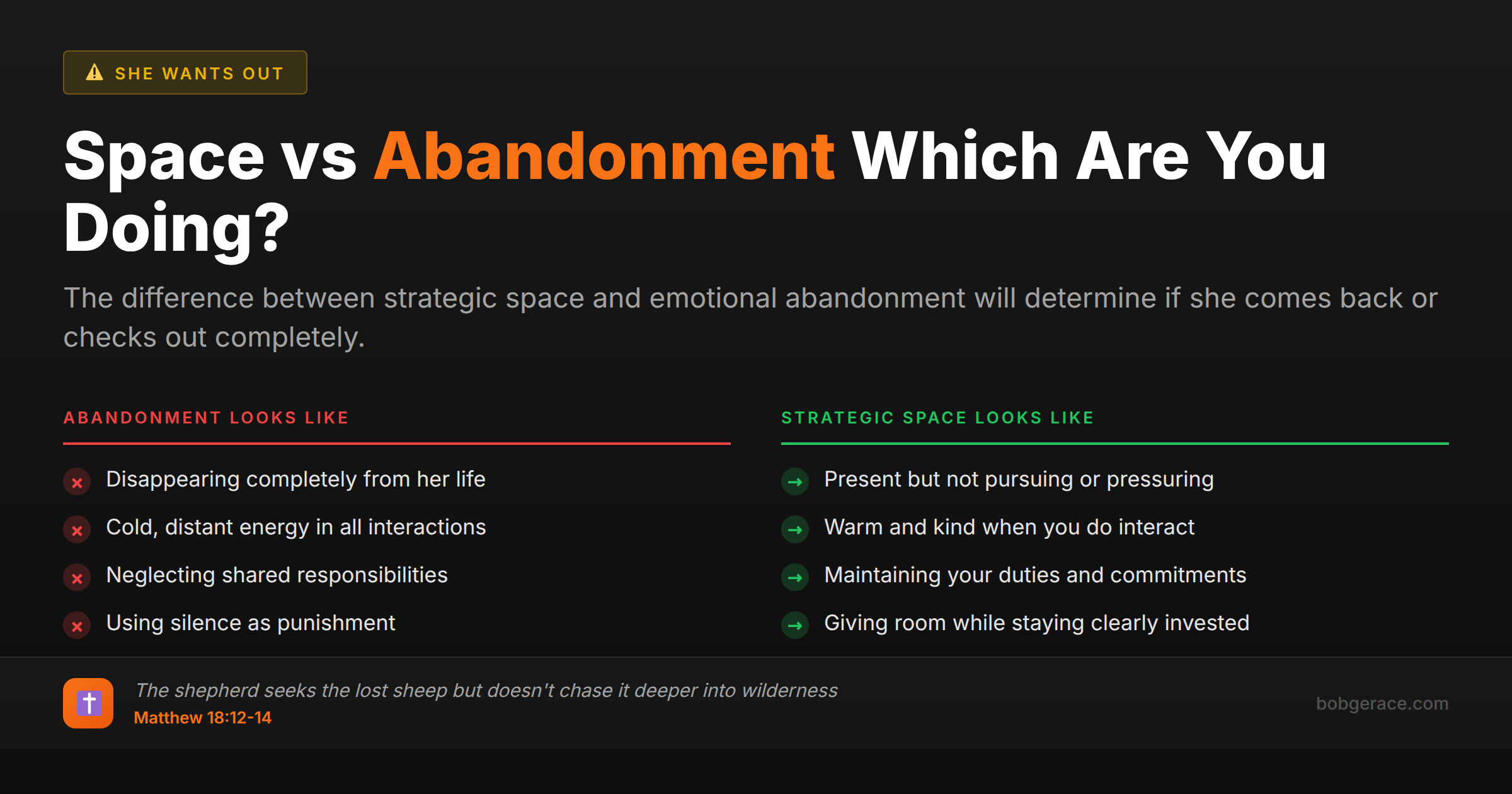
Space becomes abandonment when it shifts from intentional care to emotional withdrawal. The difference isn't in the physical distance—it's in the heart posture behind it. Healthy space maintains connection through clear communication, defined timelines, and mutual respect. It's designed to heal and restore. Abandonment, however, is characterized by silence, indefinite timelines, and emotional cutoff. Here's the brutal truth: if you're giving space out of anger, punishment, or to avoid difficult conversations, you've crossed into abandonment territory. Real space requires more courage, not less—it demands ongoing communication about boundaries, regular check-ins, and a shared commitment to working toward reconnection. When space has no structure or end goal, it becomes a slow-motion breakup.
The Full Picture
The line between healthy space and abandonment isn't about how much distance you create—it's about why and how you create it. Most men get this backwards, thinking that space means complete disconnection. That's not space; that's giving up.
Healthy space looks like: • Clear agreements about duration and boundaries • Regular, scheduled check-ins (even if brief) • Transparency about what you're working on during the space • Mutual respect for the process • Active effort toward personal growth • Hope and commitment to the relationship's future
Abandonment looks like: • Indefinite timelines with no clear goals • Complete communication blackout • Using silence as punishment or control • Making unilateral decisions without input • Avoiding responsibility or difficult conversations • Secret preparation for permanent separation
The most common mistake? Passive space. You stop trying, stop communicating, and convince yourself you're "giving her what she wants." But what she actually wants is a husband who fights for the marriage with wisdom and maturity, not one who disappears.
Another trap: punitive space. When you're hurt or angry, it's tempting to withdraw as payback. "She wants space? Fine, she'll get all the space she can handle." This isn't noble—it's emotional manipulation disguised as compliance.
Real space requires active intention. You're not backing away from the marriage; you're creating conditions for healing. This means having honest conversations about what the space will accomplish, how long it will last, and what both of you will work on individually. Without these elements, space becomes a slow drift toward permanent separation.
What's Really Happening
From a therapeutic perspective, the distinction between space and abandonment lies in attachment security and emotional availability. Research shows that secure attachment requires both autonomy and connection—the ability to be separate individuals while maintaining emotional bonds.
Healthy space activates what we call secure base behavior. Even when physically apart, both partners maintain the sense that the other is emotionally available and committed to the relationship's wellbeing. The space serves a clear therapeutic function: reducing reactivity, processing emotions, and developing individual coping skills.
Abandonment, however, triggers attachment panic. The distancing partner becomes emotionally unavailable, creating ambiguous loss—the devastating experience of losing someone who is still physically present. This ambiguity actually intensifies anxiety and prevents the emotional regulation that space is supposed to provide.
Neurologically, abandonment activates the same brain regions as physical pain. When space lacks structure and reassurance, it floods the limbic system with stress hormones, making rational processing nearly impossible. This is why indefinite separation often escalates conflict rather than reducing it.
The key therapeutic principle is differentiation—the ability to maintain your sense of self while staying emotionally connected to your partner. True space enhances differentiation by allowing each person to work on themselves while preserving the relationship container. Abandonment destroys differentiation by severing the emotional connection entirely, leaving both partners more reactive and less capable of healthy relationship functioning.
What Scripture Says
Scripture provides clear guidance on the difference between wise separation and abandonment of covenant responsibilities. Ecclesiastes 3:5 reminds us there is "a time to embrace and a time to refrain from embracing"—acknowledging that seasons of distance can be appropriate and even necessary.
However, 1 Corinthians 7:5 establishes crucial boundaries around marital separation: "Do not deprive each other except perhaps by mutual consent and for a time, so that you may devote yourselves to prayer. Then come together again so that Satan will not tempt you because of your lack of self-control." Notice the key elements: mutual consent, defined purpose, limited time, and planned reunion.
Matthew 18:15-17 provides the framework for addressing conflict: "If your brother or sister sins, go and point out their fault, just between the two of you." This principle applies to marital space—it should be accompanied by honest communication, not silent withdrawal.
The biblical model is never abandonment. Malachi 2:16 declares that God "hates divorce" and warns against dealing "treacherously" with your spouse. Treachery includes emotional abandonment—maintaining the appearance of marriage while withdrawing your heart.
Ephesians 4:26-27 instructs us: "Do not let the sun go down while you are still angry, and do not give the devil a foothold." Extended silence and emotional cutoff create exactly the kind of foothold that destroys marriages. Even necessary space must include mechanisms for addressing hurt and maintaining connection.
Finally, 1 Peter 3:7 calls husbands to live with their wives "in an understanding way," showing honor even during difficult seasons. Understanding requires ongoing communication and care, not withdrawal and abandonment.
What To Do Right Now
-
1
Define the purpose and timeline for any space - have an honest conversation about what you're both trying to accomplish and when you'll reassess
-
2
Establish minimum communication protocols - agree on how and how often you'll check in, even if it's just a brief text every few days
-
3
Create individual accountability - identify specific things you'll work on during the space and share progress regularly
-
4
Schedule regular evaluation meetings - set weekly or bi-weekly conversations to assess how the space is serving the relationship
-
5
Maintain shared responsibilities - continue handling practical matters like finances, children, and household needs collaboratively
-
6
Seek professional support - engage a counselor or coach to guide the separation process and prevent it from becoming permanent
Related Questions
- Should I give her space or fight for her?
- How much space is too much?
- What does 'space' actually mean to her?
- If I give space, won't she think I don't care?
- What's the difference between pursuing and chasing?
- How do I fight without pushing her away?
- What is the '180' approach and does it work?
- How do I not pursue while also not abandoning?
- What does 'detach with love' actually mean?
- How do I stay connected while enforcing boundaries?
Also find Bob on
Subscribe for weekly videos on Christian marriage.
Get a Coach Who Knows Your Marriage
Space, abandonment, timing—these aren't abstract concepts when it's your wife and your kids. A coach calibrates to where you actually are and what's happening in your specific situation.
Talk to Bob →